
Magnesium is like the unsung hero of your body — quietly powering your muscles, nerves, energy, sleep, and even your heart rhythm. For many of us in India, however, getting enough magnesium and absorbing enough is harder than it seems. Between modern diets, stress, and soil-depleted crops, there’s a risk of a “magnesium gap” that goes unnoticed. That’s where liposomal magnesium enters the story — and why it might be the smarter, more effective choice.
1) Why Do Many of Us Need Magnesium Supplements?
In a perfect world, we’d get all the minerals we need from food. But today’s reality makes that difficult:
- Many urban Indians eat polished rice, refined flour, and processed snacks — with fewer greens, nuts, and whole grains. These eating patterns reduce our magnesium intake.
- Research in India shows real health implications: for example, a study in North India found that lower dietary and serum magnesium levels were associated with higher risk of coronary artery disease.
- In rural North India too, low magnesium intake and low serum magnesium correlated with higher rates of hypertension.
- Among pregnant women in Haryana, 44% had serum magnesium levels below what’s considered normal.
- Lifestyle factors — stress, alcohol, and common medications like diuretics or proton-pump inhibitors — can increase magnesium loss or impair absorption.
- Certain health conditions also increase magnesium demand or depletion, including diabetes, obesity, and GI disorders.
All this means that diet alone often isn’t enough — especially when your lifestyle, health conditions, or age raise your needs or hamper absorption.
2) Who Is Most at Risk and Could Benefit from Supplementation?
Here are the key groups who really should pay attention to magnesium:
- People with type 2 diabetes, metabolic syndrome, or obesity — studies show many of these patients have low magnesium, and that can worsen insulin resistance.
- Older adults — absorption declines with age, and even a balanced diet might not cut it.
- Women, especially during pregnancy or perimenopause, when needs shift or losses increase.
- Athletes and active individuals — muscle activity, sweating, and intense training increase magnesium demands.
- People with digestive issues (like Crohn’s or celiac) or those on long-term gastrointestinal medications.
Anyone with a diet low in whole, magnesium-rich foods (greens, nuts, seeds, legumes, whole grains).

3) How Do You Know If You’re Low on Magnesium?
Magnesium deficiency is sneaky — symptoms may be mild or nonspecific:
- Muscle cramps or spasms (especially in calves or feet)
- Twitching eyelids or facial muscles
- Persistent fatigue, slow recovery from workouts
- Poor or restless sleep
- Mood changes (irritability, anxiety)
- Heart palpitations or irregular heartbeat
The tricky part: standard blood tests (serum magnesium) often don’t tell the whole story, because they only reflect a tiny fraction of the body’s total magnesium.
4) What Tests Can Measure Magnesium — and Are They Reliable?
- Serum magnesium test: Commonly available, but only shows about ~1% of your total body magnesium. Not always reliable for diagnosing deficiency.
- Red blood cell (RBC) or intracellular magnesium test: More accurate, but less common and costlier.
- Clinical evaluation: Often, doctors rely on symptoms + risk factors + test results together — not just a single number.
5) What Can Happen If Your Magnesium Stays Low?
When magnesium stays chronically low, several physical systems suffer:
- Poor muscle recovery, constant cramps
- Insomnia or poor sleep quality
- Higher stress response
- Increased risk of high blood pressure, heart rhythm issues, metabolic syndrome, and type 2 diabetes
- Slower recovery after exercise, more fatigue
- Weaker bones over time, possibly higher fracture risk.

6) Can You Get Enough Magnesium from Food? Which Foods Help?
Yes — but you’d need to be really consistent and mindful. Some good sources include:
- Leafy greens: spinach, amaranth, kale
- Nuts & seeds: almonds, cashews, pumpkin seeds
- Whole grains: brown rice, millets
- Legumes: lentils, beans
- Seafood and fish (if you eat non-veg)
- Dark chocolate (70%+ cocoa for best benefit!)
The problem? Many modern Indian diets don’t include these foods enough, making supplementation a very practical add-on.
7) Why Supplementing Makes Sense
- It helps bridge the gap between what you eat and what your body actually needs.
- You can tailor it for specific goals — better sleep, muscle recovery, managing metabolic health.
For people whose bodies demand more magnesium, or who absorb poorly, supplements are more efficient than relying only on food.
8) Why Typical Magnesium Salts (like Oxide or Citrate) Often Fall Short
- Some salts have very low absorption — magnesium oxide is notorious for this.
- They may cause digestive side-effects (bloating, loose stools) in higher doses.
- Even if a capsule says “300 mg magnesium,” your body might absorb only a fraction, due to competing minerals in food, low stomach acid, or poor gut health.
9) How Liposomal Magnesium Truly Changes the Game
So what is liposomal magnesium?
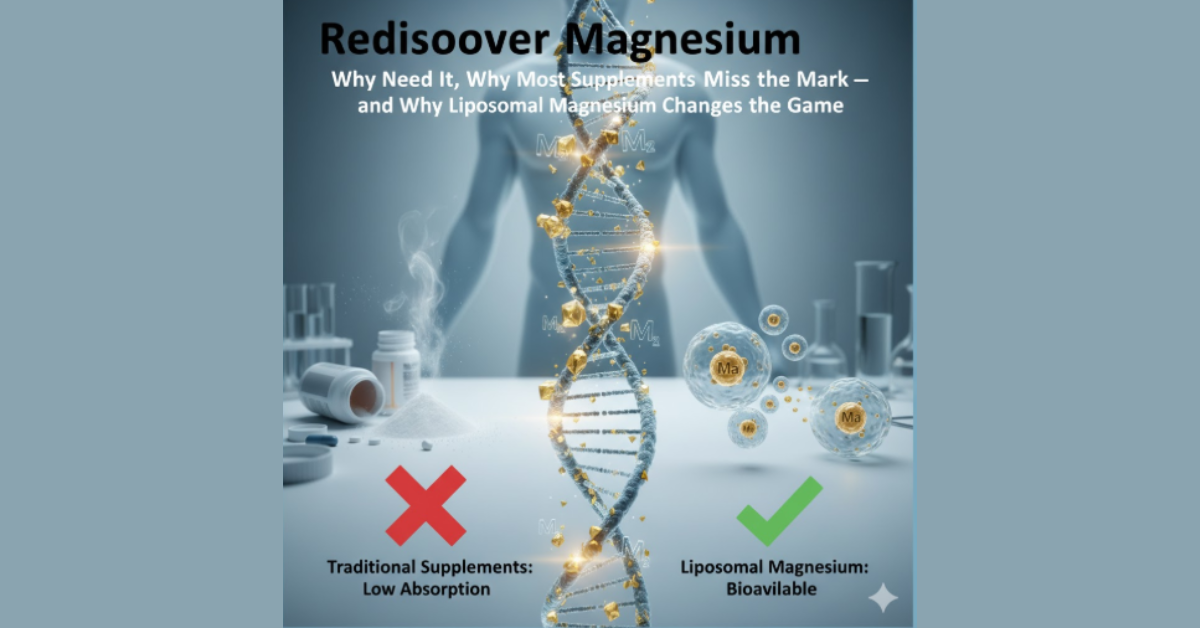
It’s magnesium (often magnesium oxide) packaged inside a tiny lipid (fat) bubble (called a liposome). This “liposome shell” protects the mineral from stomach acid and helps it enter your bloodstream more efficiently.
What does the science say?
- A cross-over human study found that Sucrosomial® magnesium (a liposome-like form) led to greater increases in blood and red blood cell magnesium compared to magnesium oxide, citrate, and bisglycinate.
- Another trial reported 5× higher bioavailability for liposomal magnesium compared to standard magnesium in blood over 12 hours.
- According to reports from supplement formulators, liposomal magnesium maintains better stability in the gut thanks to its nanoparticle design — meaning more consistent delivery and less GI irritation.
Why this matters:
Better absorption means more of the magnesium you take actually gets used by your body — especially useful for people with high needs or poor absorption.
10) Best Magnesium Type for Real Results — Quick Comparison
| Feature | Liposomal Magnesium – Best Overall | Magnesium Bisglycinate | Magnesium L-Threonate |
|---|---|---|---|
| Elemental Magnesium Per 1000 mg | High (40–60%) — best for boosting total magnesium levels | Very low (10–14%) | Low (7–10%) |
| Absorption | Highest — liposomal delivery bypasses gut issues | Good — but gut-dependent | Moderate — higher doses needed |
| Body Retention | Longer retention inside cells | Fast excretion | Moderate retention |
| Brain Benefits | Supports brain + nerves | Low brain delivery | Strong brain-specific benefits |
| Target Use | All-in-one: Muscle + Heart + Brain + Metabolism | Mainly muscle relaxation and sleep | Brain health only |
| Gut Tolerance | Gentle — no diarrhea or cramps | Best for sensitive stomach | Can cause discomfort at high dose |
| Interactions | No interference with other minerals | Glycine may affect absorption | Minimal interaction |
| Clinical Evidence | Proven increase in intracellular magnesium (strong data) | Limited studies | Early-stage clinical research |
| Practical Value | Best daily magnesium supplement for total wellness | Good for sleep support | Good for cognition only |
| Cost to Benefit Ratio | Excellent | Expensive | Highest cost |
11) How Liposomal Magnesium Supports Different People
Here’s how liposomal magnesium can especially benefit different groups:
- For people with diabetes / metabolic syndrome: Better absorption helps replenish losses; may support insulin sensitivity and blood sugar balance.
- Athletes & sports people: Faster cellular uptake helps with muscle recovery, reduces cramps, supports performance.
- Older adults: Improved absorption despite age-related gut changes, supporting sleep, bones, and energy.
- Women (PMS, pregnancy, perimenopause): Helps meet increased demand, supports mood, sleep, and muscle health (with clinician guidance).
12) Why Magnesium Glycinate Isn’t Always the “Best” Option
Magnesium glycinate is often praised for being gentle and well-absorbed — and that’s true to a degree. But:
- Its absorption still depends on gut health and dose — it may not be sufficient when demand is very high.
- There’s limited evidence showing it crosses into cells more effectively than other forms — especially for deep tissue or brain uptake.
- Unlike liposomal magnesium, glycinate doesn’t have the same protective delivery system, which can limit how much actually reaches where it’s needed most.
In short: glycinate is good, but not always optimal — especially for those who need deeper, more reliable delivery.
Frequently Asked Questions — Magnesium & Liposomal Magnesium
Q1. Is liposomal magnesium different from regular magnesium supplements?
A: Yes. Regular magnesium salts (like oxide, glycinate, citrate) dissolve in the stomach and a large portion is not absorbed. Liposomal magnesium is wrapped in a tiny phospholipid (fat-like) bubble that protects magnesium and improves its entry into the cells. More absorption → better results at lower doses.
Q2. Why is magnesium deficiency so common today?
A: Modern soil has less magnesium, water purification removes natural minerals, and stress + high-sugar diets deplete magnesium faster. Many Indians rarely reach daily required intake through food alone.
Q3. What symptoms suggest magnesium deficiency?
A: Common signs include muscle cramps, fatigue, headaches, anxiety, poor sleep, constipation, irritability, and irregular heartbeat. Many people ignore these or think they are due to stress.
Q4. How can I check magnesium levels?
A: A blood test (serum magnesium) is available but not always accurate because only ~1% magnesium stays in blood. A doctor may assess symptoms + diet too.
Q5. Who is most at risk of magnesium deficiency?
A:
• People with diabetes
• Athletes & swimmers
• Women with PMS or menopause
• People with high stress or poor sleep
• Elderly adults
• Those on diuretics, PPIs, antibiotics
• Obesity & metabolic syndrome patients
Q6. Can I meet magnesium needs through food alone?
A: Foods like spinach, nuts, seeds, whole grains contain magnesium — but typical Indian diets + cooking methods cause loss of minerals. Many still fall short, especially athletes and diabetics.
Q7. Why is supplementation recommended?
A: It ensures consistently adequate levels for energy, nerve health, sleep quality, and muscle function — without depending on unpredictable diet accuracy.
Q8. Why are common magnesium salts less effective?
A: Forms like oxide have low absorption (as low as 4%). Many get stomach upset or diarrhea, so they cannot take enough to improve levels.
Q9. What makes liposomal magnesium superior?
A:
• 3–5x better absorption than regular salts
• Gentle on stomach
• Reaches muscles, brain & heart more effectively
• Lower chance of loose motions
• Faster visible results
Q10. How does liposomal magnesium work?
A: The liposome acts like a smart delivery vehicle — it hides magnesium inside a lipid layer so the body absorbs it the same way as nutrients from food.
Q11. Is magnesium glycinate the best option?
A: It’s better than oxide or sulfate, but not the best.
Glycinate is absorbed mostly in the gut and may cause drowsiness — good for sleep but not for active lifestyles. Liposomal works for all — brain + muscles + performance.
Q12. Is liposomal magnesium safe for long-term use?
A: Yes. It is considered safe for daily use when taken within recommended doses (consult your doctor if you have kidney disease).
Q13. What is the ideal daily dose?
A: 200–400 mg elemental magnesium per day for most adults. Athletes may require slightly higher doses under guidance.
Q14. When will I start noticing results?
A: Many feel benefits in 1–4 weeks — better sleep, fewer cramps, calmer mood, more energy.
Q15. Can magnesium help diabetes?
A: Yes — it improves insulin sensitivity, glucose metabolism, and reduces muscle fatigue commonly seen in diabetes.
Q16. How does magnesium help athletes like swimmers?
A: It supports energy production, reduces muscle cramps, and speeds recovery — vital for power-based sports.
Q17. Can magnesium improve sleep and anxiety?
A: Yes — magnesium regulates GABA, the calming neurotransmitter. Many people report deeper sleep and reduced stress.
Q18. Is it suitable for older adults?
A: Absolutely — aging reduces absorption and increases muscle loss. Supplementation supports mobility, heart function, and cognition.
Q19. Can women take magnesium regularly?
A: Yes — it reduces PMS mood swings, improves bone health, supports pregnancy, and helps with sleep.
Q20. Can supplements interact with medications?
A: They may reduce absorption of antibiotics if taken at the same time. Always keep a 2-hour gap or check with a healthcare provider.
Q21. Does magnesium cause loose motions?
A: Some forms like citrate or oxide might. Liposomal magnesium rarely causes digestive issues.
Q22. Why is choosing the right magnesium form important?
A: Absorption = Results. You may take magnesium every day but still remain deficient if the body is not able to absorb it well.
Wrapping It Up — Why Liposomal Magnesium Might Be the Smarter Choice
Magnesium isn’t just “nice to have” — it’s essential for so many parts of our well-being. In India especially, modern diets and lifestyle choices create a real risk of coming up short. While traditional magnesium supplements have their place, liposomal magnesium brings something next-level to the table: superior absorption, gentler digestion, and stronger delivery where your body actually needs it.
If you fall into any of these categories — athlete, diabetic, older adult, or someone who just feels “off” — liposomal magnesium could be the game-changer you didn’t know you needed.