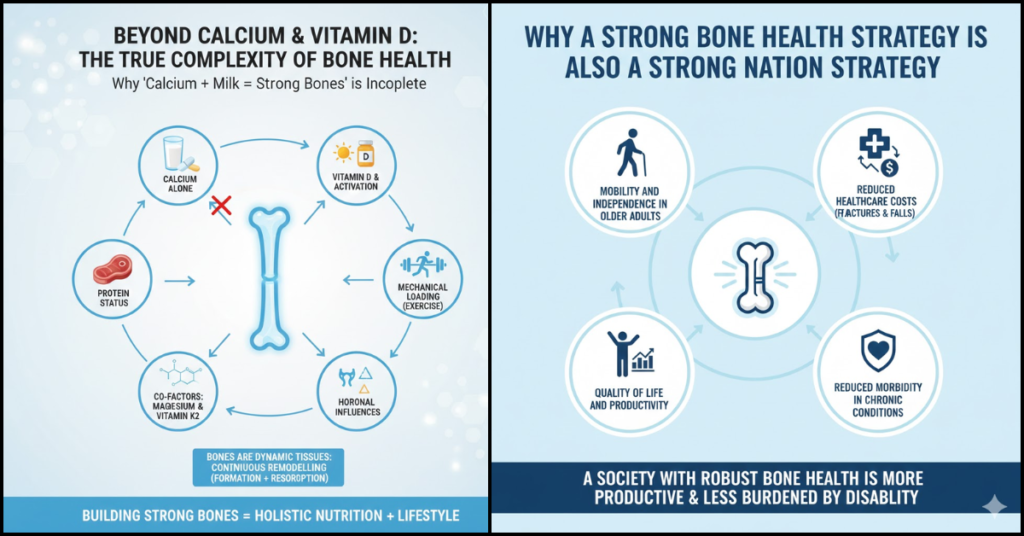
Creatine vs Protein vs Amino Acids: What to Take, When to Take Them, and Should You Combine Them?
Expert insights from Dr. Vinod Raj (Orthopedic Sports Medicine), Dr. Bhavesh (Sports Physiotherapist), Mrs. Lily John (Sports Nutrition Specialist), and Dr. Yoingder (Metabolic Specialist)
Introduction
Walk into any gym or sports clinic and you will hear the same question: “Should I take creatine or protein? Or amino acids? Or all three?”
The confusion is understandable because these supplements support muscle performance, recovery and growth—but through very different mechanisms.
- Creatine is about energy and strength.
- Protein is about muscle repair and growth.
- Amino acids are about instant muscle support and reduced fatigue.
Together, they create a powerful synergy. With the arrival of faster-absorbing formulations like Precimax Effervescent Creatine Granules, the combination strategies have become even more effective, especially for athletes, rehab patients, runners, and fitness beginners.
This blog explains how creatine, protein and amino acids differ, how to choose the right product, how to combine them safely, and who benefits the most.
Understanding the Biological Role of Each Supplement
To decide what to take, you must understand what each supplement actually does inside the body.
Creatine Monohydrate – Creatine increases phosphocreatine stores in muscles, which helps regenerate ATP—the molecule responsible for explosive strength.
Effects include:
- Increased strength
- Improved power output
- Better sprinting ability
- Reduced fatigue during high-intensity sets
- Enhanced cognitive energy
- Better recovery after injuries
Creatine monohydrate remains the gold standard, and effervescent creatine granules only improve absorption and comfort.
Protein Supplements – Protein (whey, casein, plant-protein blends) provides amino acids needed for muscle repair and hypertrophy.
Benefits include:
- Muscle building
- Faster recovery
- Reduced soreness
- Improved metabolic health
- Better fat loss outcomes
Protein is essential for anyone training regularly.
Amino Acids (EAAs/BCAAs)
Amino acids support:
- Immediate muscle repair
- Reduced muscle soreness
- Maintained performance during long workouts
- Preservation of lean mass during calorie deficit
Essential Amino Acids (EAAs) are complete;
Branched Chain Amino Acids (BCAAs) support energy and muscle protection.
Dr. Vinod Raj comments:
“Each supplement has a very distinct biological role. People get maximum benefit when they stop comparing and start combining them intelligently.”
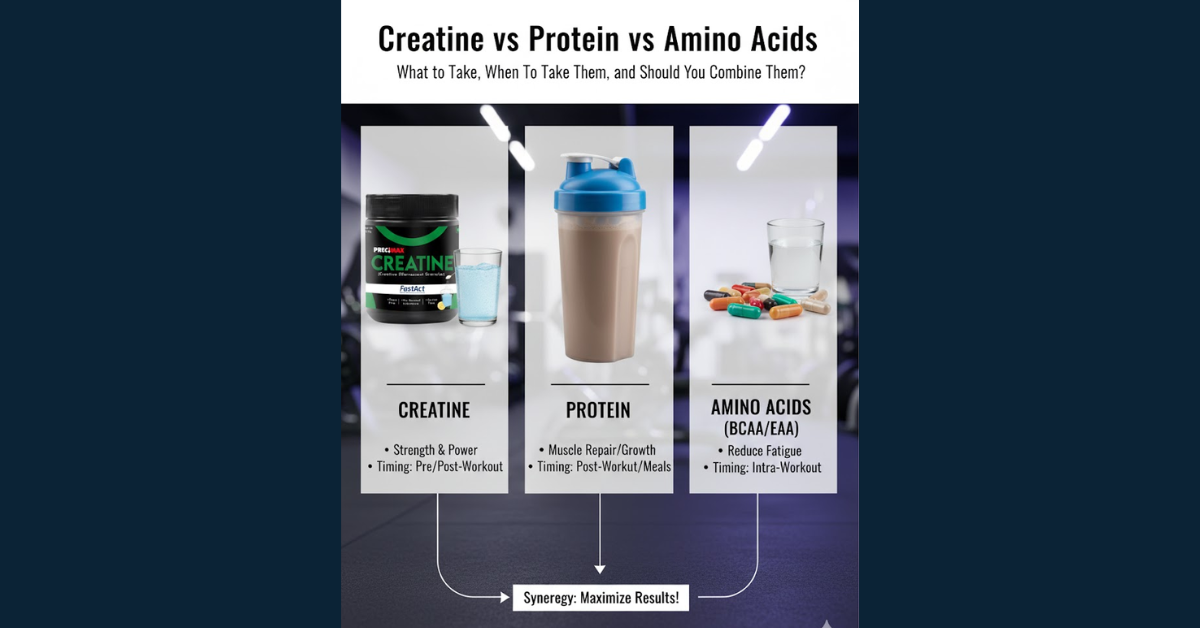
Creatine vs Protein: Which One Do You Need?
It depends on your goal.
Choose creatine if your primary goals include:
- Strength
- Power
- Muscle fullness
- Improved explosiveness
- Better sprint performance
- Faster injury rehab
Choose protein if your goals are:
- Muscle gain
- Fat loss with muscle retention
- Reduced soreness
- Overall health
Most people need both.
Creatine vs Amino Acids
Creatine improves energy and power; amino acids help reserve muscle during long training and reduce soreness. This makes amino acids ideal for endurance athletes, CrossFit, and high-volume weight training.
- Creatine + EAAs together improve:
- Hydration
- Recovery
- Training quality
- Strength output
Should You Take All Three? Yes. This is often the ideal combination.
How They Work Together
- Creatine improves explosive power.
- Protein builds muscle from training.
- Amino acids reduce fatigue and support immediate repair.
This combination is especially effective for:
1. Athletes
2. People on fat-loss programs
3. Marathoners
4. Older adults
5. Rehab patients recovering from injuries
Mrs. Lily John notes:
“When clients combine creatine, protein and amino acids correctly, their performance improves much faster. Strength, muscle tone, and endurance all go up simultaneously.”
Timing: When to Take Each Supplement
Below is a precise timing guide.
- Creatine
- Daily: 3–5 g
- Best time:
- Post-workout (fastest uptake)
- Or morning on rest days
Effervescent creatine granules improve absorption significantly and eliminate stomach discomfort.
Protein
1. Post-workout (within 30 minutes)
2. Or as a meal replacement anytime
3. Or before sleep (casein)
Amino Acids (EAAs/BCAAs)
1. Before workout (anti-fatigue)
2. During workout (endurance & hydration)
3. After workout if recovery is insufficient
How to Combine Them in One Routine
Here is a sample routine:
Pre-workout:
EAAs/BCAAs
Optional: part of your daily creatine dose
During workout:
Amino acids for endurance athletes
Post-workout:
Whey protein
Creatine effervescent granules
On rest days:
Creatine + morning protein shake
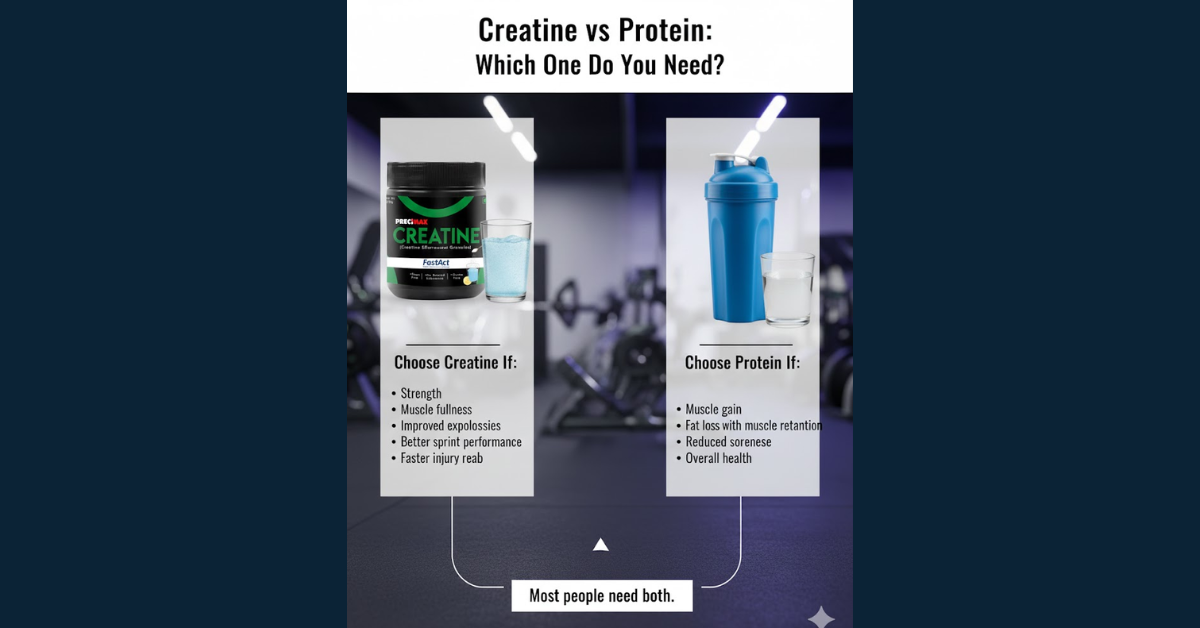
Who Should Use Creatine, Protein and Amino Acids?
Here is a clear profile of individuals who benefit the most.
- Athletes and Sprinters
Creatine enhances explosive performance.
Protein supports recovery.
Amino acids reduce fatigue. - Bodybuilders
Combination improves strength, hypertrophy and training volume. - Women
Women often benefit more from creatine because they have lower baseline muscle creatine stores. - Older Adults
Creatine + protein reduces sarcopenia and improves balance. - Vegetarians and Vegans
Creatine levels in muscles are naturally lower. - Marathoners
Amino acids preserve muscle
Creatine supports finishing strength
Protein aids recovery - Rehabilitation Patients
Creatine speeds strength recovery
Protein repairs tissue
Amino acids reduce soreness
Dr. Bhavesh adds:
“Rehab patients who combine creatine with protein recover strength faster and tolerate physiotherapy sessions better. This is especially true after knee injuries or surgeries.”
Contraindications and Safety
Creatine is safe for most individuals, but avoid or consult doctor if:
- You have kidney disease
- You have uncontrolled hypertension
- You are severely dehydrated
- You take nephrotoxic medications
Protein and amino acids are safe unless:
1. You have severe kidney dysfunction
2. You are on strict protein-restricted diets
Ideal Duration for Creatine Use, Creatine works best with long-term use.
Recommended duration:
1. 3–6 months
2. Break optional for 2–4 weeks
3. Effervescent creatine requires no loading phase
Why Effervescent Creatine is Better Than Powder for Combination Use
Creatine powders can cause discomfort when combined with protein because both draw water into the stomach. Effervescent creatine granules dissolve instantly and cause:
- No bloating
- No heaviness
- Better uptake
- Higher consistency
Dr. Yoingder explains:
“Effervescent creatine is metabolically efficient. It reduces the gastric load and enhances absorption, making it suitable even for individuals with sensitive digestion.”
Why Precimax Effervescent Creatine Granules Are the Ideal Choice for Combinations
- Fast absorption
- Comfortable with protein shakes
- No grit
- Ideal taste
- Better compliance
- Suitable for athletes and beginners
- Generates quicker muscle saturation
- Works for men, women and older adults
Frequently Asked Questions
- Do creatine and protein do the same thing?
No. Their mechanisms are completely different and complementary. - Can I mix creatine with my protein shake?
Yes. Effervescent creatine granules are especially easy to combine. - Should I take amino acids with creatine?
Yes. They serve different roles and work very well together. - Does creatine cause weight gain?
Creatine increases muscle hydration, not fat gain. - Is creatine safe for women?
Yes. Women respond very well to creatine. - Can creatine help during weight loss?
Yes. It protects muscle mass. - What about vegetarians?
Creatine supplementation is highly beneficial for vegetarians. - Is it necessary to cycle creatine?
Not mandatory. But a short break can be used if desired. - Does creatine affect the kidneys?
Not in healthy individuals. - Can older adults take creatine?
Yes. It improves muscle and bone health. - Can creatine replace protein?
No. Protein is necessary for muscle repair; creatine is for strength and energy.
Conclusion
Creatine, protein and amino acids are not competitors—they are teammates. Each supplement supports different biological pathways, and the combination delivers exceptional results in strength, recovery, fat loss, injury rehabilitation, and endurance.
- Creatine improves energy and power.
- Protein repairs and builds muscle.
- Amino acids reduce fatigue and speed recovery.
With modern, high-absorption formulations like Precimax Effervescent Creatine Granules, users get the same proven benefits of creatine monohydrate—with faster absorption, better comfort, and higher real-world results.