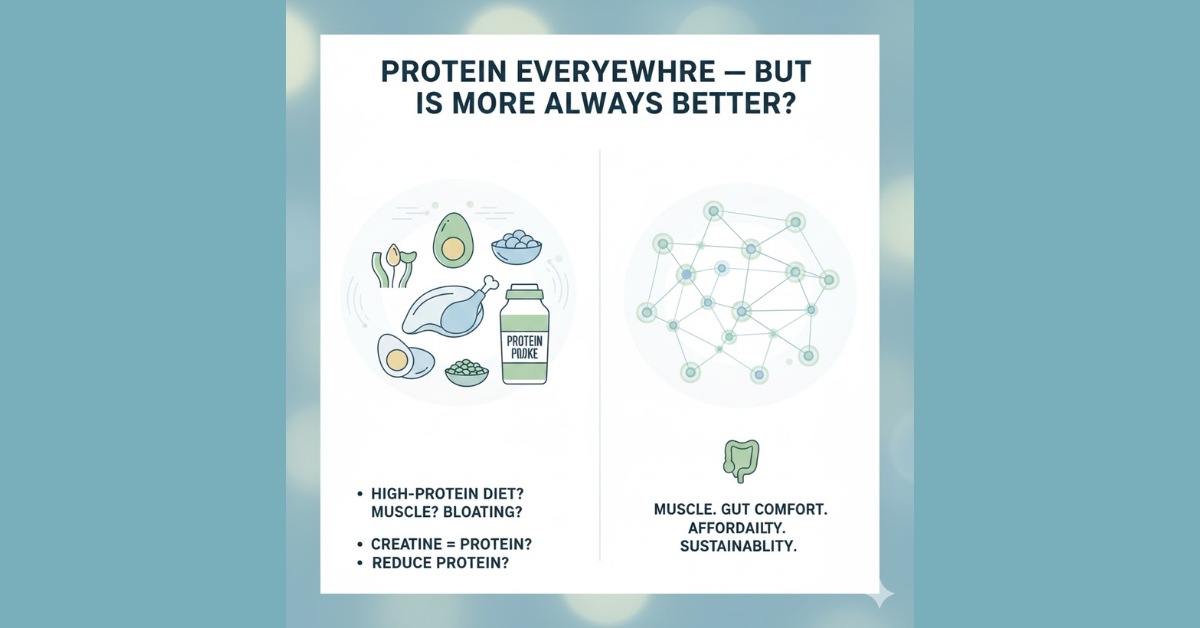
Introduction: Protein Everywhere — But Is More Always Better?
High-protein diets have gone mainstream. From gym culture to Instagram nutrition reels, protein is now marketed as the single most important nutrient for muscle health. Protein powders, bars, shakes, and fortified foods are increasingly common in Indian households — not just among athletes, but also among working professionals, women, and older adults.
At the same time, confusion has grown.
Patients and consumers often ask:
- Do I need very high protein to build or maintain muscle?
- Is creatine the same as protein?
- Can creatine reduce the need for excessive protein intake?
- Why do high-protein diets cause bloating or digestive discomfort?
This blog answers these questions practically and scientifically, focusing on muscle health, gut comfort, affordability, and long-term sustainability, rather than extreme trends.
Understanding Muscle Nutrition – Protein vs Creatine
Protein: The Building Block
Protein provides amino acids essential for:
- Muscle repair after exercise
- Muscle growth and maintenance
- Enzyme and hormone production
Adequate protein intake is non-negotiable for muscle health. However, protein’s role is primarily structural — it builds and repairs tissue.
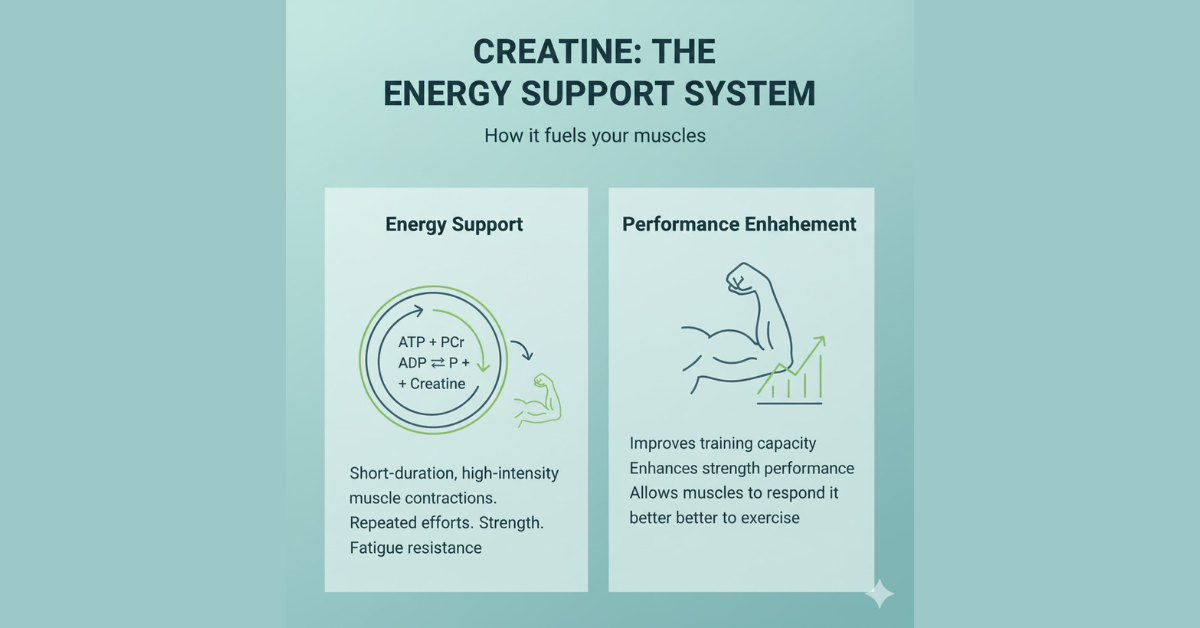
Creatine: The Energy Support System
Creatine functions very differently.
Creatine supports the ATP–phosphocreatine system, which fuels:
- Short-duration, high-intensity muscle contractions
- Repeated efforts during resistance training
- Strength output and fatigue resistance
Creatine does not directly “build” muscle like protein. Instead, it:
- Improves training capacity
- Enhances strength performance
- Allows muscles to respond better to exercise
This is why bodybuilding supplement creatine has moved beyond gyms into rehabilitation and clinical practice.
High-Protein Diets – Benefits and Common Pitfalls
Benefits of Higher Protein Intake
High-protein diets can:
- Preserve muscle during weight loss
- Improve satiety
- Support recovery in active individuals
- Reduce age-related muscle loss
For many Indians consuming carbohydrate-heavy diets, increasing protein intake is beneficial.
Common Pitfalls in the Indian Context
1. Gut Discomfort
Many people report:
- Bloating
- Acidity
- Constipation
- Loose stools
This is common when:
- Protein intake is increased suddenly
- Whey or plant protein tolerance is poor
- Fiber and hydration are inadequate
2. Poor Long-Term Compliance
Very high protein intake often leads to:
- Taste fatigue
- Meal planning difficulties
- Appetite limitations (especially in women and the elderly)
3. Cost Burden
Sustaining very high protein through:
- Animal protein
- Multiple protein supplements
…can become expensive and impractical for Indian households.
From “Maximum Protein” to “Optimal Protein”
Muscle health outcomes improve when the focus shifts to:
- Adequate, consistent protein
- Improved muscle performance
- Reduced digestive stress
This is where best creatine supplements become clinically relevant.
Where Creatine Fits into a Smart Nutrition Strategy
Creatine allows muscle performance enhancement without increasing protein load.
Key Advantages
- Improves strength without extra calories
- Requires only 3–5 g daily
- Does not burden digestion
- Works synergistically with moderate protein intake
This is why natural creatine supplements are now widely used beyond bodybuilding.
Gut-Friendly Compared to Excess Protein
Unlike large protein servings, creatine:
- Does not require complex digestion
- Does not ferment in the gut
- Does not increase nitrogen waste
This makes creatine useful for individuals with sensitive digestion or IBS-like symptoms.
Long-Term Affordability
From a cost perspective:
- Creatine is significantly more affordable than sustained high protein intake
- Small daily doses improve adherence
- Products like bulk supplements creatine monohydrate offer cost-effective options
Dr. Vasandra, Senior Physiotherapist:
“Many patients push protein higher and higher yet struggle with bloating and fatigue. When protein is optimized and creatine is added, exercise tolerance and consistency improve.”
Application Across Different Populations
Sportsmen and Athletes
- Higher creatine turnover due to training volume
- Supports repeated sessions
- Enhances strength without calorie overload
Women Aiming for Strength
- Many women struggle with very high protein intake
- Creatine supplements for women support strength without increasing food volume
- Helpful during perimenopause and menopause
Elderly Individuals
- Reduced appetite limits protein intake
- Creatine supports strength alongside physiotherapy
- Improves functional independence
Vegans and Vegetarians
- Dietary creatine intake is naturally low
- High plant-protein intake may worsen gut symptoms
- Creatine supplementation fills a nutritional gap
Rehabilitation Patients
- Appetite often reduced post-injury or surgery
- Creatine supports muscle preservation during physiotherapy
- Maximizes benefits from limited nutrition
Creatine + Protein Supplements – How to Combine Them Wisely
When Protein Supplements Are Necessary
- Inadequate dietary protein
- High training demands
- Poor appetite
Protein supplements should fill gaps, not replace meals.
When Creatine Adds Value
- When protein intake is already adequate
- When gut tolerance limits further protein increase
- When strength and recovery are priorities
Creatine enhances performance without digestive overload.
Simple Daily Routine
- Normal balanced meals
- Protein supplement only if needed
- Creatine once daily (3–5 g), consistently
- Combined with resistance training or physiotherapy
Consistency matters more than timing.
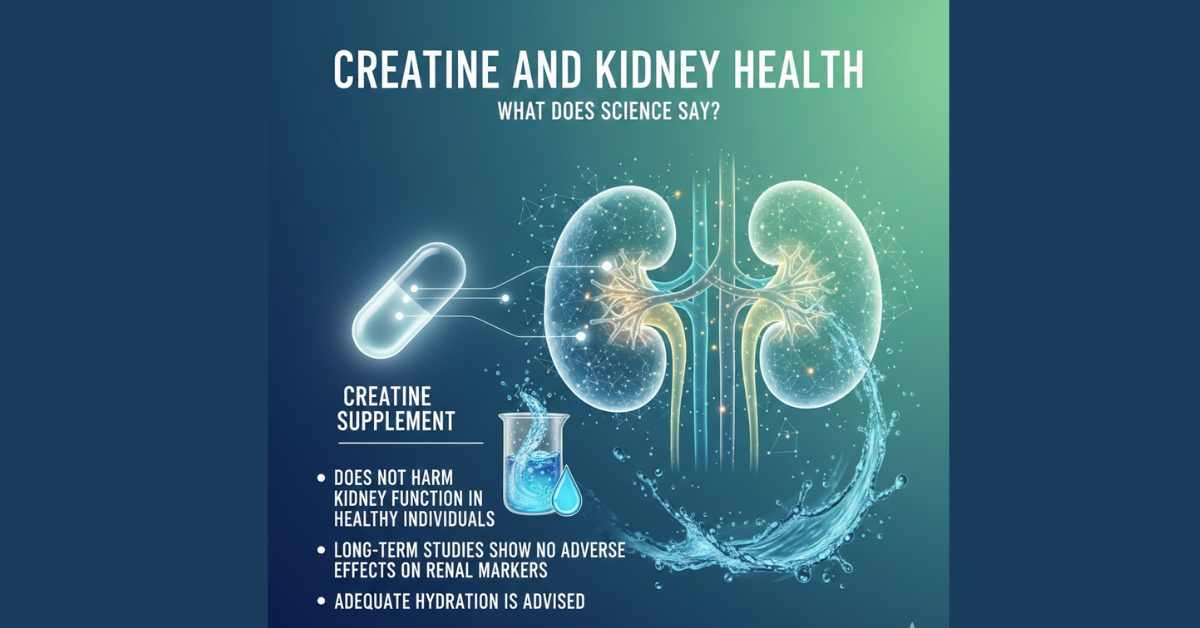
Creatine and Kidney Health – What Does Science Say?
Concerns about creatine supplement effect on kidneys are common.
Current evidence shows:
- Creatine does not harm kidney function in healthy individuals
- Long-term studies show no adverse effects on renal markers
- Adequate hydration is advised
Creatine should be avoided or used only under medical supervision in individuals with pre-existing kidney disease, not in healthy adults.
Recent Scientific Evidence – Creatine in Knee Osteoarthritis Rehabilitation
Scientific Study Published: 1 December 2025
A randomized controlled trial published on 1 December 2025 examined whether adding creatine supplementation to physical therapy and resistance exercise could enhance outcomes in individuals with knee osteoarthritis (KOA).
The study included 40 adults aged 40–70 years with mild to moderate KOA. Participants received standard physiotherapy and resistance training, along with either creatine supplementation or a placebo, over four weeks.
Key Findings
Compared to physiotherapy and exercise alone, the group receiving creatine showed:
- Greater reduction in knee pain
- Improved functional scores (KOOS)
- Better muscle strength and body composition
- Reduced fall risk
No additional benefits were observed for knee range of motion or quality-of-life scores.
Gut Sense and Purse Sense – The Indian Perspective
Affordability
- Creatine is cost-effective
- Reduces dependence on multiple protein servings
Sustainability
- Easy daily routine
- No taste fatigue
- No cooking burden
Adherence Over Extremes
Indian dietary success depends on:
- Simplicity
- Digestive comfort
- Practical affordability
Creatine fits naturally into this framework.
Frequently Asked Questions (FAQs)
1. Is creatine the same as protein?
No. Protein provides amino acids for muscle repair, while creatine supports muscle energy and strength during exercise.
2. Do I need very high protein to build muscle?
No. Adequate protein is enough when combined with resistance training and creatine support.
3. Can creatine reduce the need for excessive protein intake?
Creatine does not replace protein, but it helps muscles respond better to training without increasing protein load.
4. Is creatine only for bodybuilders?
No. Creatine is now widely used in rehabilitation, physiotherapy, aging populations, and general strength training.
5. Are creatine supplements safe for long-term use?
Yes, studies show creatine is safe for healthy individuals when taken in recommended doses.
6. What is the effect of creatine supplementation on kidneys?
Research shows no harmful effect on kidney function in healthy individuals. Those with kidney disease should consult a doctor.
7. Can women take creatine supplements?
Yes. Creatine supplements for women support strength, muscle maintenance, and training capacity without causing weight gain.
8. Will creatine cause bloating or digestive issues?
Creatine is generally gut-friendly and causes fewer digestive issues than very high protein intake.
9. Is creatine suitable for vegetarians and vegans?
Yes. Since dietary creatine is mainly found in animal foods, supplementation is especially useful for vegetarians and vegans.
10. Can elderly individuals benefit from creatine?
Yes. Creatine helps maintain muscle strength and function, especially when combined with physiotherapy or resistance exercise.
11. Does creatine help in knee osteoarthritis?
Recent studies show creatine can improve pain, muscle strength, and function when used alongside physiotherapy and exercise.
12. When should I take creatine?
Timing is flexible. Daily consistency matters more than the exact time of intake.
13. How much creatine should I take daily?
A daily dose of 3–5 g is sufficient for most people.
14. Do I still need protein supplements if I take creatine?
Protein supplements are useful if dietary protein is inadequate. Creatine adds performance benefits but does not replace protein.
15. What is the best form of creatine to use?
Creatine monohydrate is the most researched, effective, and affordable form, making it the best choice for most individuals.
Clinical Takeaway
This study suggests that creatine supplementation can enhance the effectiveness of physiotherapy and resistance exercise in knee osteoarthritis by improving pain, strength, and functional capacity — without replacing rehabilitation, but by supporting the muscle’s ability to respond to it.