Introduction: Why SIBO and SIFO Are Increasingly Recognized
Digestive complaints such as bloating, gas, abdominal discomfort, food intolerance, and irregular bowel movements are becoming increasingly common. While often labeled as simple indigestion or IBS, research increasingly links these symptoms to microbial imbalance in the small intestine, particularly Small Intestinal Bacterial Overgrowth (SIBO) and Small Intestinal Fungal Overgrowth (SIFO).
Understanding how these conditions develop, how they are diagnosed, available treatment options, and the role of evidence-based complementary formulations like SIBOWel can help individuals and practitioners adopt a more comprehensive gut health strategy.
This article is educational and not intended as medical advice.
What Is Small Intestinal Bacterial Overgrowth (SIBO)?
SIBO occurs when excessive bacteria colonize the small intestine, where microbial counts are normally much lower than in the large intestine.
This imbalance can:
Disrupt digestion of carbohydrates and fats
Interfere with vitamin and mineral absorption
Increase gas production leading to bloating
Alter gut motility
Affect intestinal lining integrity
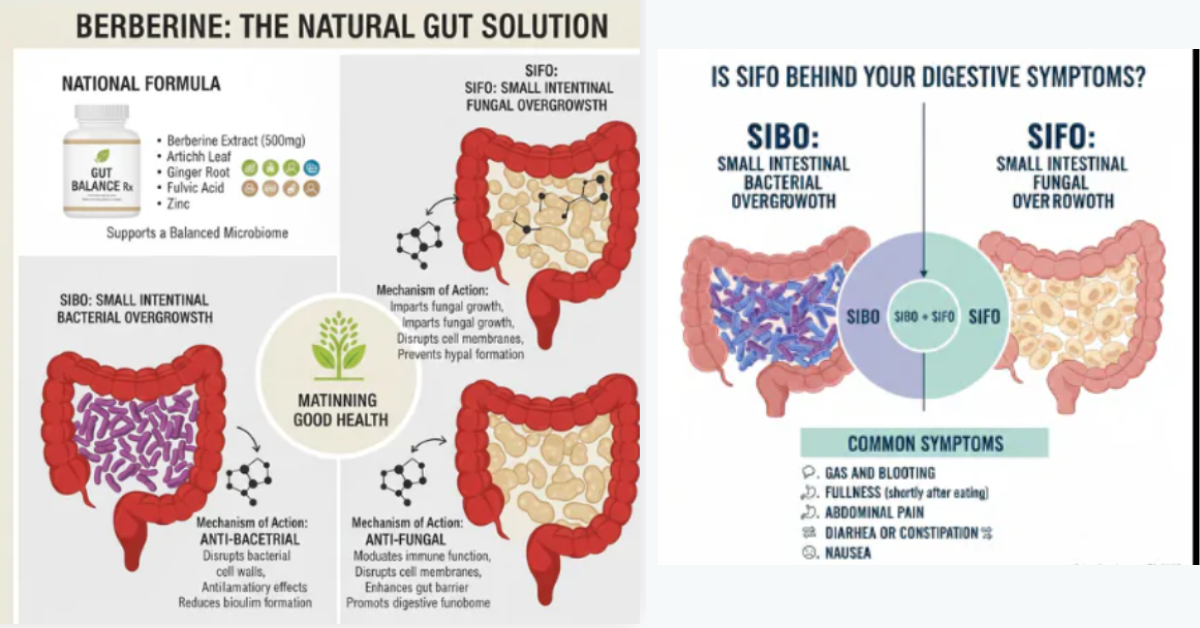
SIFO, on the other hand, involves fungal overgrowth, commonly yeast species, which may coexist with SIBO and complicate symptom management.
Incidence and Prevalence of SIBO and SIFO
SIBO prevalence is higher than previously thought.
Clinical observations suggest:
Around 10 to 20 percent of adults may experience SIBO-like symptoms
Up to 60 percent of IBS patients test positive for SIBO
Higher incidence occurs in diabetes, hypothyroidism, chronic PPI users, elderly individuals, and post-surgical patients
SIFO remains underdiagnosed because fungal testing is less routinely performed, yet persistent digestive symptoms despite antibiotics often raise suspicion.
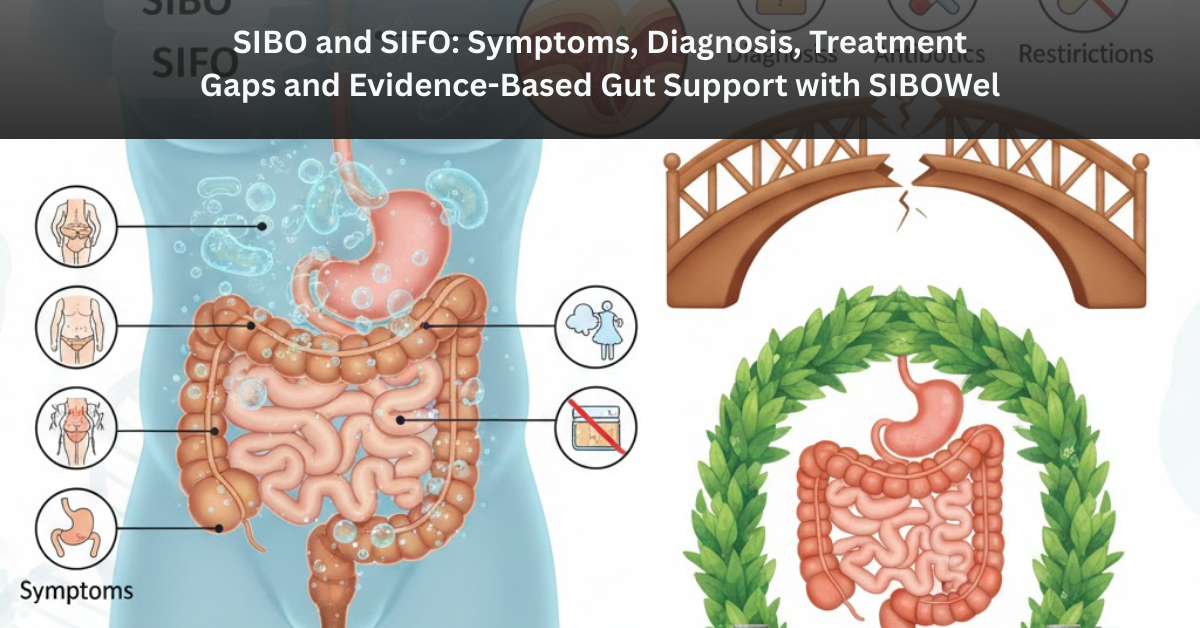
Common Symptoms of SIBO and SIFO
- Persistent bloating after meals
- Excess gas and abdominal distension
- Early satiety or heaviness
- Irregular bowel habits including diarrhea or constipation
- Food intolerance
- Fatigue and nutrient deficiencies in prolonged cases
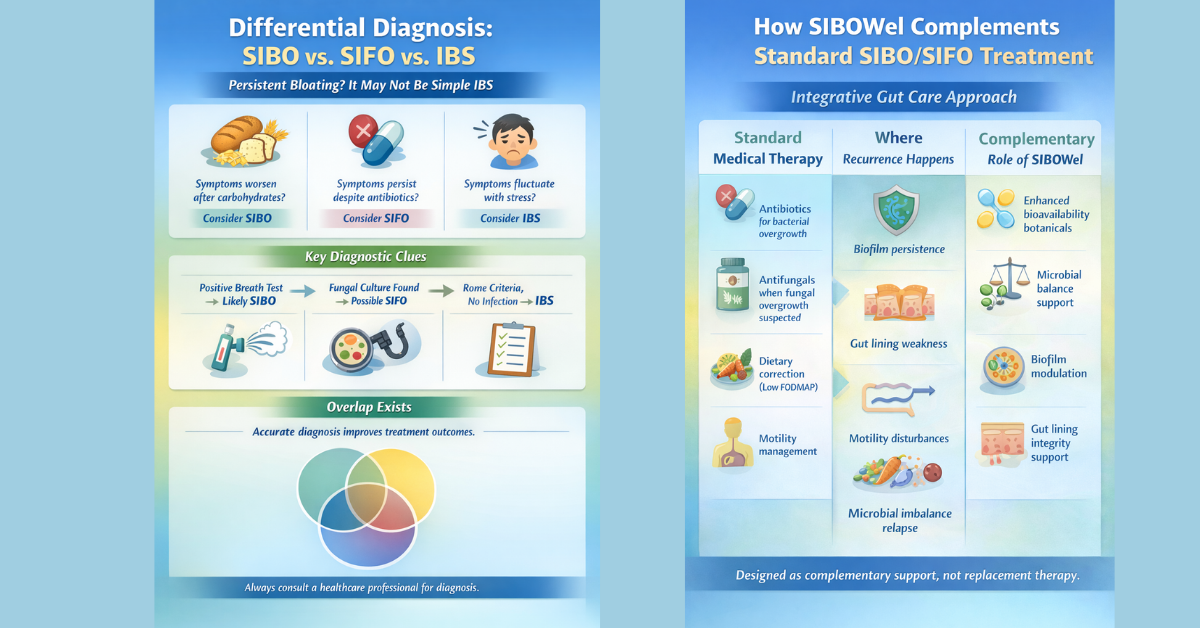
These symptoms overlap with IBS, making accurate diagnosis essential.
SIBO vs SIFO vs IBS
| Feature | SIBO (Small Intestinal Bacterial Overgrowth) | SIFO (Small Intestinal Fungal Overgrowth) | IBS (Irritable Bowel Syndrome) |
|---|---|---|---|
| Primary cause | Excess bacteria in small intestine | Excess fungal organisms, commonly yeast | Functional gut disorder without defined infection |
| Main mechanism | Early fermentation of carbohydrates, impaired motility | Fungal colonization, mucosal irritation, immune activation | Gut-brain axis dysfunction, motility alteration |
| Common symptoms | Bloating, gas, abdominal pain, diarrhea/constipation | Persistent bloating, belching, sugar intolerance, fatigue | Abdominal pain, altered bowel habits |
| Diagnosis | Breath hydrogen/methane test, aspirate culture | Endoscopic aspirate culture, clinical suspicion | Symptom-based Rome criteria |
| Nutrient malabsorption | Common (B12, iron, fat-soluble vitamins) | Possible in chronic cases | Less common |
| Response to antibiotics | Often improves initially | Usually limited unless antifungal used | Variable |
| Recurrence tendency | High without motility correction | Can recur if fungal triggers persist | Chronic but non-infectious |
| Role of gut microbiome | Direct microbial imbalance | Fungal microbiome imbalance | Functional dysregulation |
How SIBO and SIFO Are Diagnosed
Breath Testing for SIBO
Hydrogen and methane breath tests using lactulose or glucose are widely used. Elevated gas levels indicate abnormal bacterial fermentation in the small intestine.
Endoscopic Aspirate Testing
This is considered a gold standard but is invasive and less commonly performed.
Clinical Evaluation
Doctors evaluate symptoms, medication history, diet, motility disorders, and associated medical conditions.
SIFO Diagnosis
Often requires endoscopic culture or clinical suspicion when symptoms persist after antibacterial therapy.
Emerging microbiome testing technologies may improve accuracy in future.
Current Treatment Approaches for SIBO and SIFO
- Antibiotics for bacterial overgrowth
- Antifungals when fungal overgrowth is suspected
- Low FODMAP or targeted dietary approaches
- Prokinetic therapy to improve gut motility
- Correction of nutritional deficiencies
These interventions often provide relief but recurrence remains common.
Gaps in Current SIBO/SIFO Treatment Strategies
- Recurrence after antibiotics is frequent
- Biofilm-protected microbes may resist treatment
- Gut lining damage is not always addressed
- Motility dysfunction often persists
- Antibiotics do not address fungal overgrowth simultaneously
- Some botanical antimicrobials have poor absorption
These limitations have encouraged exploration of integrative approaches including targeted phytoceutical support.
Treatment Options for SIBO and SIFO
| Treatment Category | SIBO | SIFO |
|---|---|---|
| Antibiotics | Rifaximin, combination therapy in some cases | Not effective |
| Antifungal drugs | Not primary therapy | Fluconazole, nystatin etc. under medical supervision |
| Dietary management | Low FODMAP, carbohydrate restriction | Reduced refined sugar, yeast-supportive foods |
| Prokinetic agents | Important to prevent recurrence | Helpful if motility impaired |
| Nutritional correction | B12, iron, vitamin D, digestive enzymes | Micronutrient correction as needed |
| Phytoceutical adjuncts | Botanical antimicrobials, biofilm disruptors | Antifungal botanicals, mucosal support |
| Gut barrier support | Zinc, glutamine, anti-inflammatory nutrients | Similar supportive role |
| Microbial balance strategy | Complementary phytoceuticals like SIBOWel | Complementary phytoceuticals including antifungal botanicals |
Role of Evidence-Based Phytoceuticals in Complementary Gut Care
Evidence-based formulations like SIBOWel are designed to complement conventional care rather than replace it.
Scientific rationale includes:
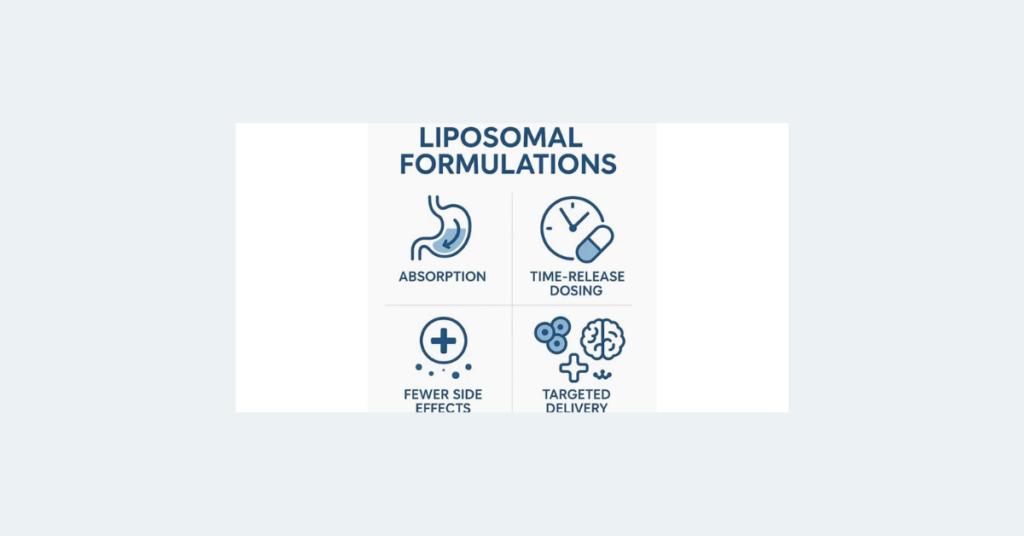
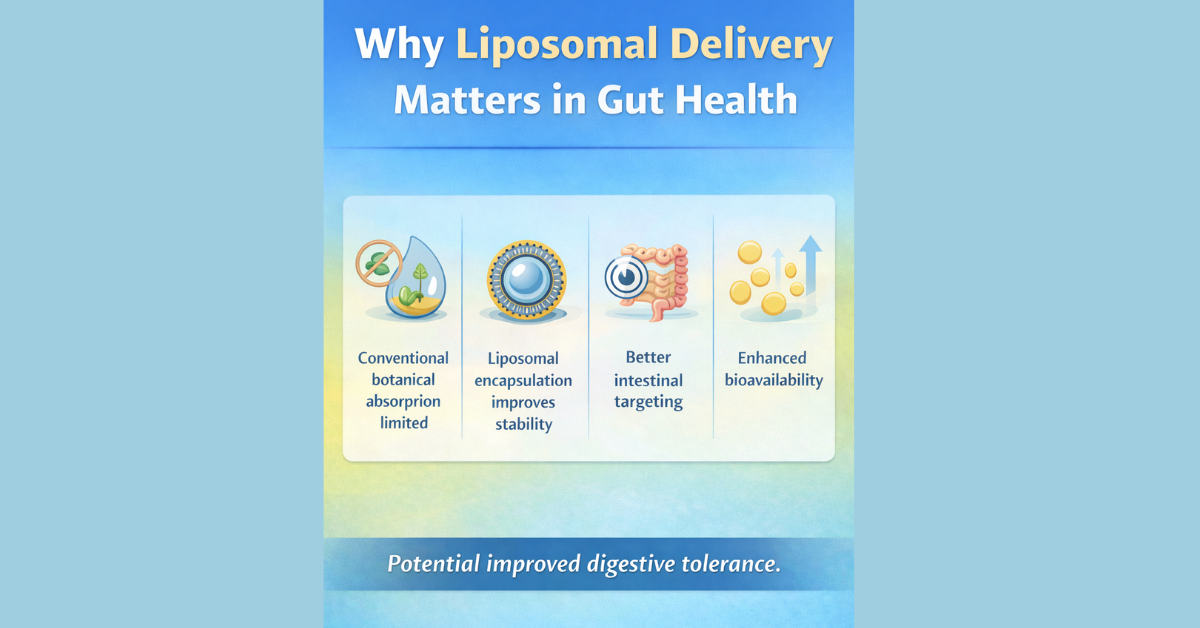
- Improved bioavailability through liposomal delivery systems
- Targeted microbial modulation rather than indiscriminate suppression
- Biofilm disruption support
- Gut lining and mucosal support
- Immune modulation within the gut ecosystem
- Motility and digestive function support
Liposomal berberine, for example, demonstrates enhanced absorption compared with standard berberine, potentially improving gut activity while reducing gastrointestinal irritation.
How SIBOWel May Support Gut Balance
SIBOWel integrates botanical antimicrobials, bioavailability-enhancing delivery systems, and gut supportive nutrients.
Potential complementary benefits include:
- Supporting microbial balance in the small intestine
- Reducing bloating and digestive discomfort
- Supporting intestinal barrier function
- Helping maintain balanced gut immunity
- Improving tolerance to diverse foods
- Supporting long-term gut stability
It should be used alongside professional medical guidance when required.
Conventional Probiotics vs SIBOWel
| Parameter | Conventional Probiotics | SIBOWel Evidence-Based Phytoceutical |
|---|---|---|
| Primary goal | Add beneficial bacteria | Modulate microbial balance |
| Mechanism | Colonization support | Antimicrobial balance + biofilm modulation |
| Action on fungal overgrowth | Limited | Includes antifungal botanical support |
| Biofilm disruption | Minimal | Designed to support biofilm modulation |
| Gut barrier support | Some strains help | Includes dedicated mucosal support nutrients |
| Bioavailability technologies | Rare | Liposomal delivery enhances absorption |
| Use during active SIBO | Sometimes debated | Often used as complementary support |
| Focus | Microbial addition | Microbial balance + gut environment correction |
Lifestyle Factors That Improve Outcomes
- Dietary discipline and mindful eating
- Regular meal timing
- Stress reduction strategies
- Adequate hydration
- Avoiding unnecessary antibiotic exposure
- Balanced fiber intake
These factors strongly influence gut microbial stability.
SIBOWel Ingredients and Mechanism of Action
| Ingredient Category | Example Ingredient Type | Mechanism of Action |
|---|---|---|
| Liposomal botanical antimicrobial | Liposomal berberine | Improved absorption, antimicrobial modulation |
| Antifungal botanical compounds | Plant-derived antifungal extracts | Supports fungal balance |
| Biofilm modulation agents | Botanical polyphenols | Helps disrupt microbial biofilm |
| Gut lining support nutrients | Zinc, amino acids | Supports mucosal integrity |
| Digestive support cofactors | Enzyme-supporting nutrients | Improves digestion efficiency |
| Immune modulation components | Plant bioactives | Supports gut immune balance |
| Motility supportive nutrients | Botanical digestive aids | Supports intestinal movement |
Final Perspective on SIBO, SIFO and Integrative Gut Health
SIBO and SIFO are complex conditions involving microbial imbalance, motility issues, immune responses, and intestinal integrity. Effective management often requires a multi-pronged approach including medical therapy, dietary modification, and targeted gut support.
Evidence-based phytoceuticals like SIBOWel can play a complementary role by addressing microbial balance, bioavailability challenges, gut lining health, and digestive resilience.
Long-term gut health depends on consistency, lifestyle alignment, and scientifically informed interventions.