Why Advanced Delivery Technology Matters More Than Purity
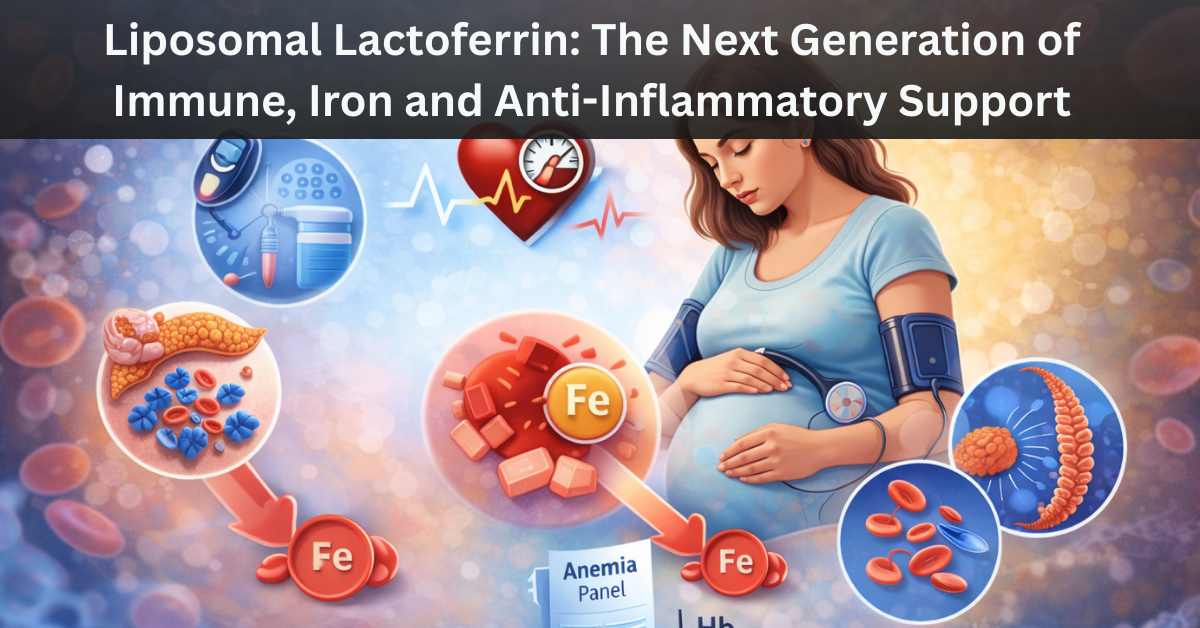
Lactoferrin has emerged as one of the most promising natural bioactive proteins in modern nutraceutical science. Found naturally in human colostrum, milk, and mucosal secretions, lactoferrin plays a vital role in immune regulation, iron metabolism, antimicrobial defense, and control of inflammation.
However, a major scientific limitation has long restricted the clinical potential of oral lactoferrin supplements.
Despite high purity levels, a large portion of conventional lactoferrin is degraded in the stomach before it can exert its biological functions.
This is where liposomal technology represents a major advancement.
Products like LF-Max – Liposomal Lactoferrin are designed to protect lactoferrin during gastrointestinal transit, ensuring that a significantly larger fraction of the protein remains intact and biologically active when it reaches the intestine and immune system.
Understanding Lactoferrin: A Multifunctional Protective Protein
Lactoferrin belongs to the transferrin family of iron-binding glycoproteins and is a key component of the innate immune system.
Research has demonstrated that lactoferrin plays roles in:
- Immune modulation
- Regulation of inflammatory pathways
- Antimicrobial defense against bacteria and viruses
- Support of intestinal barrier function
- Regulation of iron absorption and metabolism
Scientific reviews by Legrand (2012) and Actor et al. (2009) highlight lactoferrin as a critical molecule involved in immune and inflammatory processes.
Because of these broad biological actions, lactoferrin has been studied in conditions such as:
- Iron deficiency anemia
- Inflammatory disorders
- Respiratory infections
- Gut dysbiosis
- Metabolic inflammation
- Viral infections
However, oral supplementation presents a significant challenge.
The Problem with Conventional Lactoferrin Supplements
Lactoferrin is a large protein molecule, which makes it vulnerable to digestive degradation.
Once consumed orally, it encounters:
Gastric acidity
Proteolytic enzymes such as pepsin and trypsin
These digestive processes can partially break down the protein before it reaches the intestine, reducing the amount of intact lactoferrin available for absorption and biological activity.
Research studies have confirmed that bovine lactoferrin undergoes significant digestion in the stomach, limiting the delivery of intact bioactive protein to target tissues.
This explains an important clinical observation:
Even high-purity or high-dose conventional lactoferrin may fail to deliver consistent clinical outcomes, because the molecule may not survive the digestive tract intact.
In simple terms:
Higher dose does not necessarily mean better efficacy.
What truly matters is how much active lactoferrin reaches the intestine and immune system.
Liposomal Technology: A Major Breakthrough
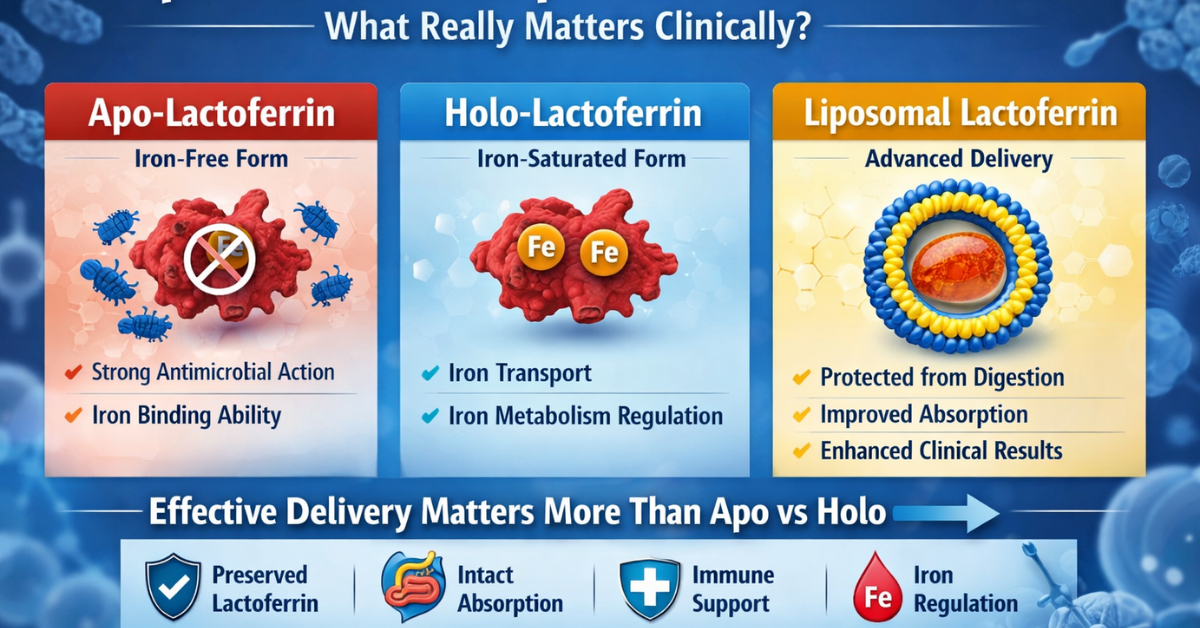
Liposomal delivery systems encapsulate bioactive molecules within phospholipid vesicles that closely resemble human cell membranes.
These microscopic lipid spheres act like protective carriers, shielding sensitive molecules during digestion.
When lactoferrin is encapsulated in liposomes, several advantages occur:
- Protection from gastric acidity and digestive enzymes
- Improved stability during gastrointestinal transit
- Enhanced interaction with intestinal epithelial cells
- Improved delivery of intact bioactive protein
Liposomes have long been studied in pharmaceutical research because they can increase stability, bioavailability, and cellular uptake of delicate molecules.
For lactoferrin specifically, liposomal encapsulation helps ensure that the protein reaches the intestine in its biologically active form, allowing it to interact effectively with immune receptors and gut-associated lymphoid tissue.
Conventional Lactoferrin vs Liposomal Lactoferrin
The difference between the two technologies is clinically significant.
| Parameter | Conventional Lactoferrin | Liposomal Lactoferrin |
|---|---|---|
| Structural protection | Exposed to stomach acid and digestive enzymes | Protected within phospholipid liposomes |
| Stability in stomach | Partial degradation by pepsin and acid | Significantly protected |
| Bioavailability | Limited intact protein reaches intestine | Higher delivery of intact lactoferrin |
| Absorption | Mainly receptor-mediated uptake | Dual pathway: receptor uptake + liposome fusion |
| Immune interaction | Reduced if degraded | Greater interaction with immune cells |
| Systemic availability | Limited circulation | Improved intestinal transport |
| Dose efficiency | Often requires higher doses | Lower doses may provide stronger effect |
| Clinical consistency | Variable between individuals | More predictable outcomes |
These findings demonstrate that liposomal lactoferrin provides better structural protection, absorption efficiency, and clinical reliability.
Evidence Supporting Liposomal Lactoferrin
Several studies have highlighted the superior biological activity of liposomal lactoferrin.
In vitro research comparing free and liposomal lactoferrin found that liposomal formulations exhibited stronger antiviral activity against coronavirus strains including HCoV-229E and SARS-CoV-2 pseudoviruses.
Another study reported that liposomal lactoferrin improved intestinal stability and bioactivity, protecting the molecule from enzymatic degradation and enhancing therapeutic effectiveness.
Additional experimental findings have suggested that liposomal lactoferrin may also help:
Reduce neuroinflammation
Improve sleep quality and jetlag recovery
Enhance intestinal repair mechanisms
These findings support the concept that delivery technology can dramatically influence clinical outcomes.
LF-Max: Advanced Liposomal Lactoferrin
LF-Max represents a next-generation liposomal lactoferrin formulation designed to maximize the biological potential of this powerful protein.
By encapsulating lactoferrin in phospholipid liposomes, LF-Max aims to:
- Protect lactoferrin from digestive degradation
- Enhance intestinal absorption
- Improve immune signaling
- Support iron metabolism more effectively
- Provide more predictable clinical outcomes
This approach allows lower or moderate doses of lactoferrin to achieve stronger biological activity, compared to high doses of conventional formulations.
Clinical Applications of Liposomal Lactoferrin
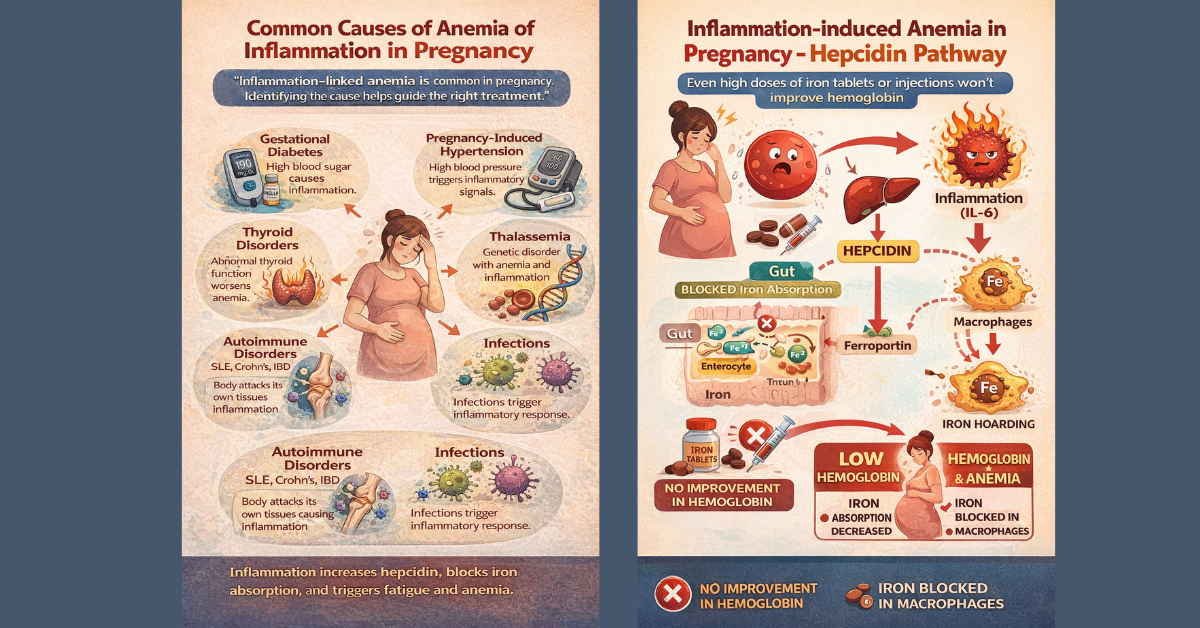
Iron Deficiency with Inflammation
Unlike conventional iron supplements that may worsen oxidative stress or gastrointestinal discomfort, lactoferrin helps regulate iron metabolism through physiological pathways.
Dr Padmavathi, Gynecologist – Bengaluru
“Many women with anemia also have chronic inflammation where conventional iron supplements fail to produce optimal response. In my clinical practice, LF-Max liposomal lactoferrin has shown better hemoglobin improvement and improved tolerability, especially in patients with inflammatory anemia.”
Immune System Support
Lactoferrin interacts with immune cells in the gut-associated lymphoid tissue (GALT), helping regulate immune responses.
Because liposomal technology improves delivery of intact lactoferrin, immune signaling may become more efficient.
Viral Infections and Respiratory Health
During the COVID-19 pandemic, lactoferrin attracted attention for its potential antiviral and immune-modulating effects.
Dr Sathish Malhotra, Pulmonologist – Kolkata
“During the SARS-CoV-2 outbreak, we used liposomal lactoferrin in several patients as an adjunct immune support strategy. Compared with standard lactoferrin, the liposomal form showed more consistent clinical response, particularly in recovery phase and inflammatory control.”
Laboratory research supports these observations, demonstrating stronger antiviral activity of liposomal lactoferrin compared with its free form.
Gut Health and Microbiome Support
Lactoferrin contributes to:
- Protection of intestinal mucosa
- Modulation of gut microbiota
- Reduction of pathogenic bacterial growth
Because liposomal encapsulation increases intestinal availability, these benefits may become more pronounced.
Expert Insight from Nutraceutical Research
Dr Sundar
Head of R&D, Precimax Life Sciences
“Many clinicians focus on ingredient purity alone. However, in protein-based nutraceuticals like lactoferrin, delivery technology determines clinical success. Without protection from gastric degradation, even high-quality lactoferrin may lose its biological potency. Liposomal delivery helps preserve structural integrity and ensures that active lactoferrin reaches the immune system.”
Why Liposomal Lactoferrin Is Clinically Superior
The key advantage of liposomal lactoferrin is not just improved absorption — it is preservation of biological function.
When lactoferrin remains structurally intact:
- It can bind iron effectively
- Interact with immune receptors
- Modulate inflammatory pathways
- Exert antimicrobial effects
This is why liposomal formulations like LF-Max may deliver more consistent clinical results compared with conventional lactoferrin supplements.