Introduction: The Changing Face of Arthritis in India
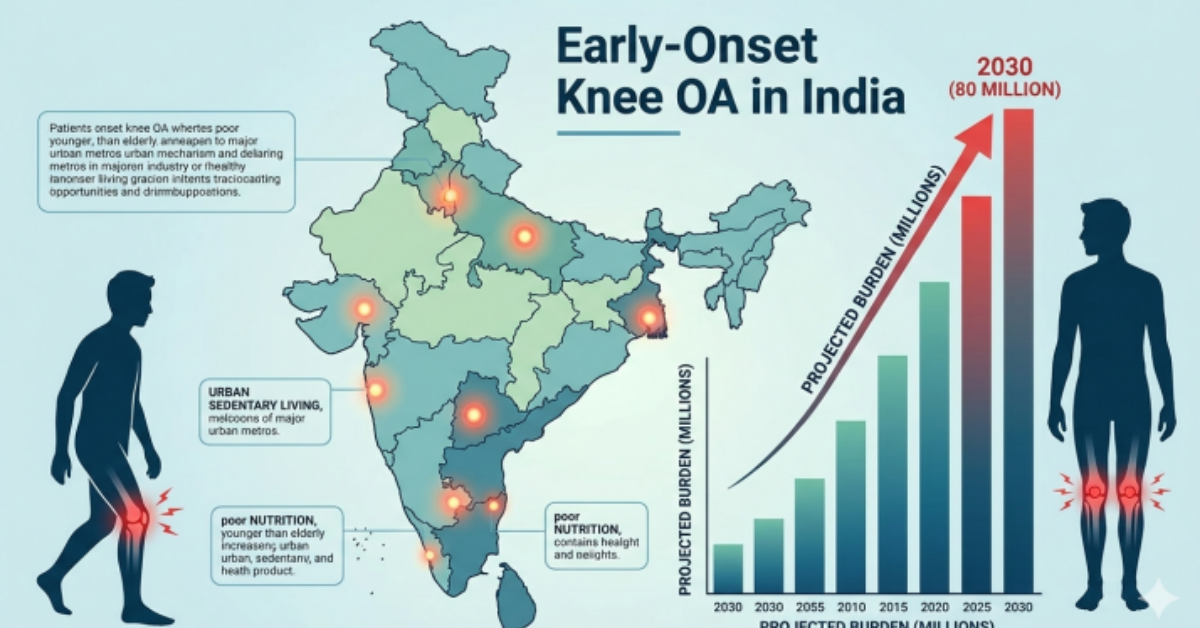
Osteoarthritis (OA) of the knee was once a predictable milestone of the 70s—a “gray hair of the joints.” However, India is currently witnessing a silent epidemic. In clinics from Bengaluru to Delhi, the patient profile has shifted dramatically. Individuals in their 30s and 40s are reporting the classic grinding, stiffness, and debilitating pain once reserved for their grandparents.
The modern Indian lifestyle—characterized by long hours at a desk, the “commuter’s knee” from heavy traffic, urban sedentary living, and a diet high in processed carbohydrates—has accelerated joint degeneration. When a 45-year-old encounters symptoms of Grade II or III OA, it isn’t just a personal health issue; it’s a socio-economic challenge. At this age, people are at the peak of their careers and caregiving responsibilities. Conventional management often relies on temporary painkillers (NSAIDs), which can damage the kidneys and stomach over time.
This is where the science of Joint Preservation through biologically active supplements enters. It is not just about “supplying” nutrients; it is about changing the biological environment of the knee to slow down decay and encourage repair.
Part I: The Burden of Knee Osteoarthritis in India
The “Osteoarthritis Capital”
India’s unique geographical and genetic diversity comes with a high predisposition to bone and joint issues. Studies estimate that over 28% of Indian adults suffer from knee OA, with the number of early-onset cases rising so rapidly that the projected burden may reach 80 million individuals by 2030.
The prevalence is particularly high in the “Metabolic Syndrome Belt”—urban centers in Karnataka, Tamil Nadu, Kerala, and Maharashtra. Why? Because OA is no longer seen as just “wear and tear.” It is now recognized as a metabolic disease. High blood sugar and systemic inflammation (often seen in urban populations) accelerate the breakdown of cartilage.
The Generational Shift
In metropolitan clinics, it is increasingly common to see “Generational OA”—where a grandmother, mother, and daughter all seek consultation for knee pain simultaneously. While the grandmother may have age-related degeneration, the daughter often has “lifestyle-induced” degeneration. This pattern proves that while genetics load the gun, lifestyle and nutrition pull the trigger.
Part II: Why Women are the Primary Victims
Knee OA affects women nearly twice as frequently as men. To address this, we must look at the “Quartet of Vulnerability” that Indian women face:
- The Post-Menopausal Estrogen Drop
Estrogen is not just a reproductive hormone; it is a potent protector of collagen and cartilage. When estrogen levels plummet during menopause, women lose their joint “cushioning” rapidly. This results in a sudden onset of stiffness and pain that many mistake for simple fatigue.
- The Muscle Mass Deficit (Sarcopenia)
Indian women statistically have among the lowest global averages for muscle mass. Your muscles act as the “shock absorbers” for your joints. When the quadriceps and hamstrings are weak, every step you take sends a mechanical shock directly into the cartilage. Over time, this leads to micro-cracks in the joint surface.
- Biomechanical and Cultural Stress
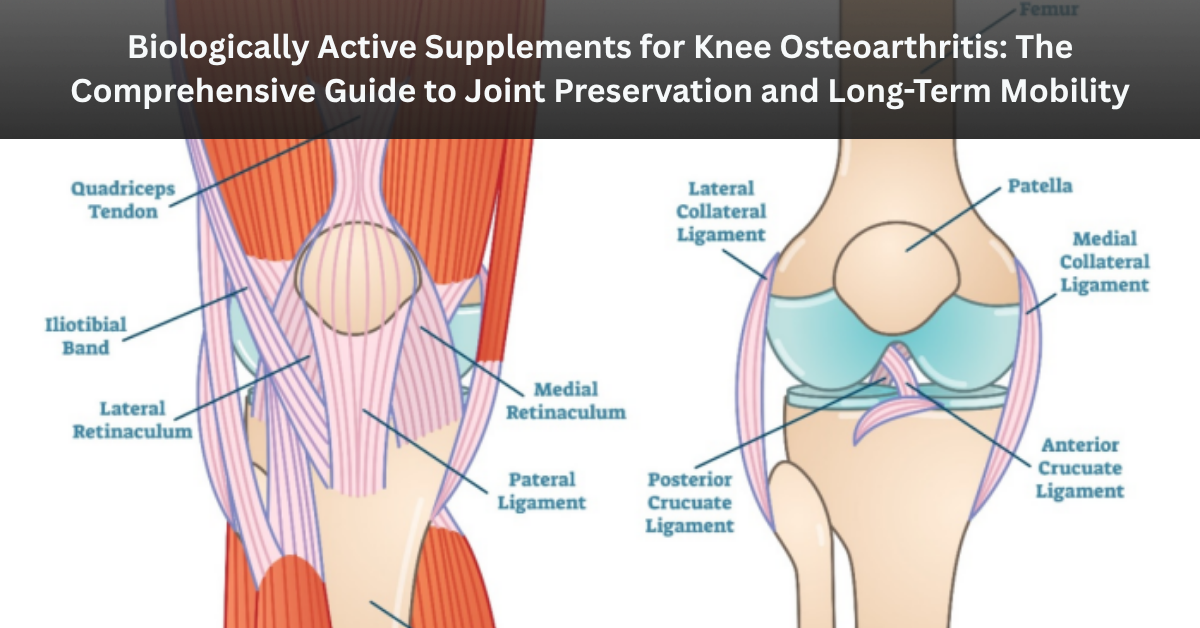
Traditional Indian household patterns often involve deep squatting, floor-level work, and lifting. While these are functional movements, doing them with poor muscle support or improper form creates a chronic mechanical overload on the patellofemoral joint (the space behind the kneecap).
- The Nutritional Gap
Despite a rich culinary heritage, many Indian diets are “protein-starved.” Without adequate protein, Vitamin D3, and Omega-3 fatty acids, the skeletal system remains in a constant state of vulnerability, unable to repair the daily micro-damage that occurs during movement.
Part III: The Fallacy of “Early” Knee Replacement
Total Knee Replacement (TKR) is a revolutionary surgery for a 75-year-old. For a 45-year-old, it is often a premature solution.
The “Revision Surgery” Trap
Most high-quality implants have a lifespan of 15 to 20 years. If a patient gets a TKR at age 48, the implant will likely wear out by age 65. A “Revision TKR” is significantly more complex than the first surgery. It involves removing more bone, has a higher risk of infection, and rarely achieves the same range of motion as the primary surgery.
The Loss of Natural Proprioception
No matter how advanced the metal and plastic, a mechanical joint can never fully replicate the “feel” (proprioception) of a natural joint. Preserving your original biological tissue should always be the priority until it is no longer medically feasible.
Part IV: The Science of Biologically Active Preservation
Joint preservation isn’t a single pill; it’s an ecosystem. Precimax Life Sciences has pioneered this by focusing on Evidence-based Targeted Nutraceuticals. Unlike generic supplements, biologically active formulations are designed for maximum bioavailability—meaning they actually reach the joint tissues in concentrations high enough to make a difference.
- Strengthening the Foundation: The Subchondral Bone
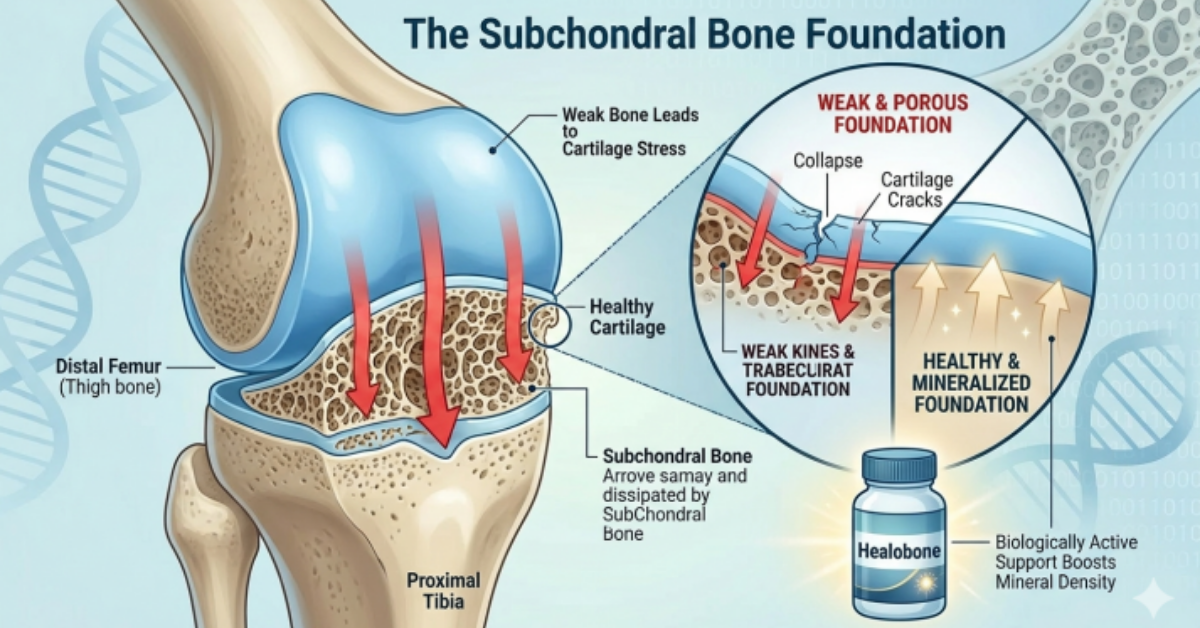
Most people focus on the cartilage, but the cartilage sits on a bed of bone called the subchondral bone. If this bone foundation is weak or porous, the cartilage above it will inevitably collapse.
Healobone Capsules represent a paradigm shift in bone health. Most patients are simply told to “take more calcium,” but excessive calcium can lead to arterial calcification or kidney stones. Healobone is a non-calcium-based bone revival formula. It uses targeted nutrients to improve bone mineralization and density, ensuring the cartilage has a rock-solid foundation. This is critical for preventing the “bone marrow lesions” often seen in painful OA.
- Metabolic Correction: The MAXLITE Strategy
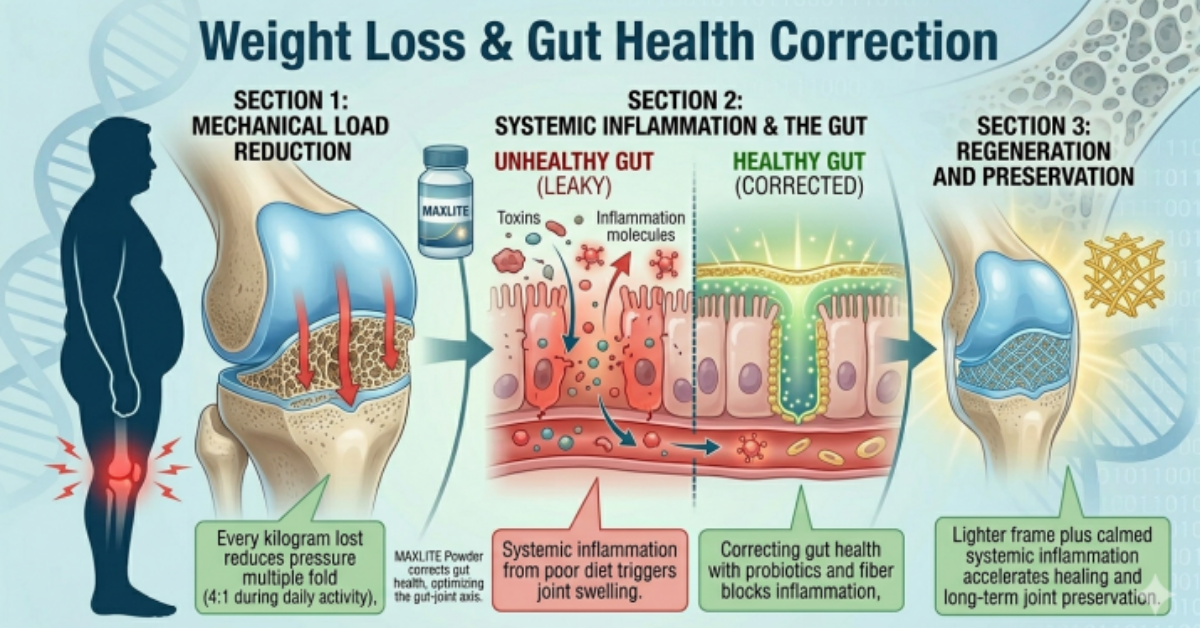
Obesity is the #1 enemy of the knee. However, losing weight when you have knee pain is a “Catch-22″—you need to exercise to lose weight, but you can’t exercise because your knees hurt.
MAXLITE Powder solves this by addressing weight from a metabolic perspective rather than just a caloric one.
- Carb Blocking: It helps modulate the absorption of carbohydrates, which in turn reduces the production of Advanced Glycation End-products (AGEs) that stiffen the joint collagen.
- Metabolism Boost: It helps the body burn fat more efficiently, even with low-impact activity.
- The Gut-Joint Axis: MAXLITE corrects gut health. Science now shows that a “leaky gut” allows bacterial toxins to enter the bloodstream, which then settle in the joints and cause inflammation. By fixing the gut, you help calm the knees.
- Managing Inflammation: The Phytoceutical Revolution
Chronic OA involves a cycle of inflammation. Standard painkillers (NSAIDs) stop the pain but don’t stop the disease. Biologically active extracts do both.
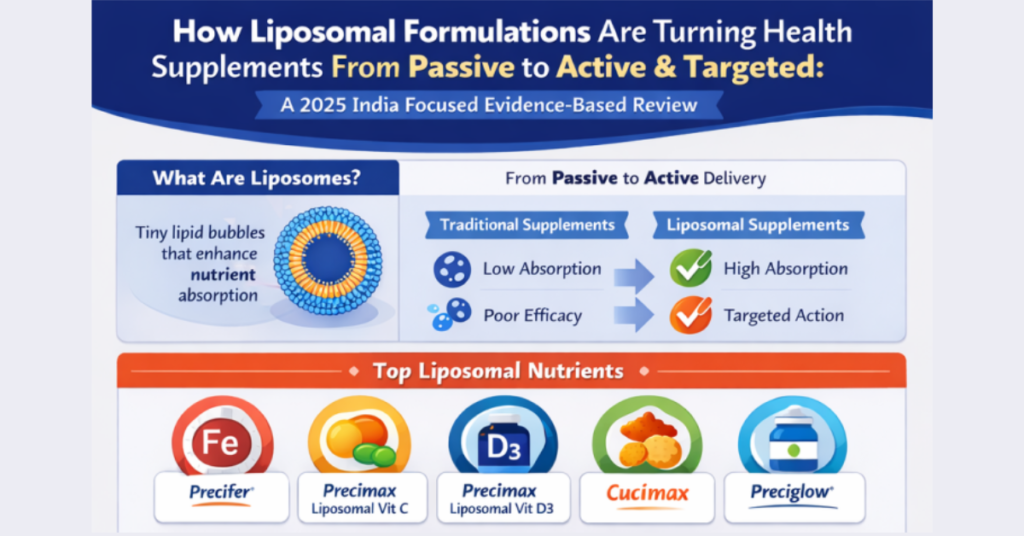
- Micellar Curcumin (Cucimax): Curcumin is notoriously hard to absorb. Precimax uses micellar technology to ensure that the curcumin is “pre-dissolved” and ready for the body to use, significantly reducing inflammatory markers like CRP and IL-6.
- AKBA Boswellia: This is the “gold standard” extract of Boswellia serrata. It specifically blocks the 5-LOX enzyme, which is a major driver of joint swelling and morning stiffness.
- Healojoint: This plant-based approach provides rapid action on pain. In clinical observations, it has shown measurable improvements in VAS (Visual Analogue Scale) pain scores and mobility within a short period, making it a “rescue” strategy that is safe for the stomach.
Part V: The Joint Preservation Ecosystem
To effectively manage OA, we must look at the knee as a living organ that requires different types of support simultaneously.
Strategy Component | Clinical Goal | Recommended Bioactive Tool |
Foundation Building | Restore subchondral bone density. | Healobone Capsules |
Load Reduction | Systematic fat loss and carb blocking. | MAXLITE Powder |
Muscle Synthesis | Rebuild the “internal brace” (Quadriceps). | EAA-MAX (Essential Amino Acids) |
Inflammation Control | Reduce swelling and enzymatic decay. | Healojoint / Cucimax |
Structural Support | Repair the cartilage matrix. | Collagen Peptides / UC-II |
Part VI: Synergy with Advanced Biologics (PRP and Stem Cells)
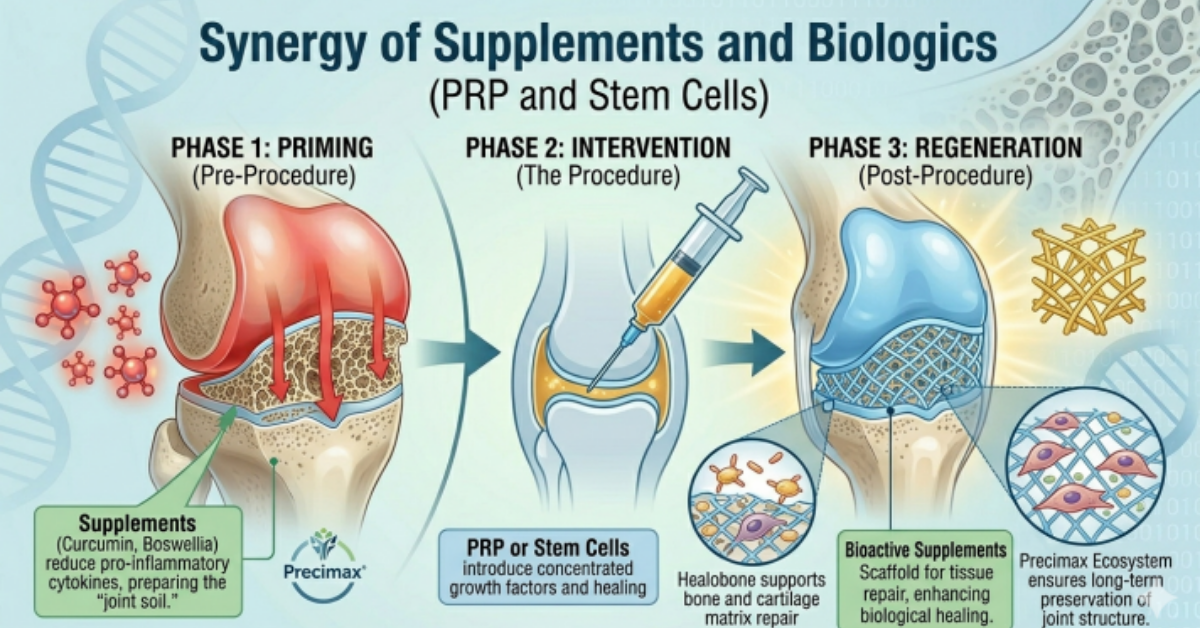
Many patients are now opting for Platelet-Rich Plasma (PRP) or Stem Cell injections. However, these treatments do not work in a vacuum. If you inject high-quality cells into a “toxic,” inflamed joint environment, the cells will die or fail to thrive.
Supplements as a “Primer”:
- Preparation (2-4 weeks before): Taking Micellar Curcumin and AKBA Boswellia “cleans” the joint environment, reducing the inflammatory cytokines that might interfere with the injected cells.
- The Scaffold (After Procedure): Once PRP is injected, the body needs raw materials to build new tissue. Healobone and collagen peptides provide the “bricks and mortar” that the newly injected growth factors use to repair the joint.
- Long-term Maintenance: Maintenance doses of bioactive supplements ensure that the benefits of an expensive procedure last for years rather than months.
Part VII: Lifestyle, Physiotherapy, and Protein
No supplement can replace movement. However, supplements make movement possible.
The Protein Problem
Indian diets are notoriously low in leucine—the amino acid that triggers muscle growth. Without enough protein, physiotherapy is essentially “beating a tired horse.” EAA-MAX provides a concentrated burst of essential amino acids that allow the muscles around the knee to recover and grow stronger.
When your quadriceps are strong, they act like an “Internal Brace,” absorbing the impact of every step so your cartilage doesn’t have to.
Weight Loss: The Math of Joint Protection
Losing just 5 kg can reduce the pressure on your knees by 20 kg with every step. Using MAXLITE to facilitate this weight loss creates a “virtuous cycle”—less weight means less pain, which means more movement, which leads to more weight loss.
Conclusion: Preservation is the Future
The “wait and see” approach to knee pain is outdated. We should not wait for the joint to be destroyed before we intervene with surgery. In the Indian context, where early-onset OA is rising and bone/muscle mass is often suboptimal, Biologically Active Supplements are the missing piece of the puzzle.
By combining the structural support of Healobone, the metabolic correction of MAXLITE, and the anti-inflammatory power of Healojoint, we are no longer just managing pain—we are preserving life.
Precimax Life Sciences remains at the forefront of this mission. We believe in innovation, clinical efficacy, and the power of transformative nutrition. Don’t just replace your joint—revive it