Osteoarthritis of the knee is no longer a disease of old age. India is witnessing a striking rise in knee pain even among people in their thirties and forties. Busy lifestyles, long working hours, urban sedentary living and poor nutrition have accelerated degenerative diseases of the joint. While advanced knee osteoarthritis at 70 may be considered natural ageing, encountering similar symptoms at 45 or 50 is a disturbing public health challenge.
This article explores the burden of knee osteoarthritis in India, why it affects women more than men, the limitations of knee replacement in younger age groups, and the role biologically active supplements play as a scientific strategy for long-term joint preservation. It also highlights how supplements work alongside physiotherapy, PRP and stem cell treatments, and how weight management forms the foundation of joint protection.

The Burden of Knee Osteoarthritis in India
India is currently the osteoarthritis capital of the world. Studies estimate that more than one in five adults over 50 suffer from knee osteoarthritis, and the numbers are rising rapidly. With the increase in early-onset cases, the projected burden may reach 80 million individuals by the end of this decade.
Certain states show higher prevalence, often linked to lifestyle, obesity, deficiency in vitamin D and poor muscle mass. Urban areas of Karnataka, Tamil Nadu, Kerala, Maharashtra and Delhi consistently report large numbers. In metropolitan clinics, it is common to see three generations—grandmother, mother and daughter—seeking consultation for knee pain. This shows the combination of genetic predisposition, lifestyle and nutritional gaps.
Why Women Are Affected More Than Men
Osteoarthritis of the knee affects women nearly twice as frequently as men. The reasons are clear and multifactorial.
- Hormonal changes after menopause reduce estrogen, which plays a key role in collagen turnover and cartilage protection. Women lose joint cushioning rapidly post-menopause.
- Lower muscle mass increases stress on the joint. Indian women have among the lowest global averages of muscle mass and bone density.
- Household activity patterns such as squatting, floor-level work and lifting place chronic mechanical load on knees.
- Nutritional gaps in calcium, vitamin D, protein and omega-3 intake create long-term skeletal vulnerability.
- Women also tend to delay treatment until pain becomes severe. By the time they reach a specialist, X-rays often reveal advanced osteoarthritis.

The Phenomenon of Early Osteoarthritis
Traditionally, osteoarthritis was considered a condition of ageing. But in India, more patients are showing symptoms in their forties, sometimes even in their thirties. This is driven by preventable causes.
- Sedentary lifestyle with prolonged sitting
- Obesity and central fat accumulation
- Weak quadriceps and hamstrings from inadequate exercise
- Vitamin D deficiency
- High carbohydrate, low protein diet
- Repetitive stress injuries, especially post-ligament injuries
A ligament tear in youth, if not rehabilitated properly, often leads to joint degeneration in midlife (link move and shine blog on ACL team). Within five to seven years, early osteoarthritis develops, which can become symptomatic much earlier than expected.
Why Knee Replacement is Not the Solution for People in their 40s and 50s
Total knee replacement is an excellent option for severe end-stage osteoarthritis in older age groups. But performing it too early leads to complications. The artificial joint has a lifespan. Most implants last 10 to 15 years under normal use and when it was done after 65. However, when surgery is performed at age 45 or 50, a revision surgery becomes almost inevitable. Revision surgeries are more complex, more painful, more expensive and carry higher risks. They require removal of bone which compromises outcomes. Replacement does not restore natural tissue. It only replaces the articulating surface. Younger patients need strategies that preserve their original joint for as long as possible. As orthopaedic surgeon Dr Prasanna from Bangalore explains, “With proper nutrition, supplements, physiotherapy and weight management, many patients in their forties and fifties can postpone knee replacement by ten or fifteen years. Our goal should be preservation, not replacement.”
Poor Bone and Muscle Mass in India
Many Indians consume diets rich in cereals and carbohydrates but low in good-quality protein. This results in lifelong suboptimal muscle development and bone mineral density. When peak bone mass is low, joint protection is poor throughout life. Sarcopenia, or age-related muscle loss, begins earlier in Indian populations. Weak muscle around the knee increases load on cartilage with every step, accelerating wear. A strategy that improves nutrition, enhances protein intake and maintains muscle strength is therefore central to osteoarthritis management.
Evidence-Based Supplementation for Long-Term Joint Preservation
Biologically active supplements are emerging as a safe, sustainable strategy for patients with knee osteoarthritis. They offer multiple advantages.
- They can be taken safely for long periods.
- They reduce inflammation without causing damage to the stomach or kidneys.
- They support cartilage structure and protect the joint.
- They improve mobility, reduce swelling and maintain function.
- They complement physiotherapy, PRP and stem cell treatments.
Supplements make sense because osteoarthritis is a chronic, lifelong condition. Long-term medication is often harmful. Supplements, in contrast, work with the body and offer cellular protection.
Important Ingredients and Their Clinical Benefits
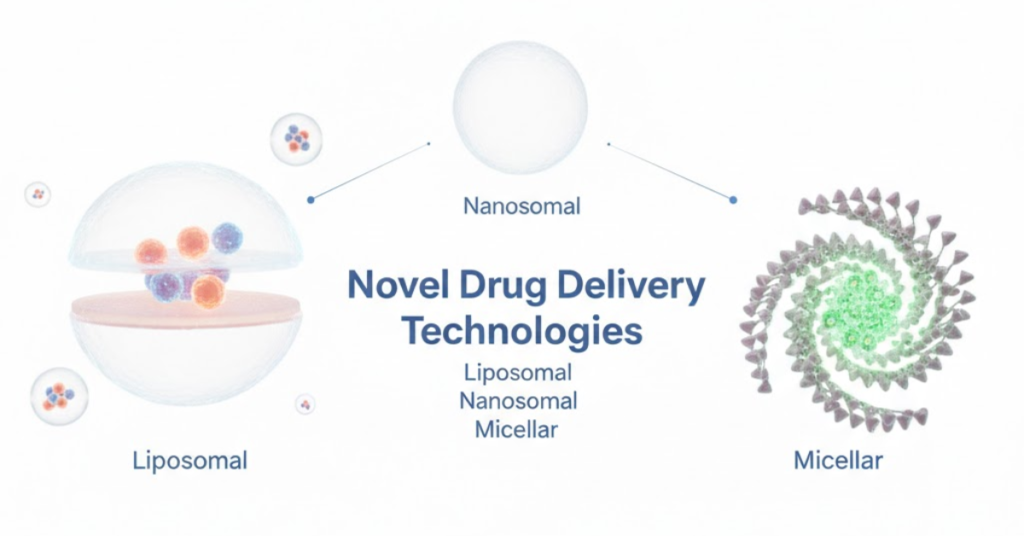
Micellar Curcumin – Curcumin is one of the most powerful natural anti-inflammatory agents. However, standard curcumin has low absorption. Micellar curcumin improves bioavailability dramatically. High-concentration micellar curcumin formulations like Cucimax have demonstrated reductions in inflammatory markers and improved mobility.
AKBA Boswellia – Ordinary boswellia extract varies in consistency. AKBA, or acetyl-keto beta boswellic acid, is the active fraction with the strongest anti-inflammatory action. It inhibits 5-lipoxygenase, reducing inflammatory mediators within the joint. AKBA is clinically proven to reduce pain and swelling faster than generic boswellia.
Bioavailable Bromelain – Bromelain is a natural proteolytic enzyme that reduces oedema and inflammation. Bioavailable forms are superior and faster acting. They are particularly useful post-procedure and when swelling is prominent.
Collagen Peptides – Collagen peptides support cartilage regeneration and ligament health. Granule forms dissolve faster, are easier to digest and have less odor and taste. Marine and bovine collagen are commonly used.
Glucosamine and Chondroitin – These remain foundational structural elements of cartilage. They help maintain matrix integrity, slow degeneration and support lubrication.
Undenatured Collagen Type-2 (UC-2) – UC-2 has a unique mechanism. It triggers immune tolerance in the gut, reducing autoimmune aggression against joint cartilage. Even small doses, around 40 mg daily, show measurable improvement in flexibility and pain.
There are many more ingredients sold like, Roship extract, MSM, Devi’s Claw, Ayurvedic formulations, but unfortunately they lack scientific basis and evidences.
Phytoceutical Approach: Healojoint
Healojoint represents a unique plant-based approach. It is non-animal, yet clinically effective for rapid action on pain and inflammation. Data shows improvements in pain scores, oedema and mobility, reflected in metrics such as VAS scores, Cohen’s D and neuromuscular tension.
Dr Govindrajan, orthopaedic specialist from Chennai, notes, “Healojoint-type formulations are extremely useful when patients cannot tolerate NSAIDs or prefer natural approaches. They are safe and act quickly, which encourages compliance.”
Supplements With PRP and Stem Cells
- Supplements integrate seamlessly with biologic procedures.
- Before procedures: They reduce inflammation, prepare the joint and enhance platelet responsiveness.
- During procedures: Bromelain helps reduce post-injection swelling. Curcumin and AKBA modulate inflammatory response.
- After procedures: Supplements maintain and enhance regeneration. PRP and stem cells create biological improvement that unfolds over weeks to months. Supplements sustain this improvement.
Dr Yaswant Singh comments, “Outcomes after PRP are consistently better when anti-inflammatory supplements and collagen support are given. We see faster improvement and longer-lasting results.”
Healojoint (Micellar Curcumin, AKBA Boswellia, and Bromelain) Supplements, Physiotherapy and Muscle Strength Physiotherapy remains central to osteoarthritis management. Exercises that strengthen quadriceps, hamstrings, gluteal muscles and core reduce load on the knee joint. Protein is a limiting nutrient. Without enough amino acids, muscle cannot grow. Essential amino acid products like EAA-MAX, especially those rich in leucine, support muscle synthesis. They make physiotherapy more effective. Patients regain strength faster, allowing them to progress from basic to advanced exercises. Supplements support healing while exercise builds strength. Together they reduce pain, improve mobility and protect cartilage.
Meal Replacement and Weight Reduction
Weight loss is one of the strongest interventions in knee osteoarthritis. Even a 5 to 10 percent reduction in body weight reduces knee load significantly. Meal replacement formula, like MAXLITE powder work well in this context. They provide:
- High protein
- Low calories
- Fibre and probiotics
- Micronutrients
They make weight loss easier without hunger or weakness. Importantly, they prevent muscle loss during calorie restriction, sustaining metabolic health. Patients who reduce weight often experience immediate improvement in knee pain. Their ability to walk, climb stairs and perform daily activities improves rapidly.

Bioactive Supplements as a Long term support Strategy
The future of osteoarthritis care is not replacement, but preservation. Supplements provide the safest way to support joint tissues long term. They improve nutrition, reduce inflammation, enhance cartilage biology and sustain benefits obtained from physiotherapy and PRP or stem cell procedures. Osteoarthritis is not simply wear and tear. It is an interface of biology, lifestyle and nutrition. Managing it requires integrated, safe and sustainable approaches.
Frequently Asked Questions
- Can supplements postpone knee replacement?
Yes. Many patients reduce pain and maintain mobility, postponing surgery by years. - Can supplements be used before PRP or stem cell therapy?
Yes. Starting 2 to 4 weeks early helps reduce inflammation and prepares the joint. - Are supplements required after PRP?
Yes. They maintain and amplify the biological healing created by the procedure. - Do supplements interfere with PRP?
No. They complement PRP by supporting platelet function and reducing inflammation. - How long should I continue supplements after PRP?
Most protocols suggest 3 to 9 months. - Do supplements work in severe osteoarthritis?
They reduce pain and improve mobility, but advanced cases may still need medical or surgical intervention. - Can supplements replace painkillers?
Many patients reduce or stop NSAIDs gradually. - What is the advantage of micellar curcumin?
It has much higher absorption, faster action and stronger anti-inflammatory benefits. - What is AKBA boswellia and why is it important?
AKBA is the active anti-inflammatory fraction of boswellia with proven clinical benefit. - What is UC-2 and how is it different?
UC-2 induces immune tolerance and works at very low doses to reduce pain and improve flexibility. - Do supplements help physiotherapy?
Yes. Patients progress faster with good muscle support. Protein such as EAA-MAX enhances muscle building. - Is protein important for knee osteoarthritis?
Yes. Muscle strength supports the joint and reduces load. - Will meal replacement help?
Meal replacements help weight loss, improve metabolic health and reduce joint pain. - Why is weight loss so important?
Every kilogram of weight lost reduces multiple kilograms of pressure on the knee during movement. - Are phytoceutical products like Healojoint useful?
Yes. They are fast-acting, plant-based and safe for long-term use. - Can supplements be used lifelong?
Yes, under medical supervision, especially when they are well tolerated and improve quality of life.
Conclusion
The future of osteoarthritis management lies in preservation, not replacement. Replacing the knee at 70 has excellent outcomes. Replacing it at 45 introduces a lifetime of surgical challenges. Biologically active supplements offer a safe, evidence-based approach to managing osteoarthritis. They reduce pain, inflammation and swelling. They support cartilage and muscle. They make physiotherapy, PRP and stem cell procedures more effective. They work harmoniously with weight reduction strategies.
In India, where early osteoarthritis is rising, and where bone and muscle mass are low, supplements provide a practical bridge between lifestyle, nutrition and medicine. They help patients move better, age better and live better.