The world of nutritional supplements has transformed rapidly over the last decade. What was once purely “passive” supplementation — where nutrients were ingested and left to the luck of intestinal transporters and digestive variability — is now becoming active and targeted delivery. Liposomal formulations are at the heart of this shift, offering improved absorption, enhanced stability, and targeted cellular delivery of nutrients that traditional oral forms struggle to provide.
This transformation is especially relevant in India, where high micronutrient deficiency prevalence, heat and humidity-related stability challenges, and price sensitivity often deter long-term use of supplements. Liposomal formulations have emerged as clinically meaningful alternatives for nutrients such as iron, Vitamin C, Vitamin D3, magnesium, curcumin, glutathione, melatonin, and resveratrol, particularly when produced with rigorous quality standards.
This blog examines how liposomal delivery is redefining clinical nutrition — from passive supplementation to active, targeted, evidence-backed solutions — with India-specific practice and cost considerations, and expert insights from leading clinicians in the field.

The Liposomal Advantage: Making Supplements Targeted and Active
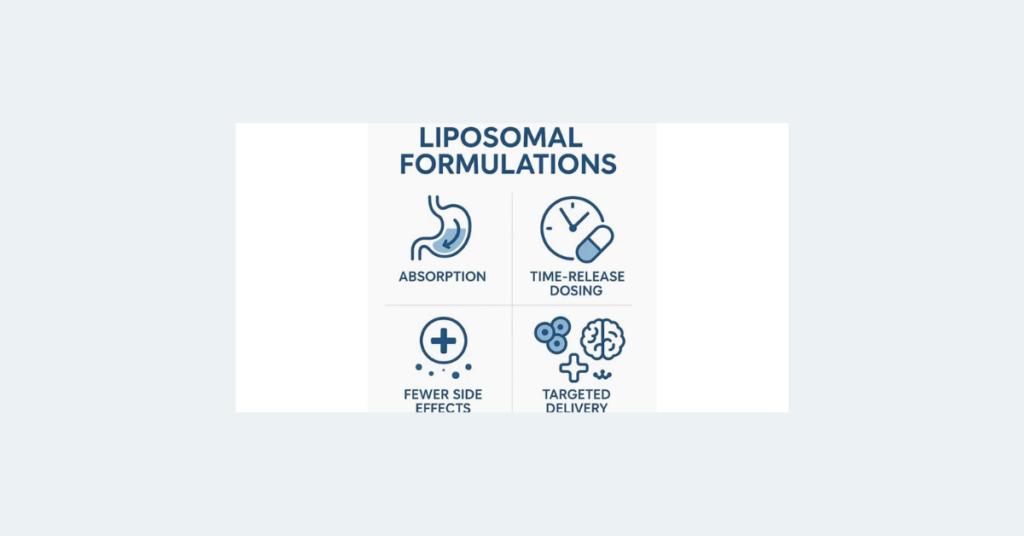
Liposomal technology encapsulates nutrients within tiny phospholipid vesicles that mimic biological membranes. This enables nutrients to bypass degradation in the gastrointestinal tract, enter circulation more efficiently, and reach target tissues effectively. Unlike conventional forms that depend on saturable transporters, liposomes interact with cell membranes directly or enter cells via endocytosis, creating higher bioavailability and more predictable physiological outcomes.
In India’s climate — where heat and humidity can degrade poorly formulated supplements — liposomal formulations engineered for stability offer consistent performance, reducing nutrient loss and ensuring patients actually receive the benefit advertised.
According to Dr Sundar, R&D Head at Precimax Life Sciences, “Liposomal success isn’t about novelty alone; it’s about engineering stability in real-world Indian conditions while keeping costs aligned with long-term adherence.”
Clinically Relevant Liposomal Nutraceuticals in 2025
- Liposomal Iron: Precifer— Active Correction of Deficiency
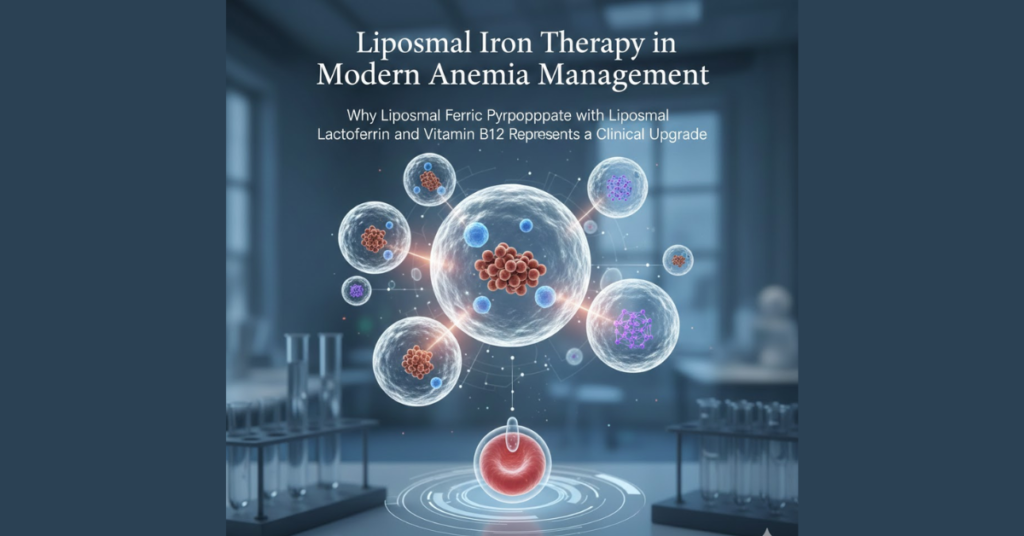
Iron deficiency anemia is one of India’s most pressing public health issues. Traditional iron salts are poorly tolerated due to gastrointestinal side effects, which leads to poor adherence. Liposomal iron such as Precifer encapsulates iron to reduce mucosal irritation and improve absorption, enabling more efficient hemoglobin restoration.
Dr Saraswathi Ramesh, leading obstetrician in Chennai, notes: “In antenatal care, tolerability is key. Liposomal iron enables better adherence and quicker symptomatic relief, essential for sustained maternal health.”
In clinical settings, liposomal iron is prescribed for moderate-to-severe anemia, especially where side effects impede compliance. Its safety and tolerability make it a practical choice for extended courses.
- Liposomal Vitamin C: Precimax Liposomal Vitamin C— Active Immune Support
Vitamin C is central to immune function and antioxidant defense, but conventional forms face bioavailability limits. A randomized, double-blind clinical trial demonstrated that liposomal vitamin C significantly increased plasma and leukocyte vitamin C levels compared to standard forms — with ~27% higher peak plasma levels and ~21% greater overall exposure (AUC), showing that liposomal delivery enhances systemic uptake.
Liposomal Vitamin C is therefore clinically useful in oxidative stress conditions, seasonal immune challenges, and recovery protocols.
Dr Shirish Patwardhan, Senior OBG Specialist in Mumbai, comments: “Liposomal Vitamin C delivers measurable biological exposure that traditional high-dose forms often fail to sustain, which matters clinically when immune or antioxidant support is essential.”
- Liposomal Vitamin D3: Precimax Liposomal D3— Targeted Deficiency Management
Vitamin D deficiency is widespread across India despite abundant sunlight, due to lifestyle factors and limited dietary sources. Liposomal Vitamin D3 enhances absorption and ensures more consistent serum level improvements than conventional oil-based forms, especially in populations with malabsorption or obesity.
Clinicians increasingly use liposomal D3 for deficiency correction when simple supplementation fails, often alongside magnesium.
- Liposomal Magnesium: Precimax Liposomal MGD3— Neuromuscular Balance and Sleep Support
Magnesium is essential for neuromuscular regulation, energy metabolism, and sleep. Conventional magnesium forms often cause loose stools at higher doses. Liposomal magnesium shows improved cellular uptake and reduced GI side effects, delivering more effective support at lower doses — a clear benefit in chronic stress, sleep disturbances, and metabolic wellness strategies.
Dr Veena Thomas, Anti-Aging Specialist, explains: “Magnesium’s role in sleep and stress physiology is well known, but liposomal delivery ensures meaningful uptake in clinical practice, especially where digestion is compromised.”
- Liposomal Curcumin: Cucimax— Targeted Anti-Inflammatory Action
Curcumin’s anti-inflammatory and antioxidant potential is well documented, but conventional forms suffer from poor absorption. Liposomal encapsulation enhances systemic exposure and tissue uptake. This makes formulations like Cucimax clinically useful for chronic inflammation, joint pain management, and metabolic syndrome support.
- Liposomal Glutathione: Preciglow— Active Redox Regulation
Glutathione is a principal intracellular antioxidant but is degraded in the GI tract when taken conventionally. Liposomal glutathione bypasses this degradation, leading to higher circulating levels and improved cellular redox balance, which is especially valuable in oxidative stress conditions, aging care, and detox support.
- Liposomal Resveratrol: Precimax Liposomal Resveratrol— Enhanced Cellular Support
Resveratrol has promising metabolic and cardiovascular effects, but conventional uptake is limited by rapid metabolism. Liposomal delivery enhances stability and absorption, making it a more viable clinical agent in cardiometabolic support protocols.
- Liposomal Melatonin: Precimax Liposomal Melatonin— Targeted Sleep and Circadian Support
Melatonin regulates the sleep–wake cycle but is often poorly absorbed in classic forms. Liposomal melatonin provides steadier plasma levels, making it a more targeted option for sleep timing disorders, shift-work related disruption, and age-related circadian dysregulation.
India-Specific Cost Comparison — Value and Adherence
Here’s how these clinically significant liposomal supplements stack up in the Indian market in 2025:
Product / Nutrient | Brand / Type | Typical Price (₹) For 30 capsules | Clinical Context |
Liposomal Vitamin D3 | Precimax Liposomal D3 | ~₹468 | Targeted deficiency correction |
Liposomal Magnesium + D3 | Precimax Liposomal MGD3 | ~₹430 | Neuromuscular & metabolic support |
Liposomal Iron | Precifer | ₹567/ | Anemia management |
Liposomal Lactoferrin | LF-Max | ₹1,800 | Infection & immune balance |
Liposomal Vitamin C | Precimax Liposomal Vitamin C | ₹400 | Immune & oxidative support |
Liposomal Curcumin | Cucimax | ₹810 | Chronic inflammation support |
Liposomal Resveratrol | Precimax Liposomal Resveratrol | ₹810 | Cardiometabolic care |
Liposomal Glutathione | Preciglow | ₹1,350/- | Redox & detox support |
Liposomal Melatonin | Precimax Liposomal Melatonin | ₹430 | Sleep regulation |
*Estimated based on typical Indian retail and clinician-prescribed pricing.
Key Insight: Products below ~₹1,000/month are significantly more likely to be used consistently by Indian patients over 8–12 week therapeutic windows, bridging efficacy and affordability.

Clinical Ranking: Impact and Evidence in 2025
- Liposomal Iron (Precifer)– Strongest clinical priority in India due to high anemia burden.
- Liposomal Vitamin C– Demonstrated superior absorption in controlled trials.
- Liposomal Vitamin D3 & Magnesium– Critical for deficient populations and synergistic in bone/immune health.
- Liposomal Curcumin– Valuable in chronic inflammation.
- Liposomal Glutathione– Relevant in oxidative stress and aging.
- Liposomal Melatonin & Resveratrol– Targeted support in sleep and cardiometabolic care.
Expert Perspectives on Targeted Liposomal Use in India
Dr. Sundar (R&D Head, Precimax Life Sciences): “The engine of difference in liposomal interventions is not just absorption; it’s ensuring that the nutrient reaches the right physiological pathways efficiently, especially in climates like India where stability is a constant challenge.”
Dr. Saraswathi Ramesh (Obstetrician, Chennai): “Liposomal iron and Vitamin D in pregnancy cut down side effects, improve compliance, and lead to better hemoglobin and bone health trajectories.”
Dr. Shirish Patwardhan (Senior OBG, Mumbai): “When inflammation and metabolic dysregulation co-exist, liposomal systems like curcumin and resveratrol allow targeted delivery that complements standard therapy.”
Dr. Veena Thomas (Anti-Aging Specialist, Trivandrum): “For oxidative stress and sleep regulation, liposomal glutathione and melatonin ensure cellular delivery and sustained physiological effects — we see outcomes traditional forms rarely achieve.”

Conclusion
In 2025, liposomal nutraceuticals are not merely premium variants; they are clinically targeted, active delivery systems that transform how nutrients function in the body. In India, this matters profoundly — where deficiencies are common, environmental stressors persist, and long-term adherence hinges on tolerability and cost.
By combining bioavailability science, climate-adapted formulation, and affordable dosing, liposomal supplements such as Precifer, LF-Max, Cucimax, Preciglow, and Precimax Liposomal D3/MGD3/Melatonin/Resveratrol represent a new era in clinical nutrition: from passive supplements to active, targeted therapeutics.
Frequently Asked Questions
- What does it mean for a supplement to go from “passive” to “active and targeted” with liposomal delivery?
Liposomal systems encapsulate nutrients in tiny phospholipid vesicles, protecting them from degradation in the GI tract and enhancing cellular uptake. Instead of relying on passive diffusion, these nutrients are delivered more actively into circulation and target tissues, increasing clinical effectiveness and reducing waste. - Why is liposomal delivery scientifically superior for many nutrients?
Liposomal technology improves stability, protects actives from breakdown, and enhances bioavailability, meaning a higher proportion of the ingested dose reaches systemic circulation and target cells — a key shift from passive absorption. - How does liposomal Vitamin D3 (Precimax Liposomal D3) improve absorption compared to conventional forms?
Vitamin D3 has fat-dependent absorption; liposomal encapsulation enables more reliable uptake independent of dietary fat and protects against digestive degradation, making it especially valuable for populations with high deficiency prevalence like in India. - What unique benefits do liposomal magnesium formulations (Precimax Liposomal MGD3) provide?
Magnesium’s absorption varies with form and digestive factors. Liposomal magnesium shows improved bioavailability and cellular uptake, enhancing support for musculoskeletal function, neuromuscular balance, and metabolic health. - Do liposomal forms of Vitamin D3 and magnesium work synergistically?
Yes — magnesium is a cofactor in Vitamin D metabolism. Liposomal delivery improves uptake of both, potentially enhancing bone, immune, and metabolic outcomes. - How does liposomal iron (Precifer) make iron supplementation more tolerable/targeted?
Liposomal Preciferencapsulates iron to reduce direct gastric irritation and enhances intestinal uptake, resulting in higher systemic iron levels with fewer GI side effects — a major compliance advantage in anemia care. - What targeted benefits does liposomal lactoferrin (LF-Max) deliver?
Lactoferrin is an immune-modulating protein that also supports iron regulation. Liposomal encapsulation increases survival through digestion and improves uptake, which can help in chronic inflammation and fertility-related immune balance. - What evidence supports liposomal Vitamin C’s enhanced effectiveness?
Emerging 2025 research highlights new liposomal Vitamin C with up to 7.6-fold higher bioavailabilitythan conventional forms, leading to more sustained systemic levels — particularly relevant for antioxidant and immune applications. - Why is a liposomal curcumin like Cucimaxclinically meaningful?
Curcumin’s classic limitation is low bioavailability. Liposomal encapsulation increases exposure many-fold, which may translate into meaningful anti-inflammatory and joint health effects in people who struggle with conventional forms. - How does liposomal resveratrol (Precimax Liposomal Resveratrol) improve metabolic and cellular effects?
Resveratrol has broad metabolic and antioxidant mechanisms, but conventional absorption is limited. Liposomal systems increase solubility and tissue delivery, potentially enhancing effects seen in clinical research on metabolic health. - Are liposomal melatonin supplements (Precimax Liposomal Melatonin) more effective for sleep support?
Melatonin’s biologic role in circadian regulation is well documented, and liposomal forms improve absorption and blood profile, potentially strengthening sleep onset and maintenance effects. - Is liposomal glutathione (Preciglow) better than regular glutathione for antioxidant support?
Yes. Because glutathione is unstable in the GI tract, liposomal delivery increases systemic antioxidant levels and cellular uptake more effectively than conventional oral forms, which are quickly degraded. - Can liposomal nutrients interact with medications?
While interactions are uncommon, any supplement — especially potent nutraceuticals — should be reviewed alongside medications by the clinician, particularly in metabolic or immunomodulatory therapies. - Are liposomal supplements safe for long-term use?
High-quality liposomal supplements formulated with pharmaceutical-grade phospholipids are generally safe for long-term use, but monitoring and periodic evaluation with clinical goals are recommended. - Why do liposomal supplements cost more?
Manufacturing liposomal products is more complex: encapsulation technology, stability testing, and quality control add cost. However, improved outcomes and reduced waste make them cost-effective for appropriate clinical scenarios. - Do liposomal products really survive Indian heat and humidity?
Thermo- and humidity-stable liposomal formulations can be engineered, but quality validation is essential because poorly stabilized liposomes may degrade under high temperatures and moisture. - Are liposomal B-complex vitamins worth considering?
Liposomal B-complex may enhance cellular uptake of water-soluble vitamins, which can be useful in conditions like high metabolic demand or malabsorption, though clinical outcome data is still emerging. - Can liposomal delivery allow lower dosing compared to conventional supplements?
Yes. Because systemic bioavailability is higher, therapeutic effects may be achieved at lower doses compared with standard forms, which can improve safety and cost-effectiveness. - Are liposomal supplements suitable for elderly or chronic disease populations?
Liposomal delivery often improves nutrient uptake in populations with diminished digestive or absorptive function, like the elderly or people with chronic inflammatory states, making them more clinically relevant. - How should clinicians select liposomal products in India?
Choose formulations with evidence-based design (verified bioavailability studies), stability data for hot/humid conditions, clear clinical indications, and defined dosing strategies to target specific deficiency or therapeutic goals.
References:
- Purpura M, Jäger R, Godavarthi A, Bhaskarachar D, Tinsley GM.Liposomal delivery enhances absorption of vitamin C into plasma and leukocytes: a double-blind, placebo-controlled, randomized trial. European Journal of Nutrition. 2024;63(8):3037–3046. doi:10.1007/s00394-024-03487-8.
- Żmuda P, Khaidakov B, Krasowska M, et al.Bioavailability of Liposomal Vitamin C in Powder Form: A Randomized, Double-Blind, Cross-Over Trial. Applied Sciences. 2024;14(17):7718. doi:10.3390/app14177718.
- Shishir MRI, et al.Review: Liposomal delivery of natural products as a method to improve protective effects against oxidative stress, inflammation, and related conditions. Journal of Liposome Research. 2019;29(…).
- Prasad S.Recent Developments in Delivery, Bioavailability, and Therapeutic Promise of Curcumin. Journal of Nutritional Biochemistry. 2014;25(9):105–115. PMCID:PMC3918523.
- Bulboacă AE, et al.Comparative Effect of Curcumin Versus Liposomal Curcumin on Systemic Parameters in Experimental Models. International Journal of Nanomedicine. 2019;14:… (study comparing liposomal to conventional curcumin in experimental settings).
- Shindikar A.Curcumin and Resveratrol as Promising Natural Compounds with Poor Pharmacokinetics but Potential Enhanced Delivery via Nanocarriers. Journal of Natural Products. 2016; (review on curcumin and resveratrol limitations).
- Huang M, et al.Liposome co-encapsulation as a strategy for the delivery of curcumin and resveratrol. Food & Function. 2019;10(…).
- Hewlings SJ, Kalman DS.Curcumin: A Review of Its’ Effects on Human Health. Foods. 2017;6(10):92. doi:10.3390/foods6100092.
- Silva PM, et al.Recent advances in oral delivery systems of resveratrol. Food & Function. 2023;14(…).