Introduction: The Silent Iron Crisis in India
Iron deficiency remains one of the most widespread yet under‑addressed nutritional disorders in India. Despite decades of supplementation programs and routine prescribing of iron tablets, anemia continues to affect a significant proportion of children, adolescents, women, and even adult men.
The World Health Organization (WHO) recognizes iron deficiency anemia as a major global public health concern, with India accounting for one of the highest national burdens worldwide. What makes this challenge more complex is that iron supplementation alone has not translated into proportionate clinical improvement.
This paradox raises an important question:
Is the problem really iron intake — or is it iron absorption, utilization, and tolerance?
Emerging clinical evidence suggests that how iron is delivered may be as important as how much iron is given. This is where advanced delivery systems such as liposomal iron and liposomal lactoferrin are redefining anemia management.
Incidence of Anemia in India
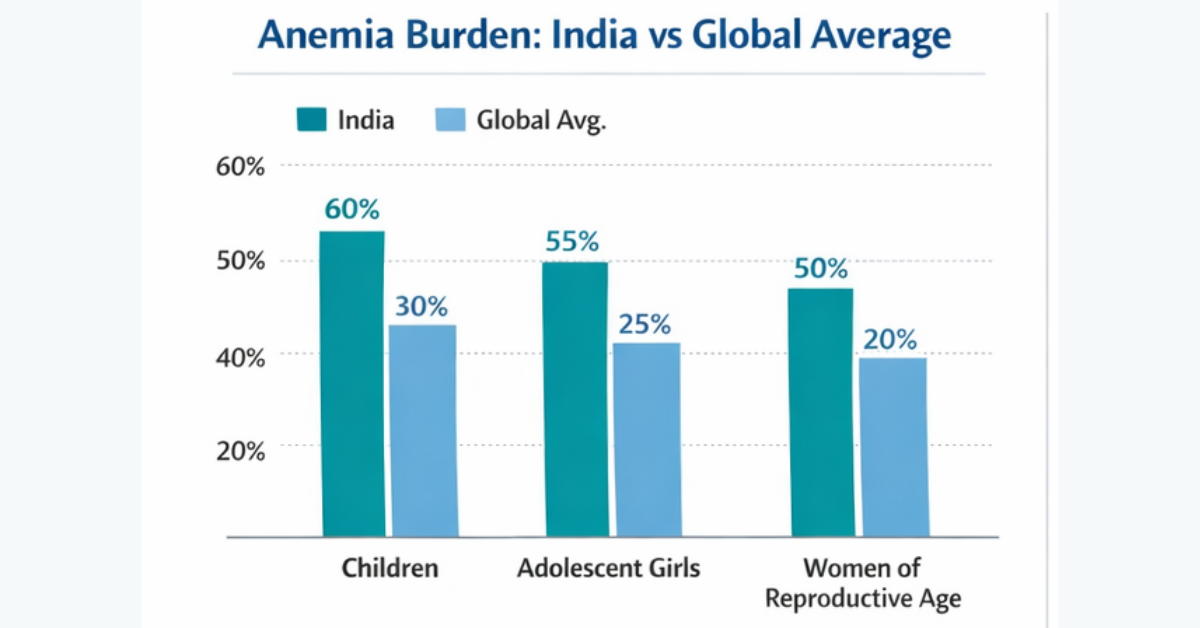
India continues to report alarmingly high prevalence of anemia across almost all population groups.
Large national surveys and nutrition assessments indicate that:
- A substantial proportion of women of reproductive age are anemic
- Adolescent girls show higher prevalence than boys
- Pregnant and lactating women remain particularly vulnerable
- Children and adolescents show both clinical and subclinical deficiency
Globally, anemia prevalence is lower in many comparable economies, highlighting that India’s burden is not merely dietary, but systemic.
Key insight: Despite iron supplementation programs, anemia remains persistent — suggesting that absorption, compliance, and inflammation‑related iron blockade play a critical role.
Why Is Anemia So Common in India?
Iron deficiency in India is multifactorial, extending far beyond low iron intake.
Key contributing factors include:
• Predominantly vegetarian diets
Plant‑based iron (non‑heme iron) has inherently lower bioavailability compared to heme iron from animal sources.
• High phytate and polyphenol intake
Staple Indian foods such as cereals, legumes, tea, and coffee contain phytates and polyphenols that bind iron and reduce absorption.
• Vitamin B12 deficiency
Common among vegetarians, B12 deficiency often co‑exists with iron deficiency and worsens anemia.
• Recurrent infections and chronic inflammation
Inflammation increases hepcidin levels, which block intestinal iron absorption and iron release from stores.
• Menstrual blood loss
Adolescent girls and women face repeated iron losses that are often underestimated.
These factors impair iron absorption and utilization, not just intake — explaining why conventional iron often fails.
Anemia Across Different Population Groups
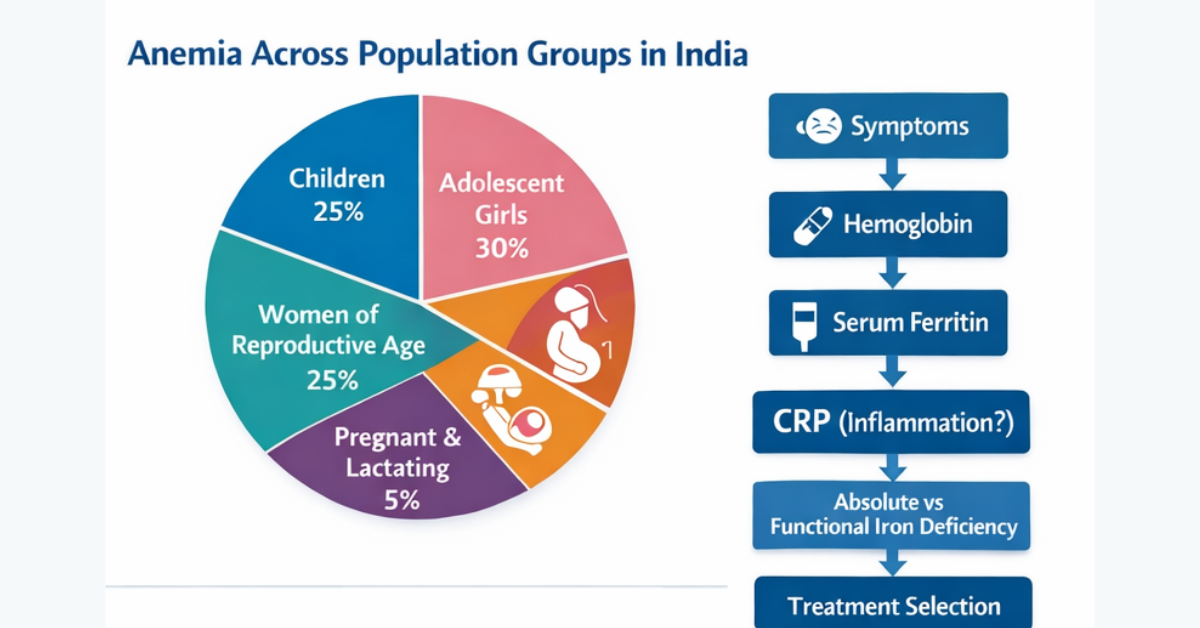
Anemia affects Indians across the life span, but clinical patterns differ:
- School‑age children: impaired cognitive development and attention
- Adolescents: higher prevalence in girls due to menstrual losses
- Women of reproductive age: chronic fatigue, hair fall, reduced productivity
- Pregnant & lactating women: increased maternal and fetal risks
- Athletes: endurance athletes, swimmers, and runners often show functional iron deficiency despite normal hemoglobin
This wide distribution underscores the need for safe, well‑tolerated, and effective long‑term iron strategies.
Types of Anemia: Clinical vs Subclinical
Iron deficiency exists on a spectrum:
• Subclinical iron deficiency
Low ferritin with normal hemoglobin. Often missed, yet associated with fatigue, reduced stamina, poor concentration, and hair fall.
• Clinical anemia
Low hemoglobin with overt symptoms such as breathlessness, weakness, and pallor.
Importantly, subclinical deficiency often precedes clinical anemia and already impacts quality of life.
Impact of Iron Deficiency on Daily Life
Iron deficiency affects multiple physiological systems:
- Persistent fatigue and reduced stamina
- Poor concentration and cognitive performance
- Hair fall and brittle nails
- Disturbed sleep
- Reduced immunity and frequent infections
- Lower work productivity and academic performance
In children and adolescents, iron deficiency is linked to impaired IQ development and learning ability, with long‑term socioeconomic implications.
Anemia During Pregnancy and Lactation
Pregnancy significantly increases iron requirements due to:
- Expanding maternal blood volume
- Fetal growth and placental needs
However, conventional iron salts are poorly tolerated during pregnancy, leading to:
- Nausea and vomiting
- Constipation
- Poor adherence and early discontinuation
Anemia during lactation further affects maternal recovery and infant nutrition, highlighting the need for better‑tolerated iron formulations.
Iatrogenic Anemia & Anemia of Inflammation
Certain medical conditions and long‑term therapies contribute to anemia:
- Chronic inflammatory diseases
- Autoimmune disorders
- Long‑term infections
- Gastrointestinal diseases
Inflammation raises hepcidin, which blocks iron absorption and traps iron in storage sites — a condition known as functional iron deficiency.
In such cases, increasing oral iron dose does not improve outcomes.
How to Identify Iron Deficiency Early
Common early warning signs include:
- Persistent tiredness
- Breathlessness on mild exertion
- Hair fall
- Pale skin
- Reduced exercise tolerance
Early recognition allows intervention before hemoglobin drops significantly.
Diagnostic Tests: Basic to Advanced
Basic tests
- Hemoglobin
- Serum ferritin
Advanced markers
- Transferrin saturation
- C‑reactive protein (CRP)
- Reticulocyte hemoglobin
Ferritin must always be interpreted alongside inflammatory markers, as inflammation can falsely elevate ferritin levels.
Why Conventional Iron Supplements Fail
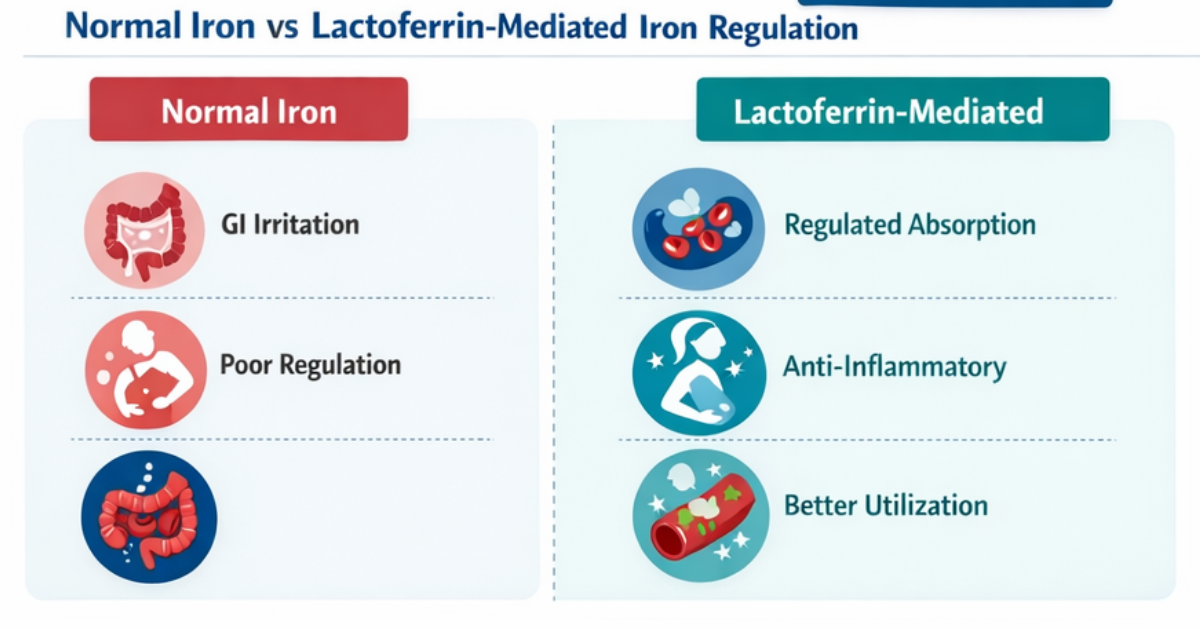
Common limitations include:
- Acid degradation in the stomach
- Low intestinal absorption
- Gastrointestinal side effects
- Poor compliance
The failure is often formulation‑related rather than dose‑related.
Liposomal Iron: A Smarter Way to Correct Deficiency
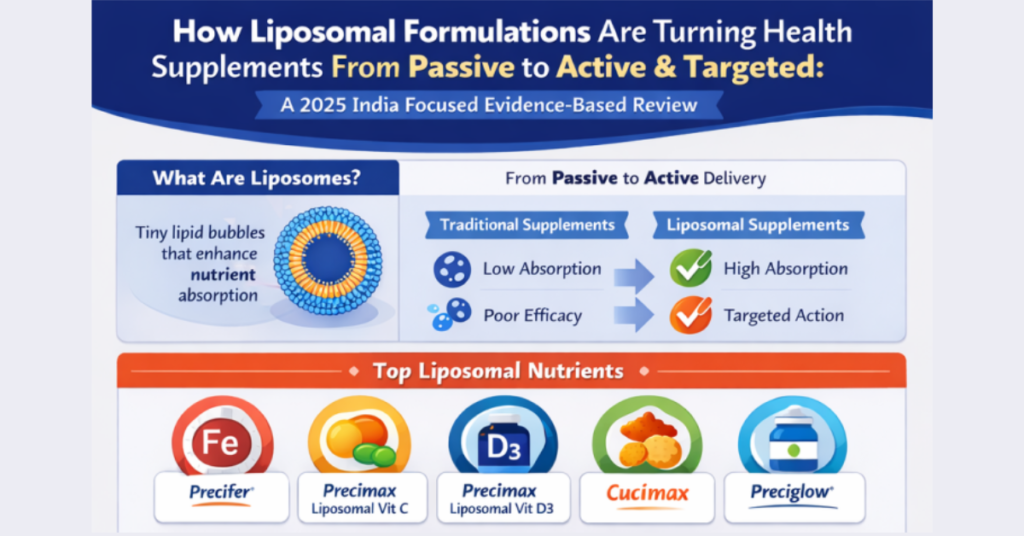
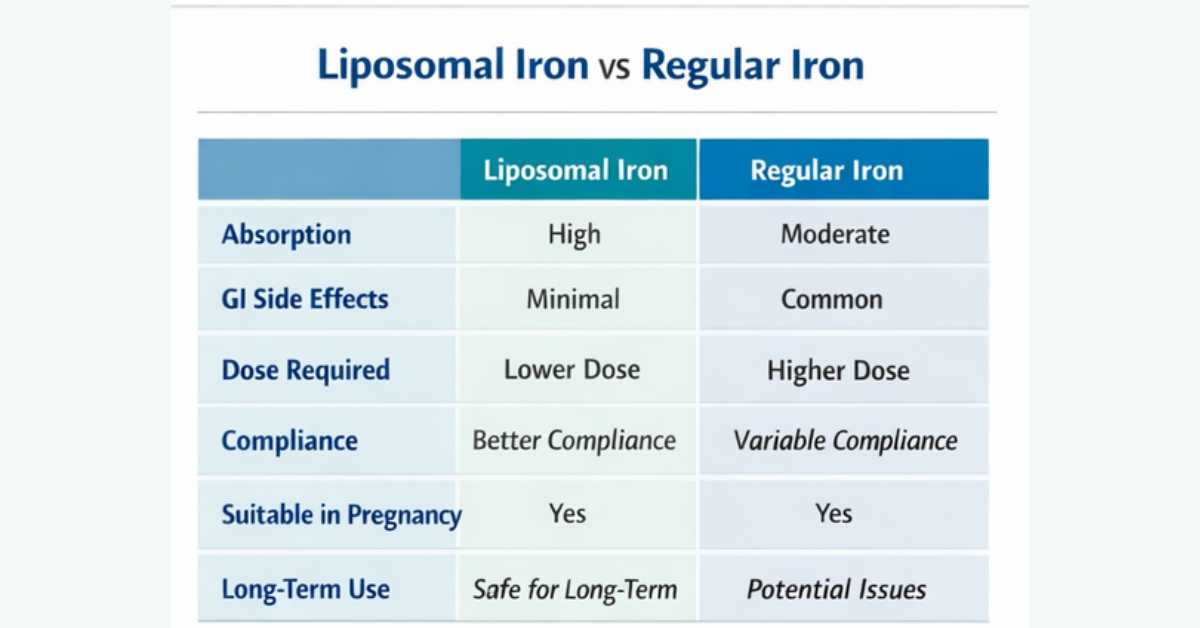
Liposomal iron encapsulates iron within phospholipid vesicles, similar to human cell membranes. This allows:
- Protection from stomach acid
- Improved intestinal absorption
- Minimal gastrointestinal irritation
- Better patient adherence
In clinical practice, liposomal iron formulations such as Precifer are increasingly used as a patient‑friendly approach to iron correction, especially where conventional iron has failed.
Role of Liposomal Lactoferrin in Iron Management
Lactoferrin is a natural iron‑binding protein involved in:
- Iron transport and utilization
- Regulation of inflammation
- Gut barrier integrity
Liposomal lactoferrin enhances stability and bioactivity, making it particularly useful in:
- Pregnancy
- Inflammatory states
- Functional iron deficiency
Used alongside liposomal iron, it supports more physiological iron regulation rather than forced supplementation.
Who Benefits Most from Liposomal Iron & Lactoferrin?
- Patients intolerant to conventional iron
- Pregnant and lactating women
- Adolescents with poor compliance
- Athletes with functional deficiency
- Patients with chronic inflammation or malabsorption
Lifestyle & Dietary Support Alongside Supplementation
Supportive strategies include:
- Iron‑rich Indian foods (millets, legumes, green leafy vegetables)
- Vitamin C‑rich foods to enhance absorption
- Avoiding tea/coffee around iron intake
- Adequate rest during correction phase
When to Consult a Doctor
Medical supervision is essential when:
- Symptoms persist despite supplementation
- Anemia is moderate to severe
- Pregnancy or chronic illness is present
Correct dose, duration, and follow‑up testing are critical.
Non‑Responders: What Else Needs Attention?
Consider:
- Vitamin B12 and folate deficiency
- Ongoing blood loss
- Malabsorption syndromes
- Chronic inflammation
Anemia management must be individualized.
Clinical Evidence & Global Perspective
Clinical studies increasingly support:
- Improved tolerability of liposomal iron
- Better adherence
- Physiological iron regulation with lactoferrin
WHO continues to emphasize that iron deficiency is a global and Indian public health priority, requiring better strategies, not just higher doses.
Conclusion
Correcting iron deficiency in India requires a shift from quantity‑focused supplementation to quality‑focused absorption.
Liposomal iron and liposomal lactoferrin represent a modern, patient‑friendly, and clinically relevant approach that aligns with real‑world needs — improving outcomes without compromising tolerability.