Beyond “Energy Support” to Mitochondrial, Cardiometabolic, and Healthy Aging Benefits
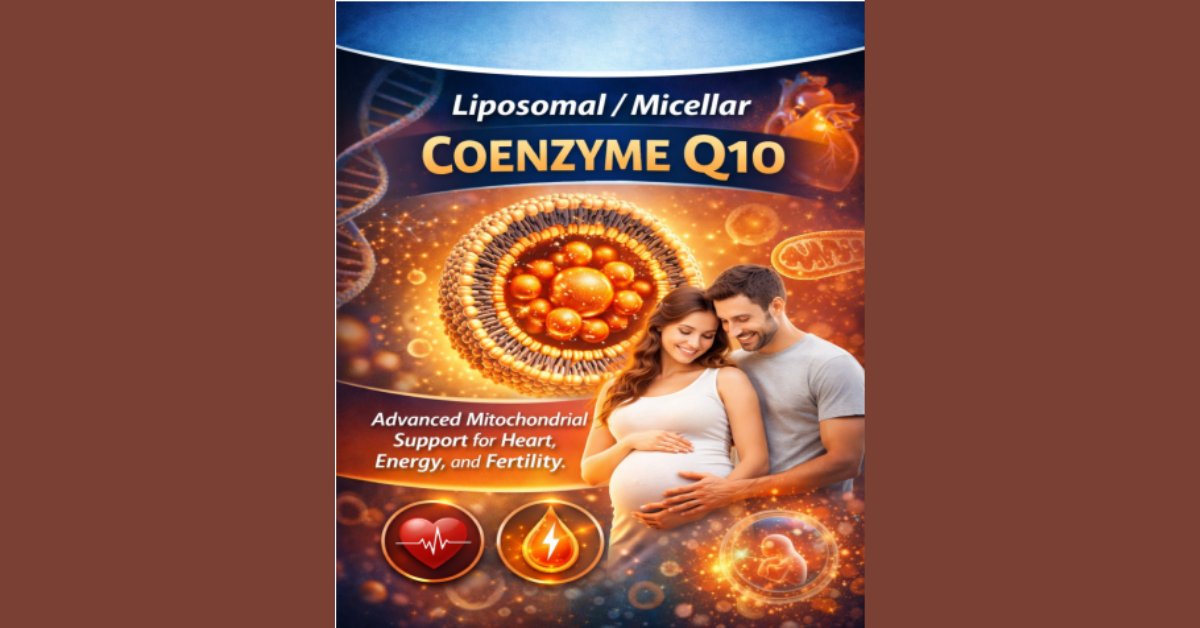
Coenzyme Q10 (CoQ10) is often described as an “energy supplement” and is also known as ubiquinone or ubidecarenone; its reduced form is called ubiquinol. While this description is not incorrect, it is incomplete. CoQ10 is not a stimulant and does not create artificial energy. Instead, it is a foundational mitochondrial molecule, essential for cellular energy production, antioxidant protection, and long-term metabolic resilience.
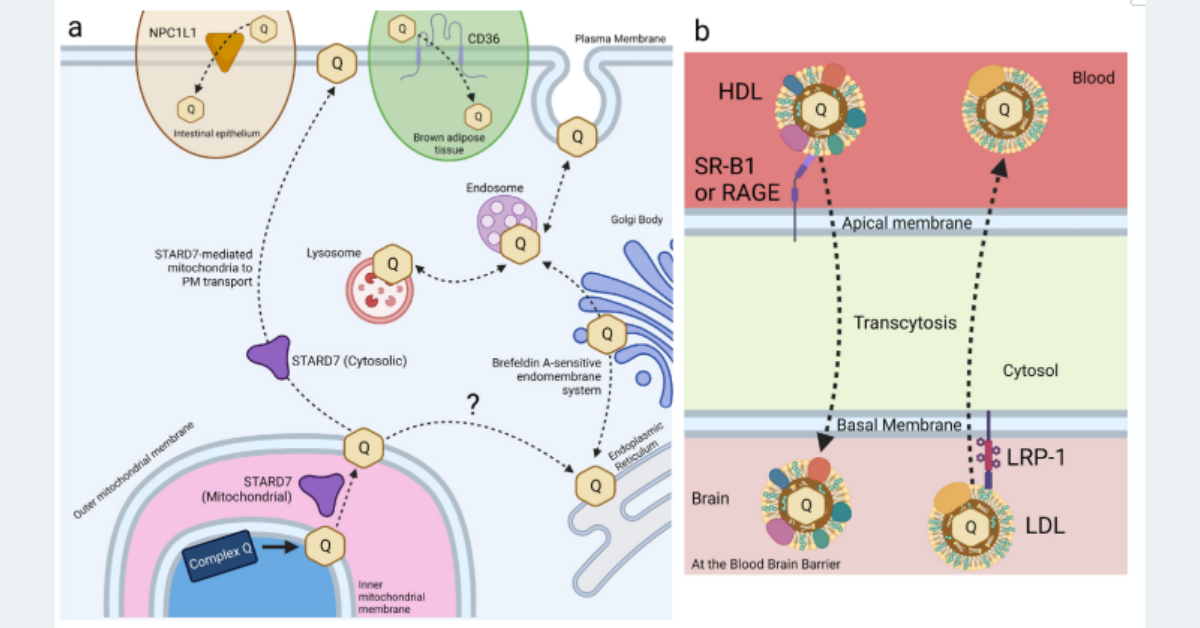
CoQ10 is present in nearly every cell of the human body, with particularly high concentrations in organs with high energy demand such as the heart, brain, skeletal muscle, liver, and kidneys. Its primary biological role is to facilitate adenosine triphosphate (ATP) production within mitochondria through the electron transport chain. Without adequate CoQ10, mitochondrial efficiency declines, leading to reduced cellular energy output and increased oxidative stress.
In parallel, CoQ10 functions as a lipid-phase antioxidant, protecting cell membranes, lipoproteins, and mitochondrial structures from oxidative damage. This dual role—energy generation and antioxidant defence—places CoQ10 at the centre of cardiometabolic health, recovery capacity, fertility biology, and healthy aging.
Despite its importance, CoQ10 supplementation has historically produced inconsistent results. Some individuals report meaningful improvements in stamina and recovery, while others experience little benefit. In most cases, this inconsistency is not related to dose, but rather to poor and variable absorption. In CoQ10 supplementation, delivery matters as much as biology.
Why CoQ10 Supplementation Becomes Relevant with Age and Stress
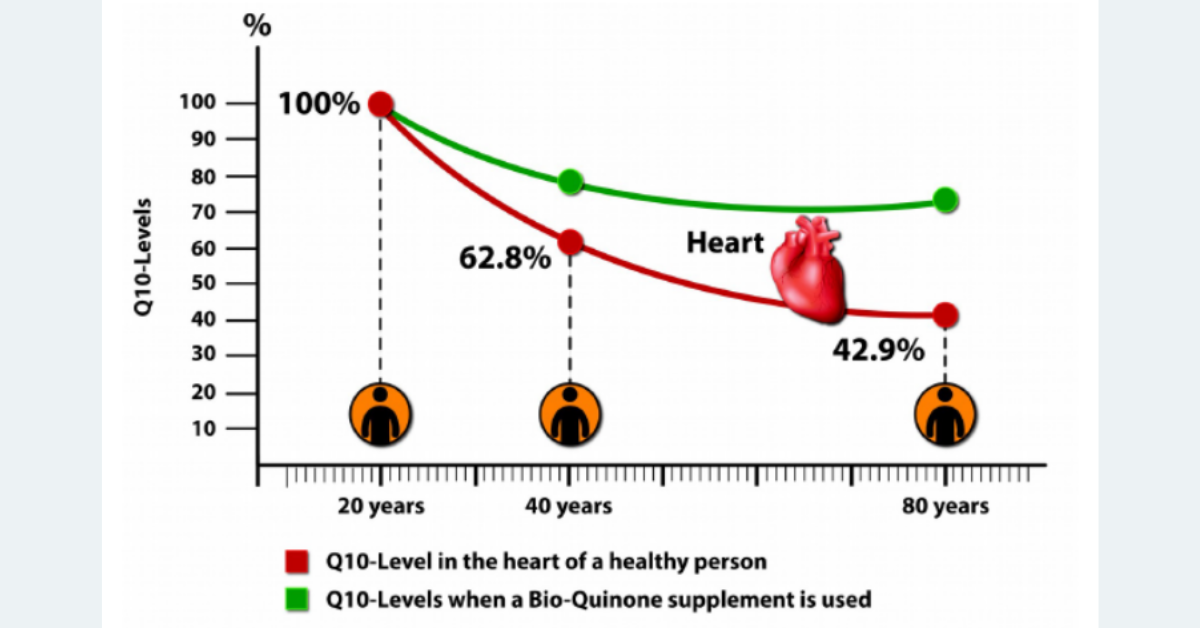
The human body synthesises CoQ10 endogenously, but this production declines progressively with age. By midlife, tissue CoQ10 levels may be substantially lower than in younger individuals. This decline is accelerated by chronic metabolic stress, inflammation, mitochondrial dysfunction, and the use of certain medications, particularly statins.
Reduced CoQ10 availability disproportionately affects tissues with high energy demand. Clinically, this may manifest as reduced exercise tolerance, muscle fatigue, slower recovery, cardiometabolic vulnerability, and diminished physiological resilience. This explains why CoQ10 supplementation becomes increasingly relevant after the fourth decade of life—even in individuals without diagnosed disease.
It is important to note that CoQ10 is not a short-term remedy. Its benefits are cumulative and dependent on consistent mitochondrial support over time.
Ubiquinone vs Ubiquinol: Understanding the Real Science
One of the most common misconceptions in CoQ10 supplementation is the belief that ubiquinol is always superior to ubiquinone.
CoQ10 exists in two interconvertible forms: ubiquinone (oxidised) and ubiquinol (reduced). Many commercial narratives promote ubiquinol as inherently better, often citing studies where standard ubiquinol products produced higher plasma CoQ10 levels than standard ubiquinone products.
However, this conclusion becomes misleading when formulation science is ignored.
Once absorbed, CoQ10 circulates in the bloodstream predominantly as ubiquinol regardless of whether ubiquinone or ubiquinol was ingested, because the body rapidly converts between the two forms as needed. What ultimately determines systemic availability is bioavailability, not the redox state listed on the label.
Importantly, comparative reviews highlight that the apparent superiority of ubiquinol largely reflects comparisons with poorly absorbed ubiquinone formulations. When advanced delivery systems are used, the absorption gap between ubiquinone and ubiquinol narrows substantially and may no longer be clinically meaningful.
This distinction is central to rational CoQ10 supplementation.
Why Conventional CoQ10 Supplements Often Underperform
CoQ10 is highly lipophilic, poorly water soluble, and relatively large in molecular size. These characteristics make it inherently difficult to absorb through the gastrointestinal tract.
Conventional tablets and powders show poor and unpredictable absorption. Oil-based softgels improve absorption modestly but remain highly dependent on meal fat content, digestive efficiency, and individual variability. Sprays and fast-dissolve formats offer convenience but introduce inconsistent dosing and short duration of action. Sustained-release products prolong exposure but do not resolve the fundamental solubility limitation.
As a result, dose escalation is often used to compensate for poor absorption—raising cost without proportionate clinical benefit.
Liposomal and Micellar CoQ10: A Rational Upgrade
Liposomal and micellar delivery systems are specifically designed to overcome the absorption limitations of lipophilic molecules such as CoQ10.
Liposomal CoQ10 ((PreciQ10) encapsulates ubiquinone within phospholipid bilayers that resemble human cell membranes. This structure protects CoQ10 from degradation and facilitates more efficient intestinal uptake and systemic distribution.
Micellar (self-emulsifying) systems increase CoQ10 solubility in gastrointestinal fluids, improving bio accessibility and reducing dependence on high-fat meals.
Formulation and clinical studies consistently demonstrate that lipid-based delivery systems produce higher and more predictable plasma CoQ10 exposure compared with conventional formulations. Clinically, this translates into greater consistency of outcomes at physiologically appropriate doses.
Why Precimax Uses Liposomal / Micellar Ubiquinone (PreciQ10)
At Precimax Life Sciences, formulation decisions are driven by clinical logic rather than marketing trends.
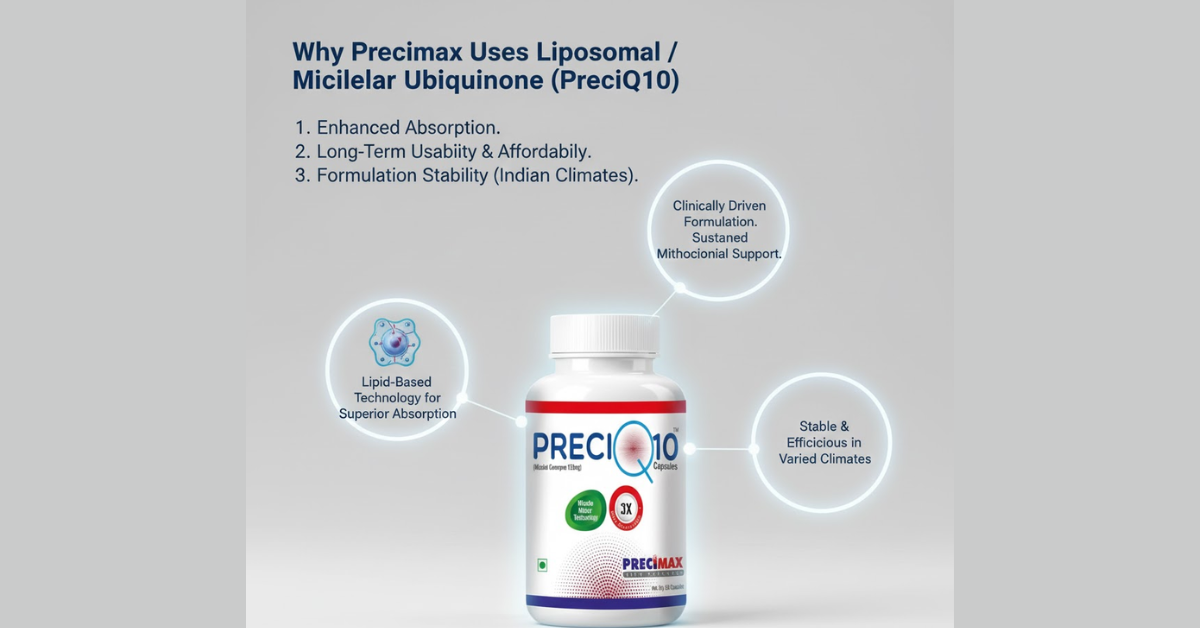
Precimax Liposomal / Micellar CoQ10 (PreciQ10) uses ubiquinone delivered through advanced lipid-based technology, rather than relying solely on the ubiquinol label claim. This strategy is based on three principles.
First, delivery efficiency outweighs molecular form alone in determining real-world absorption.
Second, long-term usability and affordability matter, especially for foundational supplements intended for sustained use.
Third, formulation stability under Indian climatic conditions is essential for maintaining efficacy from manufacture to consumption.
By focusing on bioavailable, physiologically relevant dosing rather than exaggerated milligram counts, Precimax aims to support mitochondrial systems steadily and safely over time.
Clinical Applications of CoQ10 Supplementation
Cardiovascular and Cardiometabolic Health
CoQ10 is one of the most extensively studied supplements in heart failure as an adjunct to standard therapy. Randomised controlled trials and meta-analyses, including the Q-SYMBIO study, demonstrate improvements in functional capacity, symptom burden, and quality of life. These effects are attributed to enhanced myocardial energy production and reduced oxidative stress.
Beyond heart failure, CoQ10 has been investigated for endothelial function and blood pressure support, with systematic reviews reporting modest but clinically relevant reductions in systolic and diastolic blood pressure in selected populations.
Fatigue and Reduced Exercise Tolerance
A 2022 systematic review and meta-analysis concluded that CoQ10 supplementation is effective and safe for reducing fatigue, with greater benefits observed at higher doses and longer duration of use. Importantly, CoQ10 improves energy efficiency, not stimulation.
Statin-Associated Depletion
Statins inhibit endogenous CoQ10 synthesis. Although not all statin users experience symptoms, CoQ10 is commonly used as supportive mitochondrial nutrition in individuals reporting muscle fatigue or reduced exercise tolerance.
Fertility and Healthy Aging
Mitochondrial function is central to both sperm and oocyte quality. CoQ10 is increasingly incorporated into fertility-support protocols. In aging populations, CoQ10 contributes to cellular resilience, recovery capacity, and metabolic efficiency.
Comparison of CoQ10 Forms: A Practical Perspective
Standard ubiquinone tablets are inexpensive but poorly absorbed. Oil-based softgels improve absorption but remain meal-dependent. Standard ubiquinol products may outperform basic ubiquinone but come at higher cost and remain carrier-dependent.
Sprays lack dosing precision, while sustained-release products do not address solubility barriers.
Micellar and liposomal CoQ10 ((PreciQ10) offer the best balance of absorption, consistency, and long-term value.
Comparison of CoQ10 Forms: A Practical View
CoQ10 Form | Key Strength | Key Limitation | Suitability |
Standard ubiquinone tablet | Low cost | Poor absorption | Limited benefit |
Oil-based ubiquinone softgel | Better than tablets | Meal-dependent | General use |
Standard ubiquinol softgel | Higher absorption vs basic forms | High cost | Select users |
Sustained-release CoQ10 | Prolonged exposure | Solubility limits remain | Niche use |
CoQ10 spray | Convenience | Dose variability | Not ideal long-term |
Micellar CoQ10 | Improved bioaccessibility | System-dependent | Daily preventive use |
Liposomal CoQ10 | Predictable absorption | Higher cost | Clinical-grade use |
This comparison clarifies why delivery technology often matters more than whether the label says ubiquinone or ubiquinol.
What to Expect When Using Liposomal / Micellar CoQ10 ((PreciQ10))
CoQ10 does not act immediately. Early improvements in stamina and recovery are typically noticed within two to four weeks. More meaningful physiological benefits—such as improved endurance, cardiometabolic support, and fatigue reduction—usually emerge after eight to twelve weeks, reflecting mitochondrial adaptation timelines [8].
Consistency is more important than dose escalation.
What to Expect with Precimax Liposomal / Micellar CoQ10 (PreciQ10)
CoQ10 does not produce immediate stimulation. Early benefits typically include:
• Improved exercise tolerance
• Reduced post-activity fatigue
• Better recovery
More meaningful physiological benefits generally emerge after 8–12 weeks, reflecting the time required for mitochondrial systems to adapt.
Duration of Use: Short-Term vs Long-Term
For short-term needs such as post-illness recovery or transient fatigue, a four- to eight-week course may be sufficient. For cardiometabolic health, statin-associated depletion, fertility support, or healthy aging, CoQ10 is best positioned as long-term foundational mitochondrial nutrition, with periodic reassessment rather than cycling [7,8].
Safety and Tolerability
CoQ10 has an excellent safety profile. Large clinical reviews report low incidence of adverse effects, typically limited to mild gastrointestinal discomfort [13]. Individuals on anticoagulants or complex cardiovascular regimens should use CoQ10 under medical supervision.
Frequently Asked Questions (FAQs)
- Is CoQ10 a stimulant?
No. It improves mitochondrial efficiency rather than stimulating the nervous system.
2. Is ubiquinol always superior?
No. Delivery system plays a major role in absorption.
3. Can CoQ10 be used long term?
Yes. It is widely used as a long-term supplement.
4. When will benefits be noticeable?
Usually within 2–4 weeks, with deeper effects by 8–12 weeks.
5. Is CoQ10 safe with statins?
Commonly used alongside statins, under guidance.
Closing Perspective
CoQ10 is not about quick energy—it is about mitochondrial efficiency, cellular protection, and long-term resilience. The future of CoQ10 supplementation lies not in simplistic debates over ubiquinone versus ubiquinol, but in delivery science, formulation quality, and practical usability.
By combining liposomal and micellar technology with physiologically relevant dosing and climate-appropriate stability, Precimax Liposomal / Micellar Coenzyme Q10 (PreciQ10) represents a clinically rational, science-aligned approach to daily mitochondrial support across the lifespan.
References
- Bentinger M, Tekle M, Dallner G. Coenzyme Q—biosynthesis and functions. Biochemical and Biophysical Research Communications. 2010;396(1):74–79.
- Crane FL. Biochemical functions of coenzyme Q10. Journal of the American College of Nutrition. 2001;20(6):591–598.
- Littarru GP, Tiano L. Clinical aspects of coenzyme Q10: an update. Nutrition. 2010;26(3):250–254.
- López-Lluch G, Rodríguez-Aguilera JC, Santos-Ocaña C, Navas P. Is coenzyme Q a key factor in aging? Mechanisms of Ageing and Development. 2010;131(4):225–235.
- Bhagavan HN, Chopra RK. Plasma coenzyme Q10 response to oral ingestion of coenzyme Q10 formulations. Molecular Aspects of Medicine. 2007;28(5–6):397–418.
- Kagan VE, Tyurin VA, et al. Antioxidant properties of ubiquinol: role in mitochondrial and cellular membranes. Free Radical Biology and Medicine. 1990;9(2):117–125.
- Mortensen SA, Rosenfeldt F, Kumar A, et al. The effect of coenzyme Q10 on morbidity and mortality in chronic heart failure (Q-SYMBIO Study). Journal of the American College of Cardiology. 2014;64(18):1801–1810.
- Mehrabani S, Askari G, et al. Effects of coenzyme Q10 supplementation on fatigue: A systematic review and meta-analysis. Frontiers in Pharmacology. 2022;13:883231.
- Rosenfeldt F, Hilton D, Pepe S, Krum H. Systematic review of effect of coenzyme Q10 in physical exercise, hypertension and heart failure. Journal of Human Hypertension. 2007;21(4):297–306.
- Allen TM, Cullis PR. Liposomal drug delivery systems: From concept to clinical applications. Advanced Drug Delivery Reviews. 2013;65(1):36–48.
- Lopez-Lluch G, Del Pozo-Cruz J, et al. Bioavailability of coenzyme Q10 supplements depends on carrier and formulation: implications for ubiquinone vs ubiquinol. Antioxidants. 2019;8(11):1–15.
- Hernández-Camacho JD, Bernier M, López-Lluch G, Navas P. Coenzyme Q10 supplementation in aging and disease. Frontiers in Physiology. 2018;9:44.
- Hidaka T, Fujii K, et al. Safety assessment of coenzyme Q10 (CoQ10). BioFactors. 2008;32(1–4):199–208.
- Pepe S, Marasco SF, Haas SJ, et al. Coenzyme Q10 in cardiovascular disease. Molecular Aspects of Medicine. 2007;28(5–6):605–622.
- Garrido-Maraver J, Cordero MD, et al. Clinical applications of coenzyme Q10. Frontiers in Bioscience. 2014;19:619–633.