Browse Posts by Month

Liposomal Nutraceuticals in Gut Health & Dysbiosis: Clinical Evidence and Indian Practice Insights

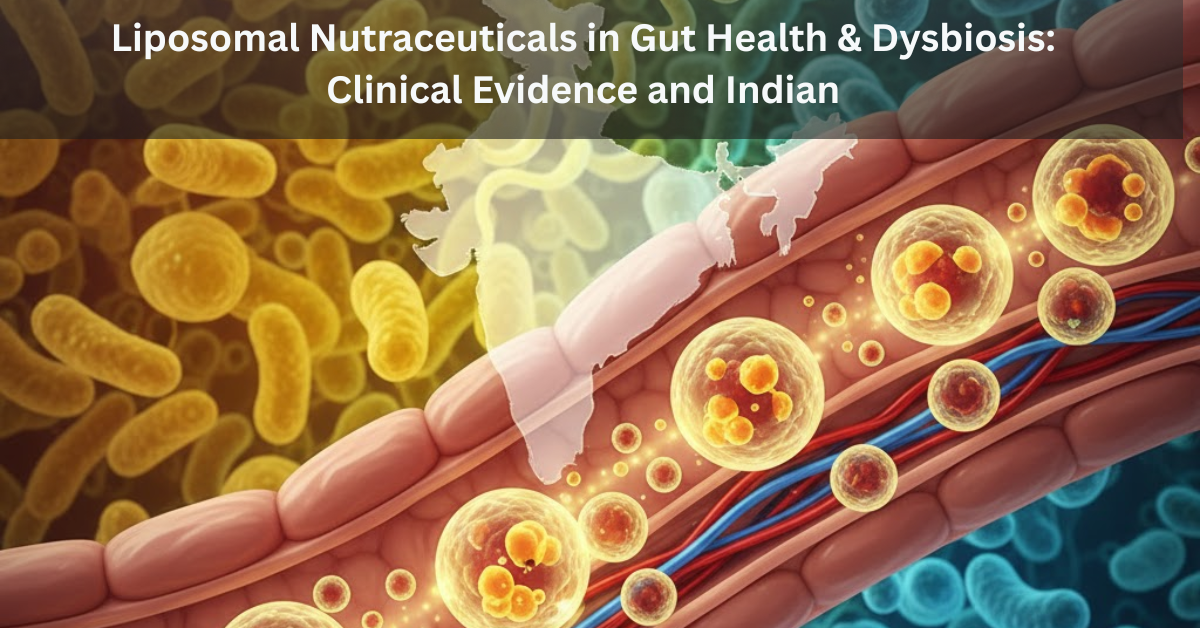
Introduction: Gut Health as the Foundation of Nutrition & Immunity

  • Position gut health as the central regulator of absorption, inflammation, immunity, and metabolism
  • Highlight why gut health searches are rapidly increasing in India
  • Introduce dysbiosis as a silent driver of supplement failure
  • Set premise: “Most supplementation failures begin in the gut”
gut health intro

Gut Health & Dysbiosis: The Indian Context

Include Indian‑specific factors:

  • Frequent antibiotic exposure
  • High carbohydrate, phytate‑rich diets
  • Stress, irregular eating patterns
  • Rising IBS, metabolic syndrome, NAFLD

Cite: Indian studies / reviews on dysbiosis prevalence, antibiotic overuse, IBS burden

What Is Gut Dysbiosis? 

Explain:

  • Healthy microbiome vs dysbiosis
  • Loss of beneficial bacteria
  • Increase in inflammatory mediators
  • Altered gut permeability

Link dysbiosis to:

  • Poor digestion
  • Reduced micronutrient absorption
  • Systemic inflammation

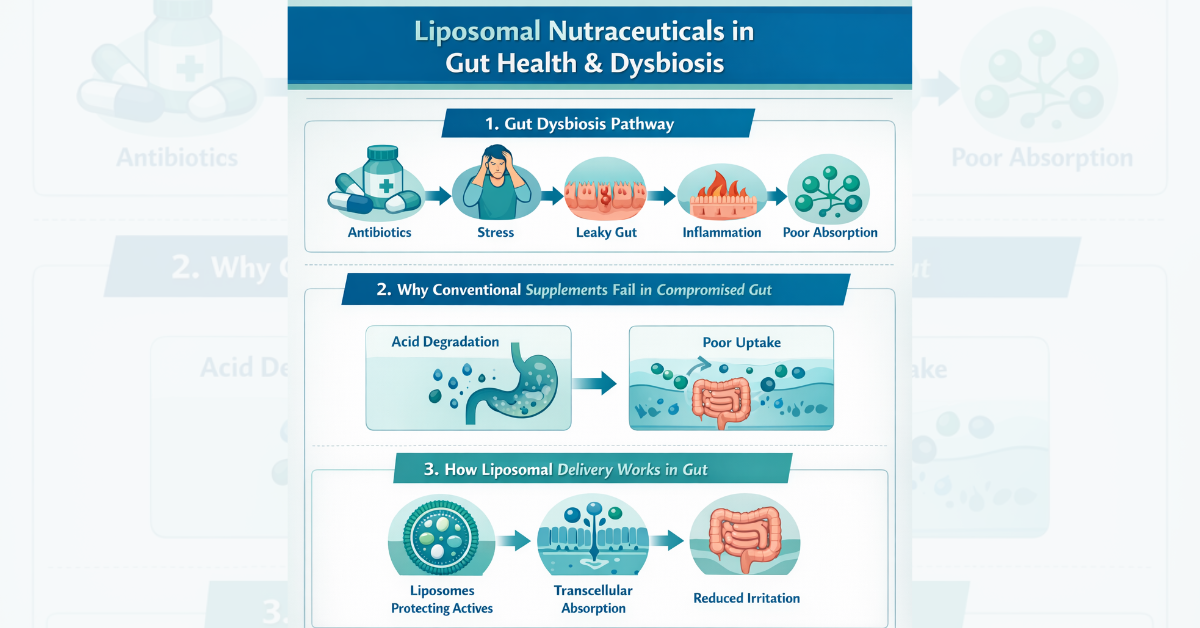
Gut Inflammation → Poor Absorption → Nutrient Failure

Key concept section (very important):

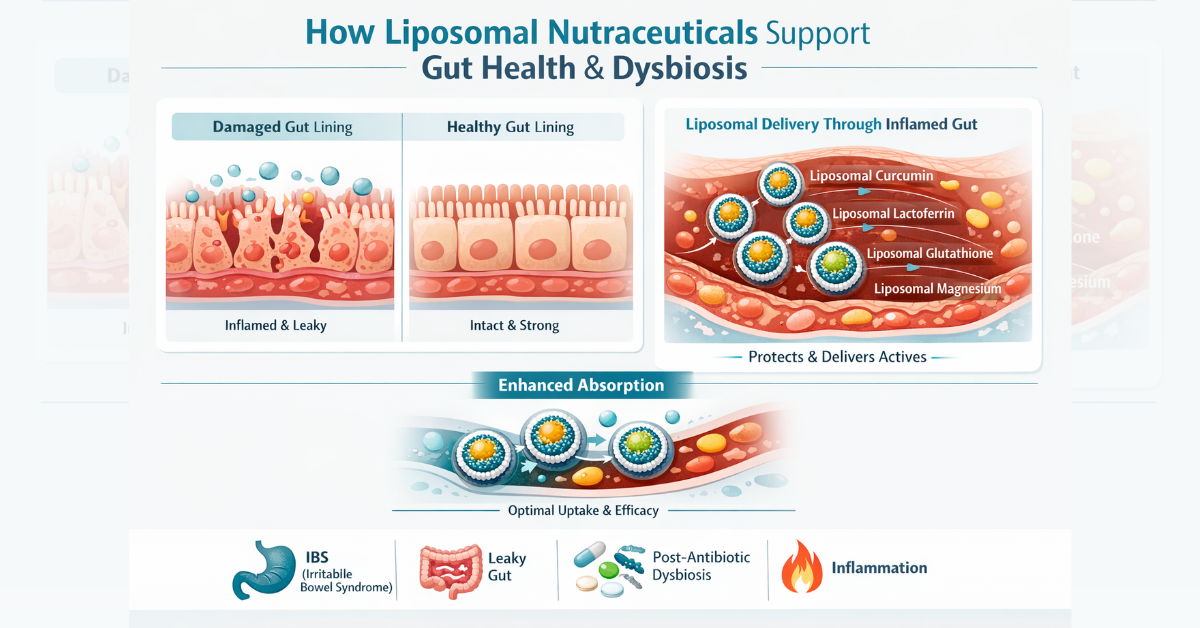
  • How inflamed gut lining reduces absorption
  • Role of tight junction damage (leaky gut)
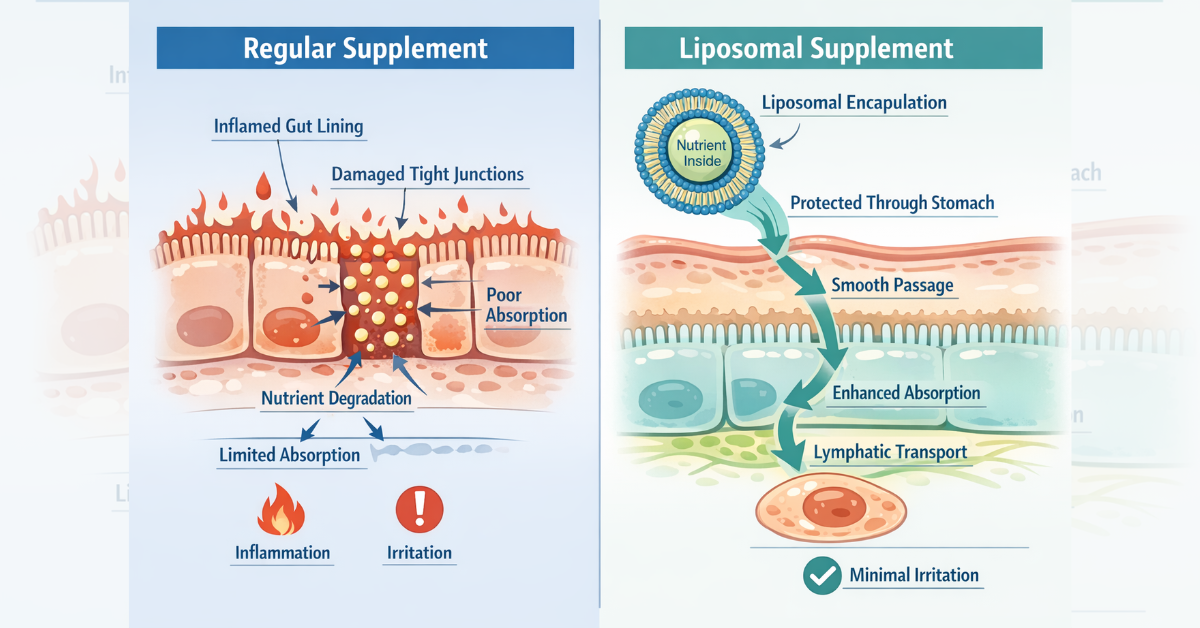
  • Why oral supplements fail even when taken regularly

This section should act as a bridge between gut health and liposomal science.

Leaky Gut Syndrome: Emerging Clinical Reality

Cover:

  • What “leaky gut” means physiologically
  • Association with IBS, autoimmune tendencies, metabolic disorders
  • Why conventional supplements often worsen GI symptoms

Clinical angle:
Leaky gut = higher intolerance to regular formulations
dybiosis

Post‑Antibiotic Gut Damage: An Overlooked Indian Problem

Explain:

  • Antibiotic‑induced microbiome disruption
  • Nutrient malabsorption post antibiotics
  • Increased oxidative stress and inflammation

Clinical relevance:
Many Indian patients take supplements after antibiotics — when absorption is worst.

Why Conventional Nutraceuticals Underperform in Compromised Gut

Explain clearly:

  • Acid degradation
  • Poor intestinal permeability
  • GI irritation
  • Microbiome disruption

Reinforce: Failure is formulation‑driven, not ingredient‑driven

Why Liposomal Delivery Works Better in Compromised Gut

Explain in simple scientific language:

  • Phospholipid encapsulation
  • Protection from gastric acid
  • Improved mucosal tolerance
  • Enhanced cellular uptake

supplement

CONDITION‑WISE CLINICAL APPLICATIONS

IBS & Functional Gut Disorders

Cover:

  • Low‑grade inflammation
  • Visceral hypersensitivity
  • Supplement intolerance

Explain role of:

Post‑Antibiotic & Post‑Infectious Gut Recovery

Cover:

  • Oxidative stress
  • Barrier repair
  • Immune balance

Explain role of:

Leaky Gut & Systemic Inflammation

Explain:

  • How gut permeability fuels systemic inflammation
  • Links to metabolic syndrome, fatigue, immune dysfunction

Highlight why:

  • Liposomal formats are better tolerated and more effective

KEY INGREDIENT SPOTLIGHT

Liposomal Curcumin

  • Anti‑inflammatory, gut‑protective
  • Why standard curcumin fails in IBS
  • Evidence for bioavailable forms

Liposomal Lactoferrin

  • Gut immune regulation
  • Barrier protection
  • Iron regulation without irritation

Liposomal Glutathione

  • Oxidative stress reduction
  • Mucosal healing support

Liposomal Magnesium

  • Gut‑brain axis
  • Motility, stress, muscle relaxation
  • Better tolerance vs salts

gut health

Clinical Evidence Overview

  • Summarize human trials / reviews on:

  • Liposomal delivery
  • Gut inflammation modulation
  • Bioavailability improvements

Important:
Cite peer‑reviewed journals (no exaggerated claims)

Practical Clinical Integration

Discuss:

  • Who benefits most
  • Duration of use
  • Combination strategies
  • Monitoring and expectations

Conclusion: Gut‑First Approach to Nutraceutical Success

Reinforce:

  • Gut health determines supplement success
  • Liposomal delivery aligns with compromised gut physiology
  • Shift from “what to take” → “how it is delivered”
Frequently Asked Questions (FAQs)

Gut dysbiosis refers to an imbalance between beneficial and harmful gut bacteria. In India, frequent antibiotic use, recurrent gut infections, highly processed diets, stress, irregular eating patterns, and low dietary fiber intake contribute significantly to dysbiosis. Poor sanitation exposure and repeated gastrointestinal insults further worsen gut health across age groups.

An inflamed or damaged gut lining reduces the intestine’s ability to absorb vitamins, minerals, and bioactive compounds. Conditions such as IBS, leaky gut, and post‑infection enteropathy interfere with transport mechanisms, leading to micronutrient deficiencies even when intake appears adequate.

Traditional supplements rely on normal digestion and intestinal transport. In inflamed or compromised gut conditions, these supplements are poorly absorbed, may irritate the gut lining, and can worsen symptoms such as bloating, acidity, or diarrhea—leading to poor compliance and suboptimal outcomes.

Liposomal supplements encapsulate nutrients within phospholipid vesicles that mimic cell membranes. This structure protects nutrients from gastric degradation and allows better absorption through the intestinal lining, even when gut integrity is compromised.

Liposomal delivery bypasses many damaged absorption pathways by enabling direct cellular uptake. This reduces dependence on inflamed intestinal surfaces and improves bioavailability, making them particularly suitable in IBS, leaky gut, and post‑antibiotic gut damage.

Yes. Clinical experience suggests liposomal forms of curcumin, magnesium, lactoferrin, and glutathione are better tolerated in IBS patients. They help reduce inflammation, oxidative stress, and gut discomfort without aggravating symptoms commonly seen with conventional supplements.

Liposomal or micellar curcumin shows improved absorption compared to regular curcumin, enabling better anti‑inflammatory effects at lower doses. This is particularly useful in gut inflammation, post‑infectious IBS, and inflammatory bowel tendencies.

Lactoferrin supports gut barrier integrity, modulates immune responses, and helps regulate iron metabolism. In liposomal form, it is better absorbed and more effective in reducing gut inflammation, supporting microbiome balance, and aiding recovery after infections or antibiotics.

Glutathione is a key antioxidant for gut epithelial repair. Liposomal glutathione improves systemic and local antioxidant capacity, helping heal oxidative damage in the gut lining and supporting detoxification pathways.

Yes. Liposomal magnesium is often better tolerated than traditional magnesium salts and may support gut motility, reduce cramping, and assist neuromuscular relaxation without causing diarrhea in sensitive individuals.

Liposomal nutrients help strengthen the gut barrier by reducing inflammation, oxidative stress, and immune activation. Nutrients such as curcumin, glutathione, lactoferrin, and vitamin D3 are particularly relevant in supporting gut lining repair.

When properly formulated and used under professional guidance, liposomal supplements are considered safe for long‑term use. Their improved absorption often allows lower doses, reducing the risk of gastrointestinal irritation.

In many cases, yes. Improved bioavailability allows effective serum and tissue levels to be achieved with smaller doses compared to conventional formulations, which is especially important in sensitive gut conditions.

Yes. Liposomal antioxidants and anti‑inflammatory nutrients can support gut recovery after antibiotic use by reducing oxidative stress, supporting immune balance, and aiding mucosal healing. They complement probiotic and dietary strategies.

Elderly individuals often have reduced digestive efficiency and chronic low‑grade inflammation. Liposomal supplements offer improved absorption and better tolerability, making them particularly useful in aging populations.

The gut plays a central role in immune regulation. Liposomal nutrients such as vitamin D3, lactoferrin, glutathione, and curcumin help modulate immune responses, reduce inflammation, and support mucosal immunity—especially relevant post‑COVID‑19.

No. Clinical efficacy depends on formulation quality, particle stability, phospholipid composition, and manufacturing standards. Poorly formulated products may not deliver the expected absorption benefits.

No. Liposomal supplements are supportive tools that complement medical treatment, dietary correction, and lifestyle changes. They are not a replacement for prescribed medications in diagnosed gastrointestinal diseases.

Individuals with IBS, recurrent gut infections, post‑antibiotic gut damage, chronic inflammation, poor absorption, elderly patients, and those not responding to conventional supplements may benefit the most.

Growing clinical use, better research data, and increasing awareness among Indian healthcare professionals suggest liposomal nutraceuticals may become an integral part of modern gut health and functional medicine protocols.

1
Scroll to Top