Introduction: Cardiovascular Disease in India Is No Longer Just a Cholesterol Problem
India is facing an unprecedented cardiovascular crisis. Heart disease has become the leading cause of mortality, affecting individuals at younger ages compared to Western populations. Despite major advances in cardiology — including statins, angioplasty, advanced imaging, and precision diagnostics — morbidity and long‑term complications continue to rise.
This raises an important clinical reality:
Modern cardiovascular risk is no longer explained only by LDL cholesterol.
It is driven by inflammation, endothelial dysfunction, oxidative stress, metabolic syndrome, mitochondrial decline, and muscle wasting.
Today’s cardiology demands an expanded approach — one that integrates evidence‑based nutraceutical strategies alongside standard pharmacology.
This is where liposomal delivery technologies are emerging as clinically relevant tools, offering improved absorption, predictability, and tolerability compared with conventional supplements.
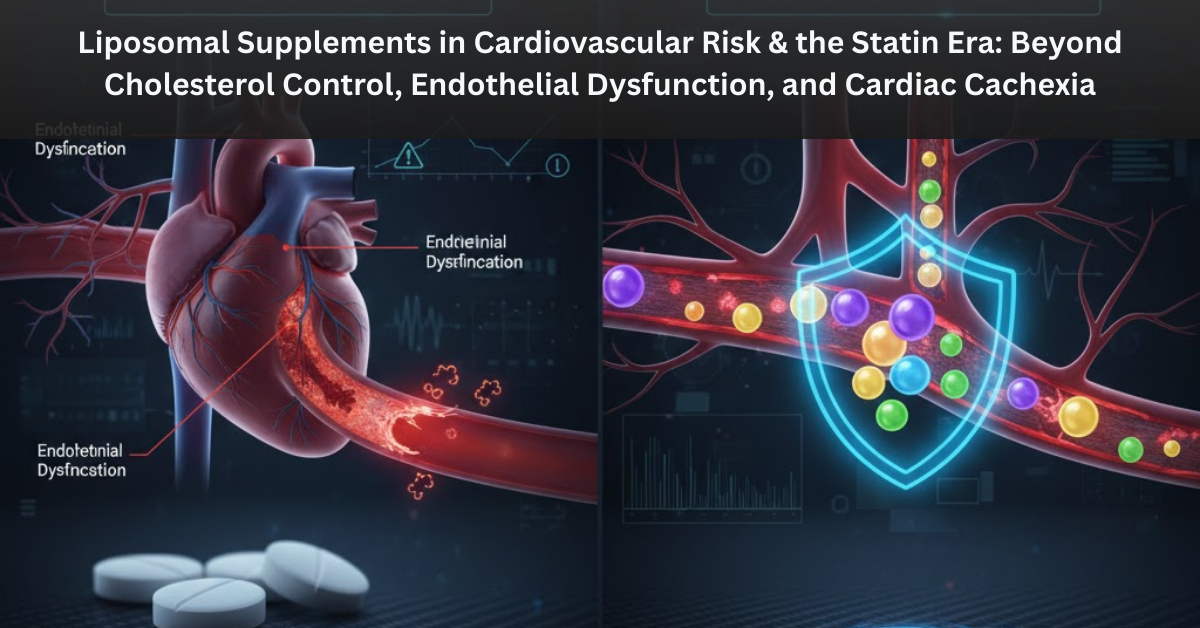
Cardiovascular Risk in India: Incidence, Mortality, and Systemic Challenges
India’s cardiovascular burden is amplified by multiple interlinked factors:
- Rising central obesity
- Sedentary lifestyle and urbanization
- High triglycerides + low HDL phenotype
- Diabetes and metabolic syndrome overlap
- Air pollution and oxidative injury
- Delayed diagnosis due to low preventive screening
- Limited health insurance penetration
- High out‑of‑pocket treatment costs
- Poor awareness of lifestyle‑based prevention
Unlike many developed countries, Indian patients often present late — after myocardial infarction, stroke, or advanced heart failure.
The Statin Era: LDL Control but Residual Cardiovascular Risk Remains
Statins remain the cornerstone of cardiovascular prevention, effectively lowering LDL cholesterol. Yet clinicians increasingly observe:
- Persistent endothelial dysfunction
- Ongoing inflammation despite lipid correction
- Statin‑associated fatigue and muscle symptoms
- CoQ10 depletion affecting mitochondrial energy
- Continued plaque instability in metabolic syndrome
This is referred to as residual cardiovascular risk.
The future of heart prevention is therefore shifting toward:
✅ Endothelial protection
✅ Oxidative stress reduction
✅ Mitochondrial resilience
✅ Muscle preservation
✅ Gut and metabolic health support
Endothelial Dysfunction: The Silent Driver Beyond Cholesterol
The endothelium is the inner lining of blood vessels. Dysfunction here precedes:
- Hypertension
- Atherosclerosis
- Microvascular damage
- Kidney decline
- Diabetic retinopathy
- Stroke risk
Oxidative stress reduces nitric oxide bioavailability, causing vascular stiffness and impaired circulation — even when cholesterol appears “controlled.”
Why Oxidative Stress Is Central to Cardiovascular Progression
Oxidative stress is elevated in:
- Obesity
- Diabetes
- Smoking
- Pollution exposure
- Chronic inflammation
- Aging mitochondria
It accelerates:
- LDL oxidation
- Plaque instability
- Myocardial energy decline
- End‑organ damage (heart, kidney, eyes)
Thus, antioxidants with proven delivery systems are increasingly relevant.
Liposomal Nutraceuticals: Why Delivery Science Matters in Cardiology
Many cardioprotective nutraceuticals suffer from poor oral absorption:
Liposomal encapsulation improves:
- Stability in digestion
- Cellular uptake
- Lower dose requirement
- Reduced GI intolerance
- Predictable outcomes in chronic use
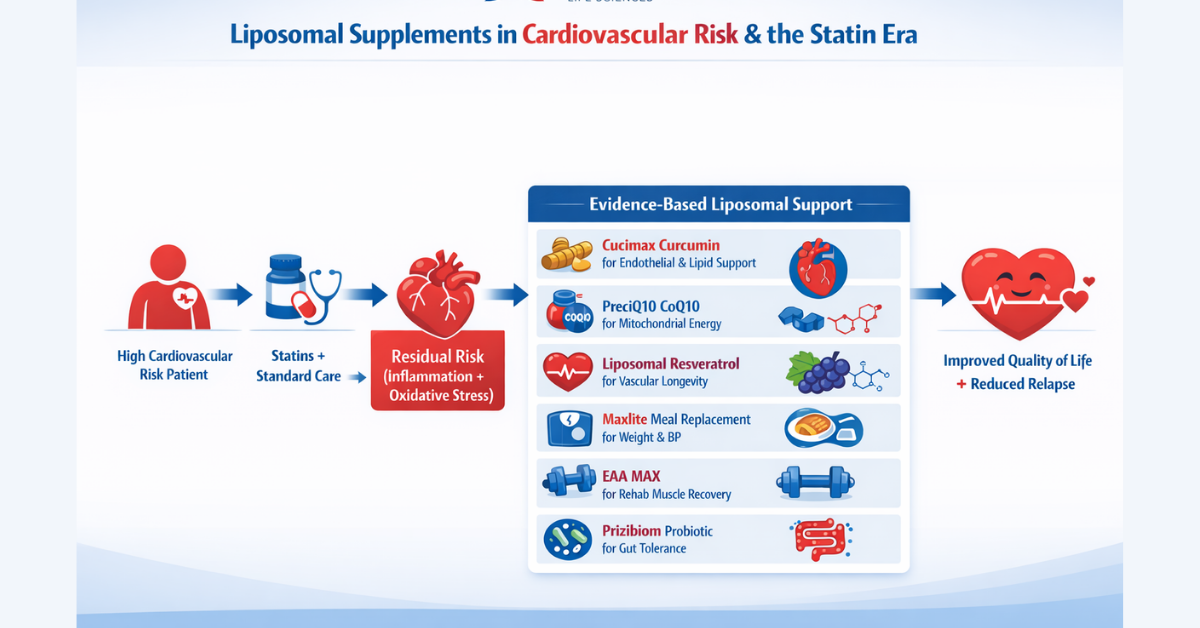
Liposomal Curcumin (Cucimax): Dyslipidemia, Endothelium, and Metabolic Syndrome
Curcumin is one of the most studied natural anti‑inflammatory compounds.
Clinical research indicates curcumin may:
- Reduce inflammatory cytokines
- Improve endothelial function
- Support lipid balance
- Reduce oxidative injury
Evidence Highlights
Studies such as “Curcumin supplementation improves lipid profile and reduces oxidative stress markers in patients with metabolic syndrome” suggest benefits in:
- Increasing HDL
- Reducing LDL oxidation
- Lowering triglyceride burden
However, normal curcumin has extremely poor bioavailability.
Cucimax (liposomal/micellar curcumin) overcomes absorption barriers, making it clinically useful in:
- Residual inflammatory cardiovascular risk
- Metabolic syndrome patients on statins
- Endothelial dysfunction protocols
- Early prevention of microvascular diabetic complications
It may also support mild BP modulation via vascular anti‑oxidant pathways, indirectly protecting kidneys, heart, and eyes.
Liposomal CoQ10 (PreciQ10): Statins, Mitochondria, and Cardiac Performance
CoQ10 is essential for ATP generation in cardiac mitochondria.
Statins reduce endogenous CoQ10 synthesis, contributing to:
- Muscle fatigue
- Reduced cardiac energy output
- Exercise intolerance
Clinical studies such as “Coenzyme Q10 supplementation in statin-associated myopathy and heart failure” highlight its role in restoring mitochondrial function.
PreciQ10 (liposomal CoQ10) improves absorption and tissue delivery, supporting:
- Cardiac energy metabolism
- Statin era fatigue reduction
- Heart failure adjunct support
- Mitochondrial resilience in aging cardiology
Liposomal Resveratrol: Preventive Cardiology and Anti‑Aging Vascular Benefits
Resveratrol is linked to:
- Endothelial longevity pathways
- Anti‑oxidant vascular protection
- Improved arterial flexibility
Research such as “Resveratrol improves endothelial function in patients with cardiometabolic risk” supports its preventive role.
Precimax Liposomal Resveratrol improves plasma persistence compared to conventional forms, making it relevant in:
- Early prevention
- Anti‑aging cardiology
- Dyslipidemia phenotype with low HDL
Meal Replacement (Maxlite): Fighting Obesity, Hypertension, and Post‑Surgery Recovery
Central obesity is India’s strongest cardiovascular risk amplifier.
Maxlite meal replacement supports:
- Weight reduction
- Visceral fat lowering
- Better BP control
- Controlled metabolic nutrition
Clinically useful in:
- Hypertension management
- Post‑angioplasty recovery
- Prevention protocols in high‑risk metabolic patients
Cardiac Cachexia & Rehabilitation: The Role of EAA MAX
Cardiac patients post surgery often develop:
- Muscle wasting
- Frailty
- Reduced recovery capacity
EAA MAX (high‑protein essential amino acid medical nutrition) supports:
- Lean mass preservation
- Rehabilitation strength
- Prevention of sarcopenia
This is essential for long‑term cardiac quality of life.
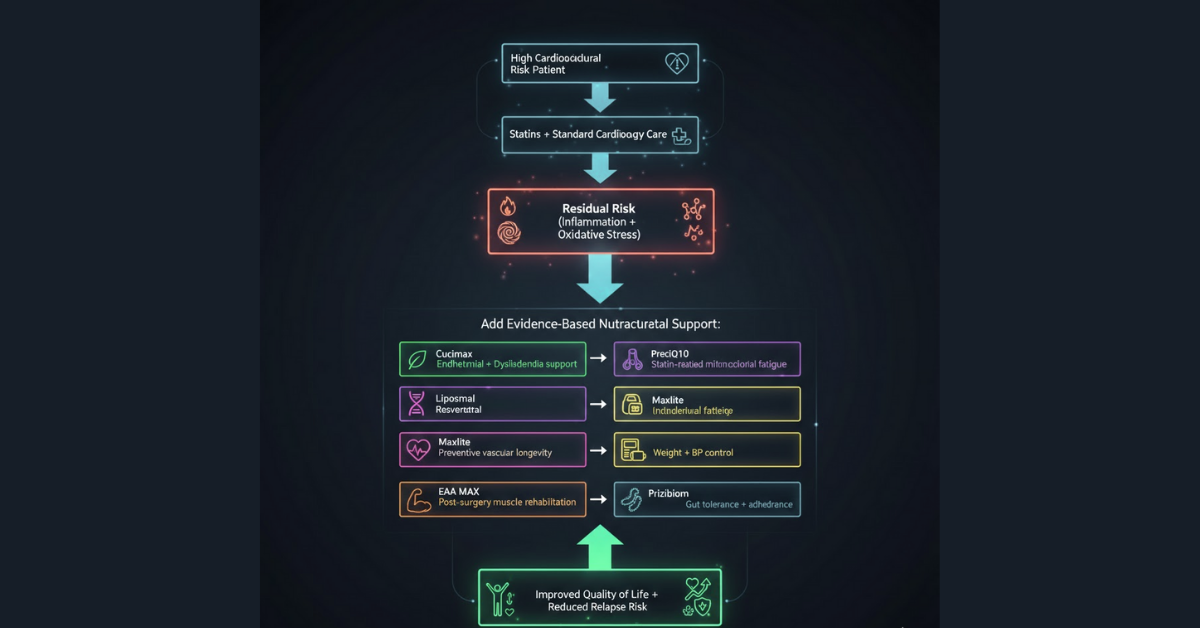
Gut Health in Cardiology: Why Prizibiom Matters
Polypharmacy in cardiac patients often leads to:
- Gut dysbiosis
- Bloating
- Poor supplement adherence
Prizibiom (high‑strength probiotic) supports:
- Gut microbiome balance
- Better metabolic absorption
- Improved tolerability during chronic cardiac therapy
FAQs
1. Why is heart disease rising so rapidly in India?
Due to central obesity, diabetes overlap, sedentary lifestyle, pollution, and delayed prevention.
2. Are statins enough to prevent heart attacks?
They reduce LDL but residual inflammation and endothelial risk remain.
3. What is endothelial dysfunction?
Damage to blood vessel lining that precedes hypertension and atherosclerosis.
4. How does oxidative stress affect the heart?
It drives plaque instability, mitochondrial decline, and vascular injury.
5. Why do supplements fail in cardiology patients?
Poor absorption and inconsistent bioavailability limit outcomes.
6. What makes liposomal supplements different?
They enhance absorption, stability, and cellular delivery.
7. Can curcumin help lipid balance?
Studies suggest improvements in HDL, LDL oxidation, and inflammation.
8. Why is Cucimax clinically stronger than normal curcumin?
Micellar/liposomal delivery provides higher absorption.
9. Can curcumin support endothelial function?
Yes, through antioxidant and anti-inflammatory pathways.
10. Does curcumin help diabetic microvascular risk?
It may support protection in early retinopathy and kidney stress.
11. Why is CoQ10 important in statin users?
Statins reduce CoQ10, impacting mitochondrial cardiac energy.
12. How does PreciQ10 help?
Liposomal CoQ10 improves cardiac mitochondrial delivery.
13. Is resveratrol useful in preventive cardiology?
Yes, for endothelial longevity and vascular aging modulation.
14. Why liposomal resveratrol?
Improves persistence and predictability.
15. Are meal replacements useful in hypertension?
Yes, weight control improves BP and metabolic load.
16. When is Maxlite most useful?
Obesity, post-surgery recovery, metabolic cardiac prevention.
17. What is cardiac cachexia?
Muscle wasting in advanced heart disease or post surgery.
18. How does EAA MAX support rehabilitation?
Provides essential amino acids for muscle recovery and strength.
19. Why are probiotics relevant in heart patients?
Gut health improves absorption and reduces therapy intolerance.
20. Do liposomal supplements replace medicines?
No — they complement standard cardiology protocols.
Closing Take‑Home Message
Modern cardiovascular prevention must move beyond cholesterol alone.
In the statin era, the future lies in addressing:
- Endothelial dysfunction
- Oxidative stress
- Mitochondrial decline
- Cachexia and rehabilitation
- Metabolic inflammation
Evidence‑based liposomal nutraceuticals such as Cucimax, PreciQ10, Liposomal Resveratrol, alongside Maxlite, Prizibiom, and EAA MAX, provide a clinically aligned strategy to improve long‑term cardiac wellness and quality of life.