Insights from the April 2026 JAMA Network Open Study on Anemia and Brain Health
As people grow older, tiredness, weakness, and forgetfulness are often dismissed as “just aging.”
But new research suggests that low hemoglobin (anemia) may deserve much closer attention.
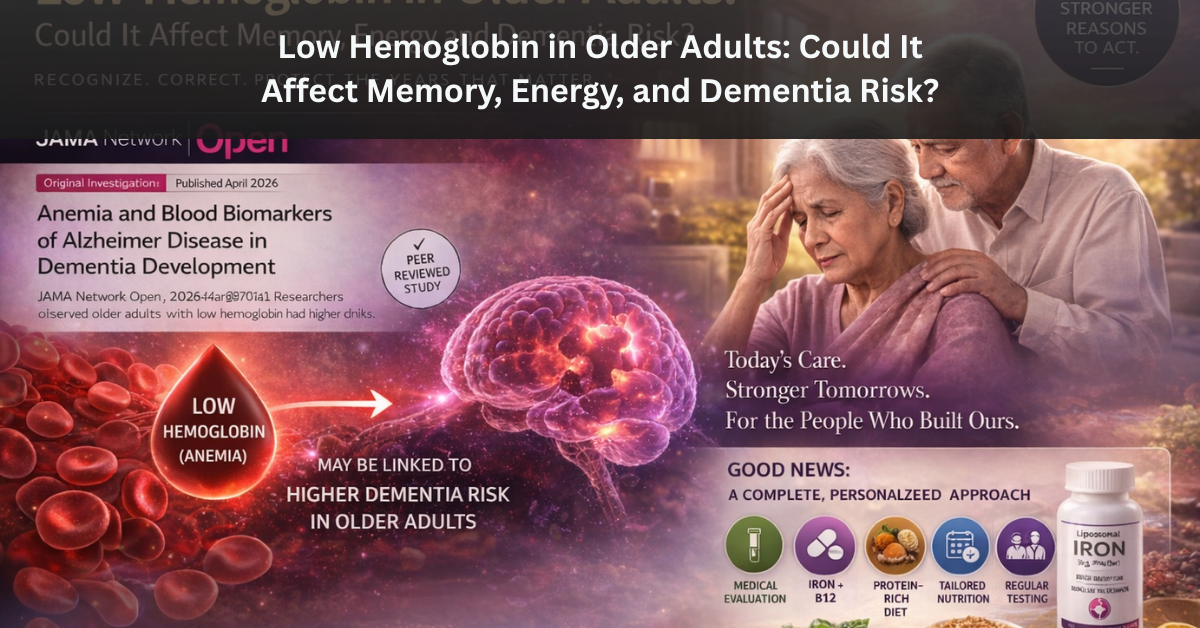
A large study published in JAMA Network Open in April 2026 found that older adults with anemia had a significantly higher risk of developing dementia over time compared with those with normal hemoglobin levels. Researchers also found links between anemia and blood biomarkers associated with Alzheimer’s disease.
Importantly, this study shows an association — not proof that anemia causes dementia.
Still, it raises an important question:
Could correcting anemia early help protect long-term brain health?
Why This Topic Matters Now
Hemoglobin is the protein inside red blood cells that carries oxygen throughout the body.
The brain needs a constant oxygen supply to function properly.
When hemoglobin drops, the brain may receive less oxygen over time.
Researchers observed that older adults with anemia had:
- higher dementia risk
- higher Alzheimer-related biomarkers
- more functional decline over time
That means anemia may be more than a fatigue problem.
It may be an important aging-health marker.
How Common Is Anemia After Age 60?
Anemia becomes more common with age.
Studies estimate that anemia affects:
- around 10% of adults over 65
- up to 20–25% of adults over 85
It is often missed because symptoms are subtle.
Many families assume symptoms are simply:
- weakness
- poor appetite
- slower walking
- age-related tiredness
But anemia is often:
✅ detectable
✅ treatable
✅ sometimes reversible
How Low Hemoglobin Affects Daily Life
Low hemoglobin can quietly affect daily living.
Common symptoms
Physical symptoms
- Constant fatigue
- Low stamina
- Breathlessness
- Weak muscles
- Dizziness
- Poor balance
- Increased falls
Brain-related symptoms
- Forgetfulness
- Slower thinking
- Reduced concentration
- Mood changes
- Poor sleep
- Irritability
Recovery problems
- Slower healing
- More infections
- Reduced immunity
- Longer illness recovery
Families may notice:
“Something feels off, but we can’t explain it.”
Sometimes low hemoglobin is the hidden reason.
What the 2026 Study Suggests About Dementia Risk
Researchers followed over 2,000 older adults.
They found:
- people with anemia had a 66% higher dementia risk
- anemia was linked with elevated Alzheimer biomarkers
- the risk was highest when anemia and abnormal biomarkers occurred together
Possible reasons include:
- Reduced brain oxygen
- Less oxygen can stress brain cells.
- Chronic inflammation
- Inflammation can damage neurons.
- Nutritional deficiencies
- Iron and B12 deficiency can affect nerve function.
- Vascular changes
- Poor circulation may worsen cognitive decline.
Again:
Anemia may not directly cause dementia — but it may increase vulnerability.
Common Causes of Low Hemoglobin in Older Adults
Anemia in seniors can have many causes.
Common reasons include
- Iron deficiency
- Vitamin B12 deficiency
- Folate deficiency
- Chronic kidney disease
- Thyroid disorders
- Low protein intake
- Poor digestion
- Blood loss from stomach or intestines
- Medication side effects
Because causes vary, treatment must be personalized.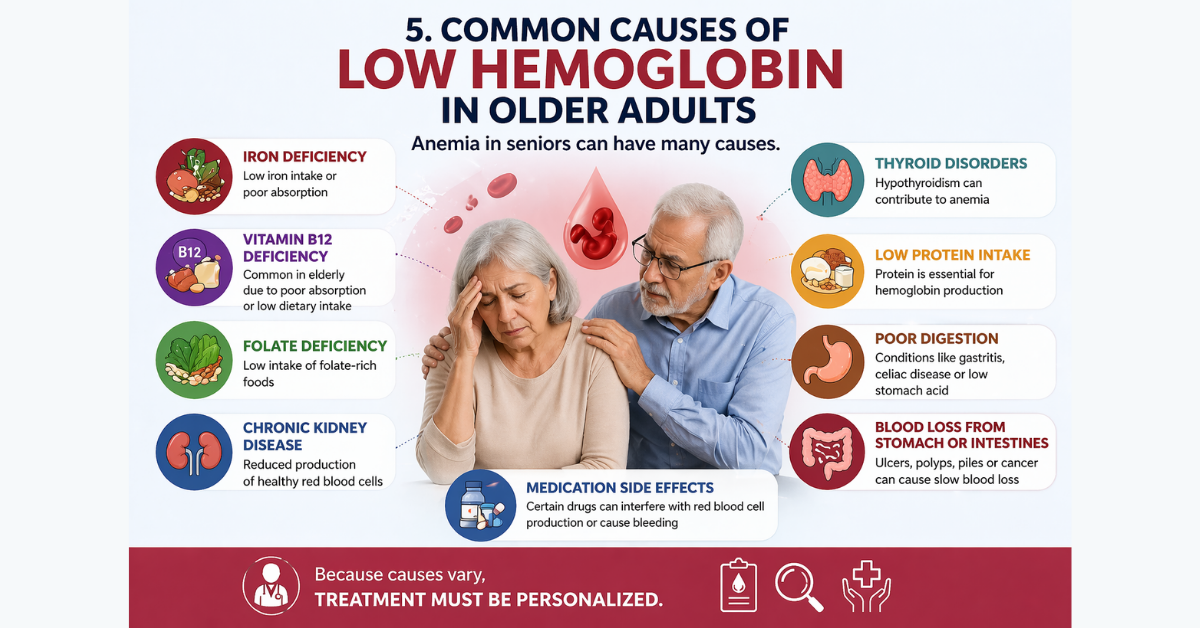
Why Vitamin B12 Must Be Checked
Vitamin B12 deficiency can mimic dementia.
Symptoms may include:
- memory loss
- confusion
- numb feet
- poor walking
- mood changes
The good news:
B12 deficiency can often be reversed if treated early.
Older adults are at higher risk because:
- stomach acid decreases
- absorption weakens
- vegetarian diets may be low in B12
Doctors often should check:
- CBC
- Serum B12
- Ferritin
- Folate
- Thyroid tests
Where Iron Supplementation Fits
If iron deficiency is confirmed, iron therapy may help.
Standard oral iron
Often first-line treatment:
- Ferrous sulfate
- Ferrous fumarate
- Ferrous ascorbate
But older adults may experience:
- constipation
- nausea
- stomach pain
- poor tolerance
Liposomal iron
Some clinicians consider liposomal iron formulations because they may offer:
- better tolerance
- less gastric irritation
- improved absorption
- fewer interactions
Examples may include liposomal iron such as Precifer, but only under medical advice.
It should support — not replace — proper diagnosis.
Protein Matters Too
Hemoglobin production requires protein.
Without enough protein:
- anemia worsens
- weakness increases
- muscle loss accelerates
Good protein sources
- Dal
- Paneer
- Eggs
- Curd
- Fish
- Sprouts
- Soy
- Lentils
Many elderly adults eat too little protein without realizing it.
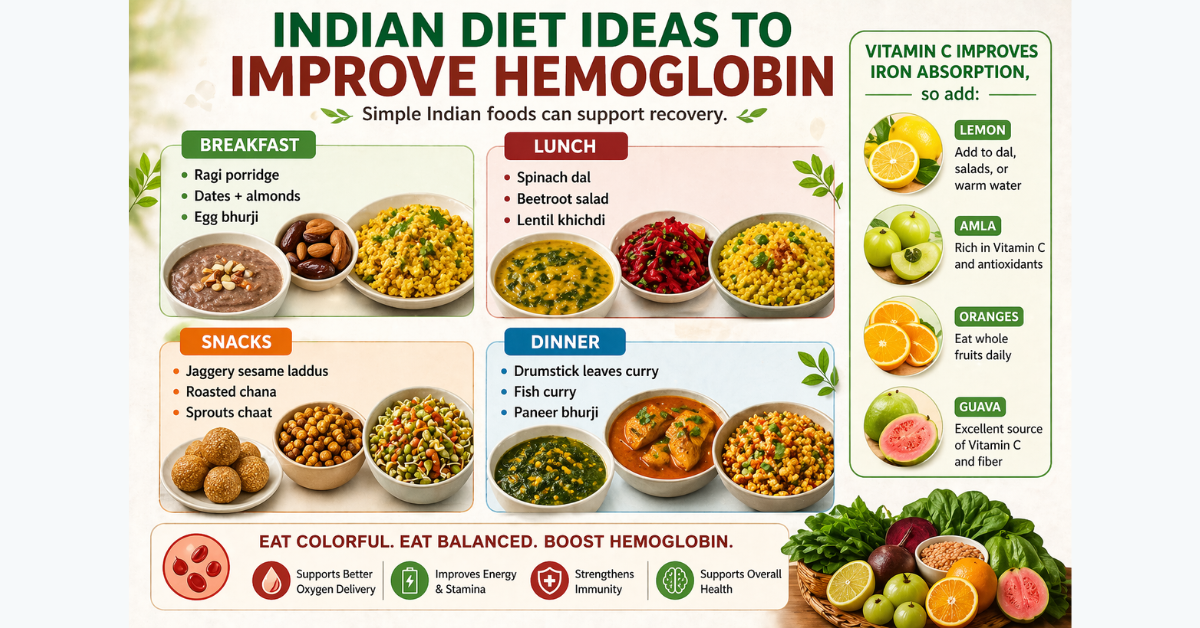
Indian Diet Ideas to Improve Hemoglobin
Simple Indian foods can support recovery.
Helpful meals
Breakfast
- Ragi porridge
- Dates + almonds
- Egg bhurji
Lunch
- Spinach dal
- Beetroot salad
- Lentil khichdi
Snacks
- Jaggery sesame laddus
- Roasted chana
- Sprouts chaat
Dinner
- Drumstick leaves curry
- Fish curry
- Paneer bhurji
Vitamin C improves iron absorption, so add:
- lemon
- amla
- oranges
- Guava
Why Monitoring After Age 60 Matters
Silent anemia is common.
Even without obvious symptoms, routine testing can help.
Recommended monitoring
Every 6–12 months:
- CBC
- Hemoglobin
- Ferritin
- Vitamin B12
- Kidney function
Regular testing can detect anemia before complications appear.
When a Geriatric Specialist Helps
A geriatric specialist can help when anemia becomes complex.
They can assess:
- hidden causes
- medication side effects
- nutritional issues
- fall risk
- memory changes
- long-term brain health
Specialist care becomes important when:
- anemia keeps returning
- memory worsens
- weakness increases
- appetite declines
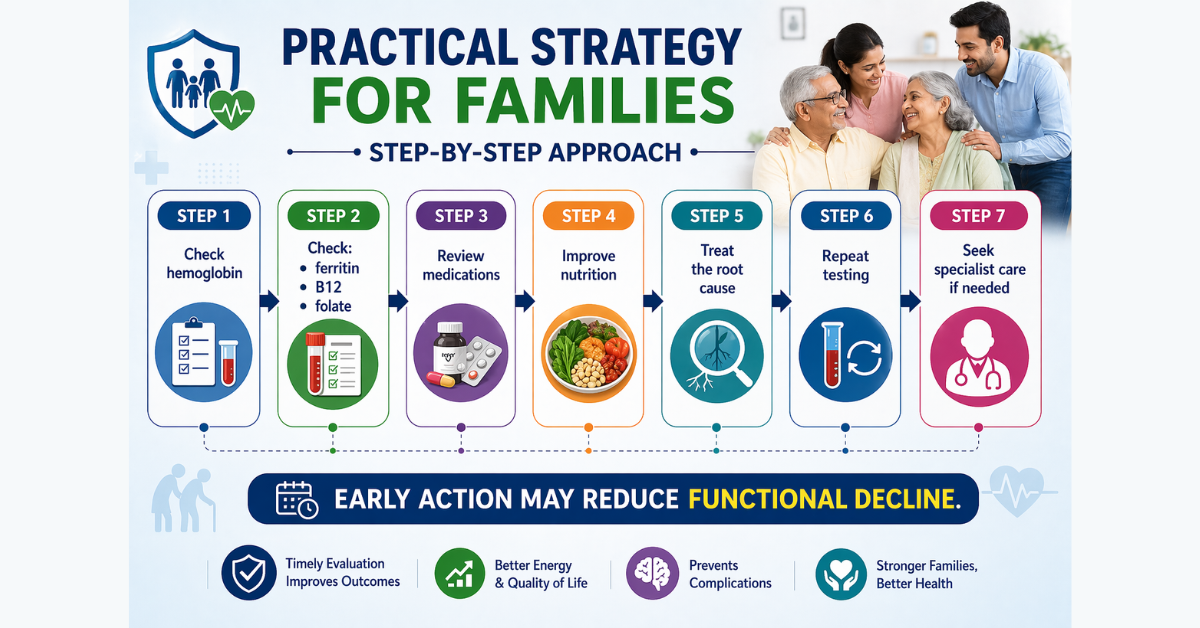
Practical Strategy for Families
Step-by-step approach
Step 1
Check hemoglobin
Step 2
Check:
- ferritin
- B12
- folate
Step 3
Review medications
Step 4
Improve nutrition
Step 5
Treat the root cause
Step 6
Repeat testing
Step 7
Seek specialist care if needed
Early action may reduce functional decline.
Key Takeaway
Anemia is not “normal aging.”
It may be:
- treatable
- reversible
- clinically important
- potentially relevant to brain health
Correcting anemia may not prevent dementia, but it may help protect:
✅ energy
✅ mobility
✅ independence
✅ cognitive function