
Magnesium has often been labeled as a “supportive mineral,” but recent advancements in sports science are changing that perception. Nowadays, magnesium is seen as a vital performance nutrient, playing a crucial role in energy production, neuromuscular coordination, recovery, tendon health, metabolic regulation, and even brain resilience. This blog draws heavily from a groundbreaking longitudinal study published in the Journal of the American College of Nutrition:
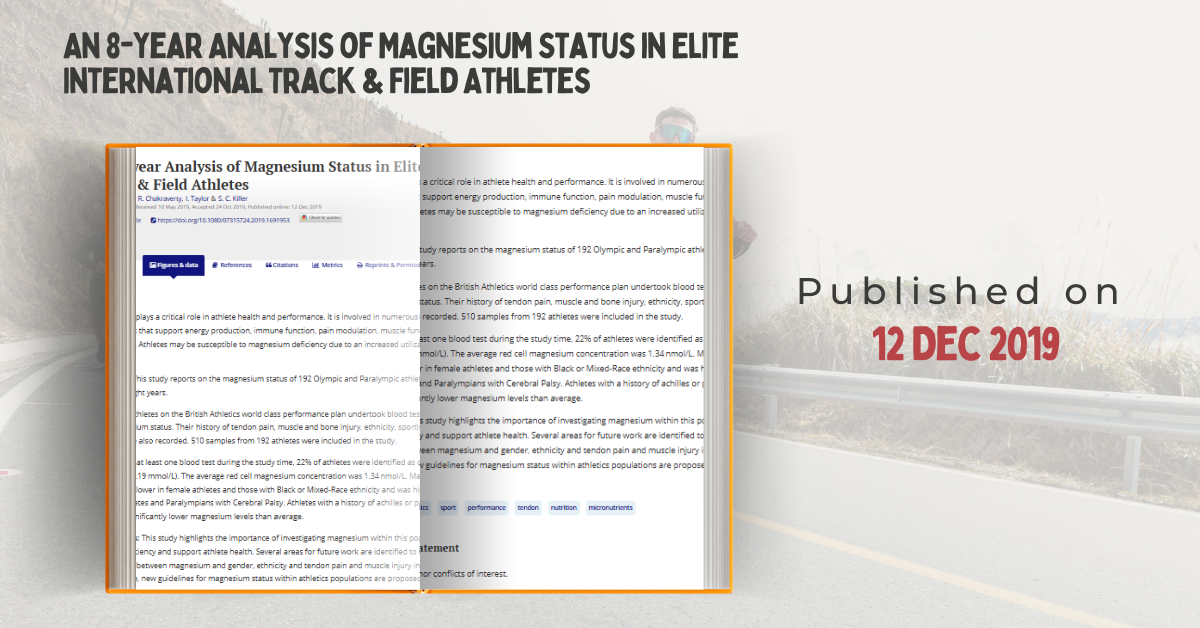
“An 8-Year Analysis of Magnesium Status in Elite International Track & Field Athletes” by Pollock N., Chakraverty R., Taylor I., and Killer S.C.
In this extensive study, researchers tracked 192 elite Olympic and Paralympic track & field athletes over eight years, analyzing 510 red-cell magnesium samples—a more accurate indicator of intracellular magnesium levels rather than just the circulating serum levels.
The results were eye-opening:
Almost 22% of elite athletes faced clinically low intracellular magnesium at least once during their careers, despite being in professional training environments, following structured diets, and having medical supervision. If magnesium deficiency can occur even among the top athletes, the consequences for amateur runners, recreational athletes, gym enthusiasts, and active professionals are significant.
Why This Study Changed the Magnesium Conversation
The Pollock et al. study is important not just for its length, but for what it uncovered about hidden magnesium deficiency. Here are some key takeaways:
- A surprising number of elite athletes are magnesium deficient
- Athletes experiencing tendon pain, especially in the Achilles and patellar tendons, tend to have lower magnesium levels
- Female athletes consistently show lower intracellular magnesium levels
- Standard serum magnesium tests often miss deficiencies, while red-cell magnesium tests can reveal functional inadequacies This study shifted the perspective on magnesium from being a “minor mineral” to a crucial factor in musculoskeletal resilience and recovery.
The Physiological Role of Magnesium in Active Bodies
Magnesium is involved in over 300 enzymatic reactions, many of which become even more important during physical activity.
1. Energy Production (ATP Activation) – ATP, the body’s energy currency, only works when it’s bound to magnesium (Mg-ATP). Without enough magnesium, muscles struggle to produce or use energy efficiently, leading to quicker fatigue and lower endurance.
2. Muscle Contraction & Relaxation – Calcium kicks off muscle contraction, while magnesium is key for relaxation. When magnesium levels are low, calcium can flood in unchecked, causing:
- Muscle stiffness
- Cramps
- Delayed relaxation
- Higher risk of injury
3. Tendon & Connective Tissue Health – The Pollock study’s link between low magnesium and tendon pain highlights magnesium’s role in:
- Collagen cross-linking
- Modulating inflammation
- Distributing neuromuscular load
4. Nervous System & Brain Performance – Magnesium helps stabilize neuronal membranes and regulates NMDA receptors, which affects:
- Focus
- Stress management
- Sleep quality
- Reaction times
These factors are crucial not just for elite athletes, but also for runners and sports lovers who are juggling training with work-related stress.
Why Athletes and Runners Lose Magnesium Faster
Magnesium can slip away from athletes and runners more quickly due to several factors:
- Losing sweat during long workouts and hot weather
- Increased urination when training hard
- Stress hormones like cortisol that can deplete magnesium levels
- A lack of magnesium-rich foods in our modern diets
Even if you’re eating enough calories, the magnesium content in your food might not be enough—especially if your meals are low in leafy greens, legumes, and whole grains.
Clinical Signs of Magnesium Deficiency in Active Individuals
Magnesium deficiency often sneaks up on you, showing functional and subclinical signs before any lab tests pick up on it. Here are some common symptoms to watch for:
- Muscle cramps or twitching
- Ongoing fatigue even after adjusting your training
- Decreased endurance performance
- Trouble sleeping and feeling restless
- Recurring discomfort in tendons or joints
- Slower recovery times between workouts
These signs are quite similar to what’s been noted in the Pollock cohort, especially among athletes dealing with tendon pain.
Dietary Magnesium: Essential but Often Insufficient
When it comes to magnesium-rich foods, you can find plenty of options, such as:
- Spinach, kale, and Swiss chard
- Pumpkin seeds, almonds, and cashews
- Beans, lentils, and soy
- Whole grains
- Dark chocolate
Despite these great sources, factors like soil depletion, food processing, and increased physiological needs often mean that simply relying on diet isn’t enough to keep active individuals’ intracellular magnesium levels where they should be.
Supplementation: Why the Form of Magnesium Matters More Than the Dose
Not all magnesium supplements work the same way in our bodies. Magnesium Bisglycinate
- Easy on the stomach
- Contains less elemental magnesium
- Needs a higher dose to meet our physiological requirements
- There are few high-quality clinical trials showing it’s better than others
- More research is needed to confirm its unique benefits Magnesium Threonate
- Specifically made to boost brain magnesium levels
Shows promising effects on cognitive function
- Limited ability to replenish magnesium throughout the body
Magnesium Oxide (Traditional)
- Has the highest elemental magnesium content
- Not well absorbed when taken in the usual way
- Often overlooked due to gastrointestinal side effects
Liposomal Magnesium: The Game-Changer for 2026
What’s Liposomal Magnesium All About?
Liposomal magnesium is a clever way of wrapping magnesium particles in tiny lipid vesicles that resemble our own cell membranes. This innovative delivery method:
- Shields magnesium from being broken down in the digestive system
- Boosts absorption in the intestines and lymphatic system
- Promotes direct uptake by cells
- Ensures a steady release over time
- Minimizes gastrointestinal discomfort
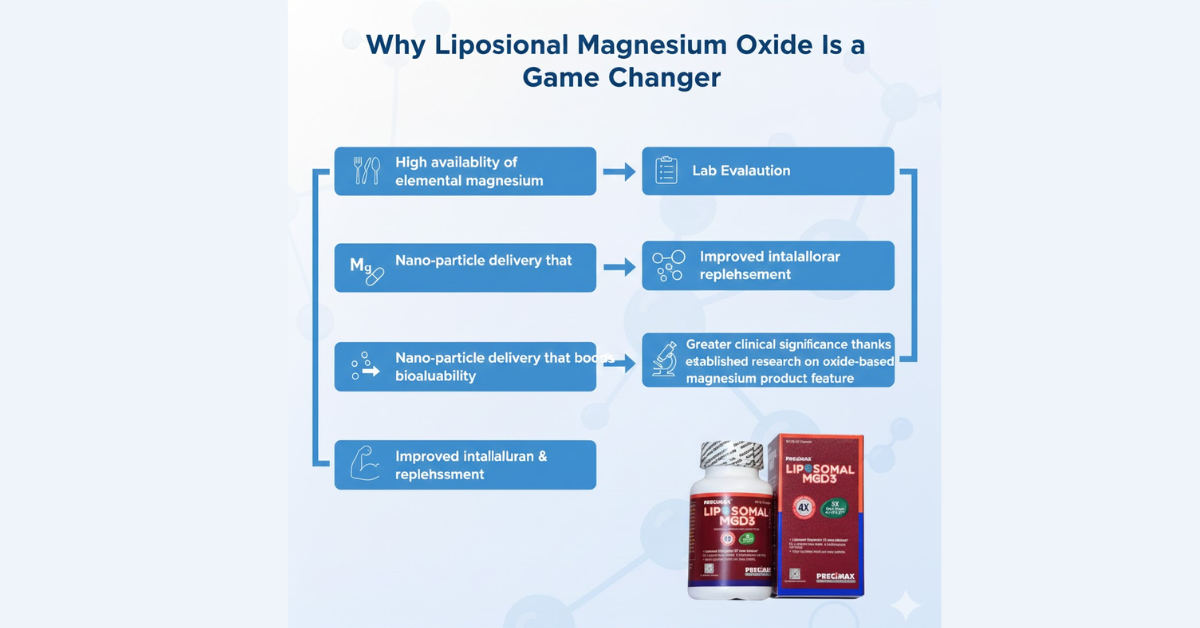
Why Liposomal Magnesium Oxide Is a Game Changer
When we transform magnesium oxide into a liposomal nano-formulation, we tackle its biggest drawback—poor absorption. This innovation leads to an impressive mix of benefits:
- High availability of elemental magnesium
- Nano-particle delivery that boosts bioavailability
- Improved intracellular replenishment
- Greater clinical significance thanks to established research on oxide-based magnesium
In contrast to bisglycinate, magnesium oxide boasts decades of clinical experience, and with liposomal technology, we can finally tap into its full biological potential. Recent comparative studies reveal that liposomal mineral formulations can achieve:
- Elevated serum and intracellular levels
- Extended retention time
- Enhanced functional outcomes with lower doses
When it comes to the Blood-Brain Barrier and sustained action
Liposomal delivery is a game changer for magnesium. It helps magnesium to:
- Move through cellular membranes with greater ease
- Possibly boost the availability of magnesium in the brain
- Enhance sleep quality, build resilience against stress, and improve neuromuscular coordination
With sustained release, magnesium is available during training, recovery, and sleep cycles, rather than just causing temporary spikes.
Co-Nutrients That Boost Magnesium’s Benefits
Magnesium really shines when paired with:
- Vitamin D – it helps activate vitamin D metabolism ]
- Calcium + Vitamin K2 – for balanced muscle and bone health
- B-complex vitamins – essential for energy metabolism
- Omega-3 fatty acids – great for controlling inflammation
If you’re low on magnesium, it can really dampen the effectiveness of these important nutrients.
Sport-Specific Relevance
Magnesium adequacy is critical in:
• Endurance running, cycling, triathlon
• Strength and power sports
• Team sports with explosive demand
• HIIT and CrossFit
• Swimming and racquet sports
The higher the training volume, sweat loss, and neuromuscular load, the greater the magnesium requirement.
Testing and Monitoring
Inspired by the Pollock study, assessment should include:
• Serum magnesium
• Red-cell magnesium (preferred)
• Vitamin D, calcium, electrolytes
Re-evaluation every 8–12 weeks allows intelligent dose adjustment.
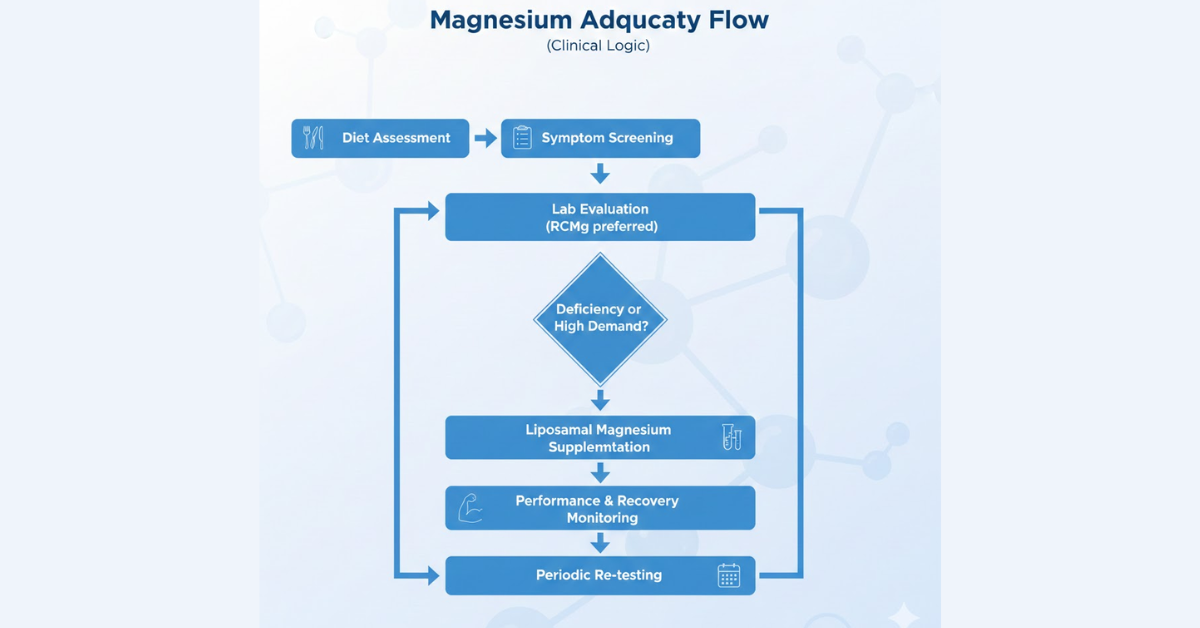
Magnesium Adequacy Flow (Clinical Logic)
Diet Assessment → Symptom Screening
↓
Lab Evaluation (RCMg preferred)
↓
Deficiency or High Demand?
↓
Liposomal Magnesium Supplementation
↓
Co-nutrient Optimization
↓
Performance & Recovery Monitoring
↓
Periodic Re-testing
FAQs
- Why is magnesium deficiency common even in athletes?
Because demand exceeds intake and serum tests miss intracellular deficits. - Is liposomal magnesium better than bisglycinate?
Yes—for absorption, sustained action, and elemental delivery. - Can magnesium reduce tendon pain?
The Pollock study links low magnesium to tendon symptoms. - How long to correct deficiency?
Typically 8–12 weeks with proper dosing. - Does magnesium help sleep?
Yes, through nervous system stabilization. - Is magnesium safe long-term?
Yes, when dosed appropriately and monitored. - Can I combine magnesium with creatine and protein?
Absolutely—synergistic for performance and recovery. - Best timing?
Evening or post-training for recovery benefits.
Conclusion: Why This Matters in 2026
The 8-year elite athlete analysis by Pollock et al. makes one thing clear:
Magnesium deficiency is real, common, and clinically relevant—even at the highest level of sport.
For runners, athletes, and active individuals, magnesium is no longer optional—it is foundational.
With advanced technologies like liposomal magnesium, especially liposomal magnesium oxide, we now have the tools to correct intracellular deficiency effectively, sustainably, and safely.
Train harder. Recover smarter.
But above all—replete what your cells truly need.