Adequate Protein Intake and Physiotherapy Protocols: A Collaborative Strategy for Rehabilitation
Getting better after being sick, having surgery, or getting hurt is never a simple procedure. To get stronger and work again, the body needs a carefully balanced mix of physical treatment, rest, and good food. Protein is the most essential nutrient for healing. Physiotherapy can help you regain mobility, strength, and function, but if you don’t eat enough protein, improvement is often delayed and incomplete.
Different types of physiotherapy, such as strength training, endurance treatment, flexibility work, post-surgical recuperation, geriatric care, or sports rehabilitation, need varying amounts of protein to operate effectively.
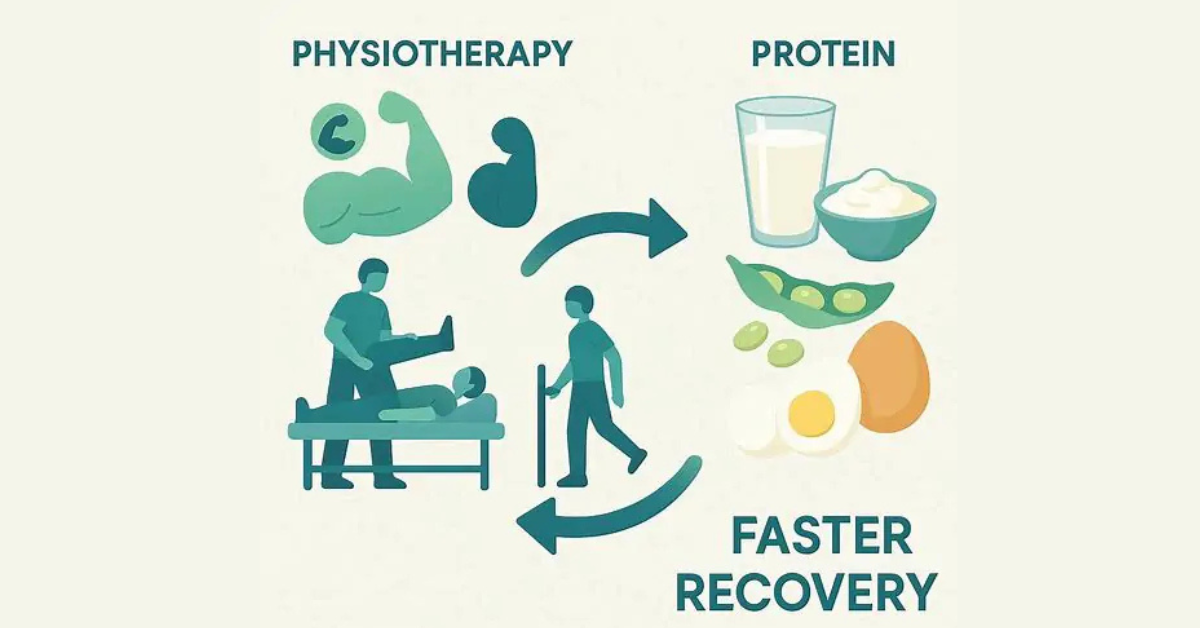
This article talks about how protein adequacy and physiotherapy work together to create a synergistic effect that speeds up healing, stops setbacks, and ensures long-term health outcomes.
- Resistance and Strength Training Physiotherapy – Strength training and resistance physiotherapy are both types of exercise that help you recover from muscle weakness and keep them from being weak, especially after being inactive for a long time.
- Need for Protein – ACSM and ESPEN say that people who do resistance or rehabilitative activities should get 1.2 to 2.0 grammes of protein per kilogramme of body weight per day.
- Why Protein Is Important – While strength training, muscles get microscopic tears that they need to heal to get stronger. Amino acids, which are the building blocks of protein, help fix these fibres. If you don’t get enough protein, your muscles can start to waste away (atrophy), which slows down progress.
- Food and supplement approach – Paneer, milk, lentils, soy, eggs, and chicken are some of the foods that make up a strong base. But it’s typically hard to meet your greater protein needs just by eating. That’s when whey protein or soy protein isolate can help, especially after physical therapy. This allows muscles to heal faster and get stronger.
- Aerobic and Endurance Physiotherapy – Patients who are recovering their stamina, cardiovascular health, and mobility after being sick, having a chronic ailment, or resting for a long time often do endurance or aerobic physiotherapy.
- Need for Protein – The ISSN says that people who are getting aerobic-based physiotherapy should eat 1.2 to 1.6 grammes of protein per kilogramme of body weight each day.
- Why Protein Is Important – Aerobic therapy is good for your heart and lungs, but it also puts a lot of stress on your muscles. Protein helps repair mitochondria (the energy-producing parts of cells), minimises muscle damage from exercise, and boosts endurance. Patients get tired quickly and don’t make as much improvement if they don’t get enough protein.
- The Food and Supplement Approach – You can make meals with complete proteins by combining pulses with rice or adding nuts, seeds, and soy milk. Plant-based protein mixes make sure the body obtains all the amino acids it needs. Adding a supplement helps fill the gap and keep constant progress because endurance patients tend to eat less protein naturally.
- Being able to move about and be flexible, Physical therapy – This type of physiotherapy is all about making joints work better, ligaments healthier, and increasing the range of motion.
- Need for Protein – To help connective tissue heal, the ESPEN guidelines say to eat 1.0–1.2 g/kg/day of protein.
- Why Protein Is Important – Flexibility therapy focuses on tendons, ligaments, and cartilage, which is different from strength training. Proteins like collagen are essential for keeping joints stable. The body can’t fix these tissues properly without adequate protein, which makes them rigid and hard to move.
- Food and Supplement Method – Taking collagen peptides or fish collagen along with vitamin C (which helps make more collagen) can help tendons and ligaments mend much faster. Dairy proteins also help. People who eat food often realise that their agility and flexibility improve more slowly.
- Rehabilitation after surgery – After orthopaedic surgery, such as hip or knee replacements, ligament reconstructions, or spinal surgeries, patients require extensive rehabilitation. Nutrition is a big part of how soon patients get better.
- Need for Protein – The ESPEN and ASPEN standards say that during the recovery phase, you should eat 1.5 to 2.0 grams of protein per kilogram of body weight each day.
- Why Protein Is Important – Surgery causes muscle loss, tissue damage, and delayed wound healing. Protein helps heal wounds, close them, and replace muscle that has been lost. Patients who eat more protein heal faster, have fewer problems, and regain more strength.
- The Food and Supplement Approach – After surgery, soft proteins that are easy to digest, such as curd, milk, and eggs, are good to eat. But diet alone sometimes doesn’t provide enough protein to meet the needs. Whey protein isolates or soy protein powders make sure you get enough protein without putting too much strain on your digestive system. Patients who don’t take their supplements often have trouble getting better on time.
- Elderly Physical Therapy – Sarcopenia is the name for the natural loss of muscle mass that happens as people get older. Physiotherapy helps older people stay independent, mobile, and strong, but eating enough protein is just as important.
- Need for Protein – The PROT-AGE study group and ESPEN say that adults with chronic illness should get 1.0 to 1.2 g/kg/day, while older adults should get up to 1.5 g/kg/day.
- Why Protein Is Important – Older adults have anabolic resistance, which means that their muscles don’t respond as well to protein. They require more protein to receive the same benefits as younger people do from less protein. Getting enough protein lowers the chance of falling, helps you stay balanced, and builds strength.
- Eating and taking supplements – Seniors do better with smaller, more frequent meals that include protein-rich foods like milk, paneer, and lentils. Whey or casein protein smoothies might help fill in the gaps. Without supplements, muscle strength and overall function don’t develop much, which slows down independence.
- Rehabilitation for Sports Injuries – Athletes who are recovering from injuries need both specialised physiotherapy and a better diet to return to their best performance.
- Protein Requirement:- The American College of Sports Medicine (ACSM) and the International Society of Sports Nutrition (ISSN) say that this is one of the highest protein needs among physiotherapy categories, at 1.6–2.2 g/kg/day.
- Why Protein Is Important – Athletes often hurt their ligaments, tendons, or muscles. Protein helps muscles grow, tendons recover, and tissues heal faster. Athletes who eat more protein can return to their sport more quickly and with less danger of being hurt again.
- Eating and taking supplements – The best effects come from taking whey protein after a workout and collagen or gelatin with vitamin C before physiotherapy. Diet alone doesn’t usually give you enough protein to meet these higher needs, which might make downtime longer and recovery slower.
How Protein and Physiotherapy Work Together
Physiotherapy helps the body get back its strength, movement, and endurance. Protein gives the body the nutrients it needs to respond to this training. When they work together, they have a synergistic effect:
- Physiotherapy makes people want to mend their muscles and tissues.
- Protein gives the body the building blocks it needs for these processes.
Physiotherapy doesn’t work as well without protein. Likewise, protein alone cannot restore lost mobility or function without physiotherapy. Only the combination of both can guarantee long-term health and recovery.
Final thoughts
Protein adequacy is still a key part of success in all types of rehabilitation, including strength training, endurance treatment, flexibility exercises, post-surgical recovery, geriatric care, and recovery from sports injuries. Global standards repeatedly emphasise that natural protein-rich diets are necessary, but they don’t always match the higher needs during recovery.
Patients will always meet their protein objectives if they follow a dual approach that includes healthy foods and high-quality supplements like whey, soy, casein, or collagen. Not only does this speed up recuperation, but it also makes you stronger, more durable, and healthier in the long run.
In short, physiotherapy gives you the workout, while protein gives you the energy. Together, they make a strong team that makes recovery a faster, stronger, and more lasting process.
FAQs
- Why is protein crucial for recovery from physiotherapy?
Ans – Protein helps muscles mend, helps tissues heal, and helps you get stronger from physical therapy.
- How much protein should I eat while I’m recovering?
Ans – The amount depends on the type of physiotherapy and the person’s needs, and it can be anywhere from 1.0 to 2.2 g/kg/day.
- Can you get enough protein from food alone while you’re recovering?
Ans – Food is a good start, but it doesn’t always work. Whey, soy, and collagen supplements can help you get more protein.
- Is protein just as necessary for older people in physical therapy?
Ans – Yes. Older folks require additional protein to help them keep their independence and mobility by fighting muscle loss and anabolic resistance.
- What proteins are best to eat after surgery?
Ans – Soft, easy-to-digest proteins like milk, curd, eggs, and whey or soy isolates help you heal faster.
- What role does protein play in recovering from sports injuries?
Ans – Eating a lot of protein speeds up muscle recovery and tendon healing, and helps athletes get back to their best performance faster.
- Do I need to change the amount of protein I eat for strength and endurance physiotherapy?
Ans – Yes. Strength training needs 1.2 to 2.0 grammes of protein per kilogramme of body weight per day, while endurance training needs 1.2 to 1.6 grammes of protein per kilogramme of body weight per day.
- Can people who consume mostly plants get enough protein to help them heal?
Ans – Yes, you can do this by eating pulses with rice, soy, nuts, and seeds, and adding plant-based protein supplements if you need to.
- How can collagen protein help with flexibility physiotherapy?
Ans – Collagen helps tendons and ligaments repair, which makes joints more stable and allows for long-term movement.
- What will happen if I don’t consume enough protein while I’m doing physical therapy?
Ans – It takes longer to get better, you may keep losing muscle, and physiotherapy doesn’t work as well.