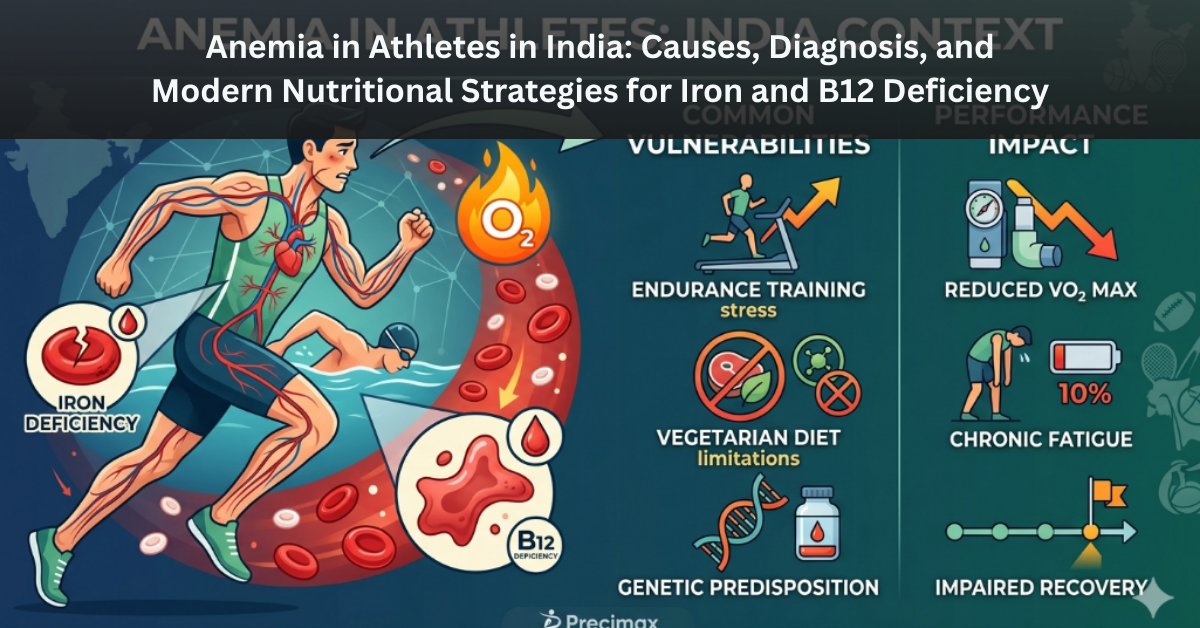
Anemia is increasingly recognized as a significant health and performance issue among athletes, particularly in countries such as India where nutritional patterns, dietary preferences, and genetic predispositions may increase the risk of iron and vitamin deficiencies. Swimmers, endurance athletes, runners, and young sports trainees are especially vulnerable because their training demands place greater stress on oxygen transport systems and metabolic capacity.
Despite regular supplementation and dietary adjustments, many athletes continue to struggle with persistent or unexplained anemia. In several cases, standard iron supplementation fails to correct hemoglobin levels, raising important questions about underlying causes, absorption limitations, and the role of advanced nutritional interventions.
This article examines the growing prevalence of anemia among athletes in India, explores why certain individuals are more susceptible, and discusses modern approaches to diagnosis and management, including newer formulations such as liposomal iron and lactoferrin-based supplements.
Prevalence of Anemia Among Athletes in India
India has one of the highest global burdens of anemia. According to the National Family Health Survey (NFHS-5), approximately 57% of women and 25% of men in India show some degree of anemia. While these statistics reflect the general population, the prevalence among athletes may be underestimated because routine screening is not consistently performed.
Young athletes, particularly swimmers and endurance sports participants, often train intensely during adolescence—a phase when nutritional demands are already elevated due to growth and hormonal changes.
Sports medicine specialists increasingly report anemia in:
- Competitive swimmers
- Long-distance runners
- Female athletes in endurance sports
- Adolescent athletes in training academies
- Vegetarian athletes with restricted dietary patterns
Even mild iron deficiency can impair oxygen transport, reduce aerobic capacity, and negatively affect training outcomes.
Why Athletes Are Vulnerable to Anemia
Athletes face a unique combination of physiological stressors that can predispose them to anemia.
Increased Oxygen Demand
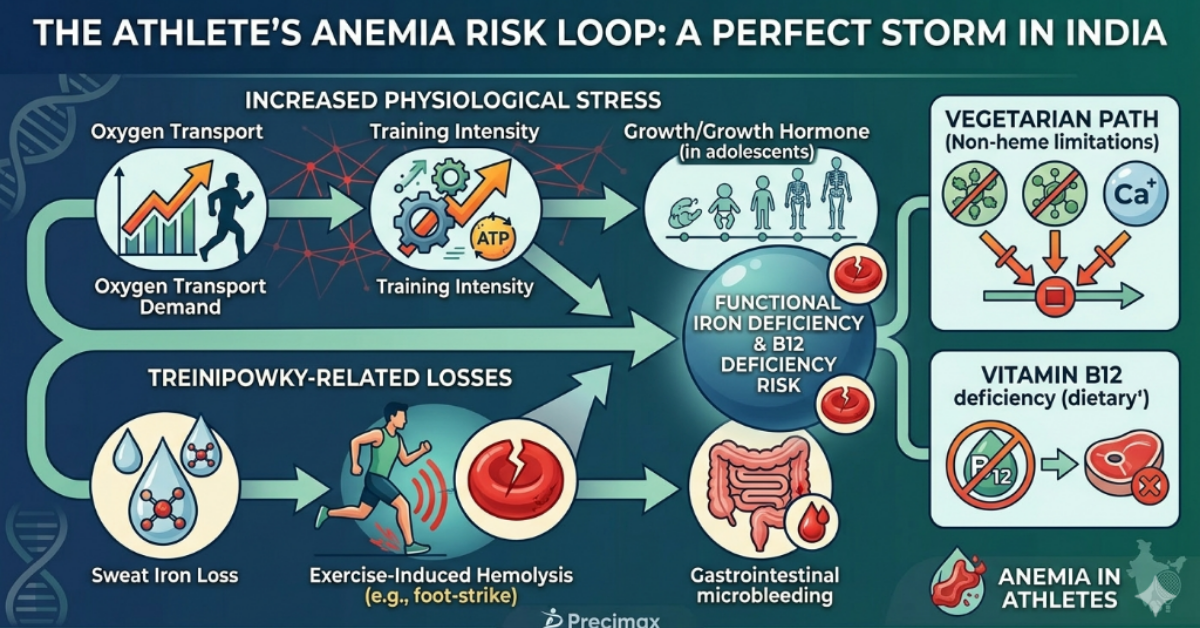
Athletic training increases the demand for oxygen delivery to muscles. Hemoglobin is responsible for transporting oxygen in the bloodstream, and even a small reduction in hemoglobin concentration can reduce endurance capacity.
Research shows that iron deficiency without anemia can still reduce aerobic performance because iron is essential for mitochondrial function and energy metabolism.
Exercise-Induced Hemolysis
Repeated mechanical stress during exercise may lead to destruction of red blood cells. This phenomenon, known as exercise-induced hemolysis, has been documented in endurance athletes.
While it is most commonly reported in runners due to foot-strike impact, swimmers and cyclists may also experience red blood cell turnover due to circulatory stress during intense training.
Iron Loss Through Sweat
Athletes lose iron through sweat. Although the amount is relatively small per session, chronic training may result in cumulative losses.
Studies estimate that athletes can lose 1–2 mg of iron per day through sweat, gastrointestinal microbleeding, and hemolysis combined.
Nutritional Factors Contributing to Anemia in India
In India, nutritional patterns often amplify the risk of anemia.
Vegetarian Diets and Non-Heme Iron
Many Indian athletes consume predominantly vegetarian diets. Plant-based foods contain non-heme iron, which is absorbed less efficiently than heme iron found in meat and fish.
Non-heme iron absorption is also inhibited by compounds such as:
- Phytates (in grains and legumes)
- Polyphenols (in tea and coffee)
- Calcium (when consumed with iron-rich foods)
These inhibitors can significantly reduce iron absorption even when dietary iron intake appears adequate.
Vitamin B12 Deficiency
Vitamin B12 deficiency is widespread in India, particularly among vegetarians. B12 plays a critical role in red blood cell formation and DNA synthesis.
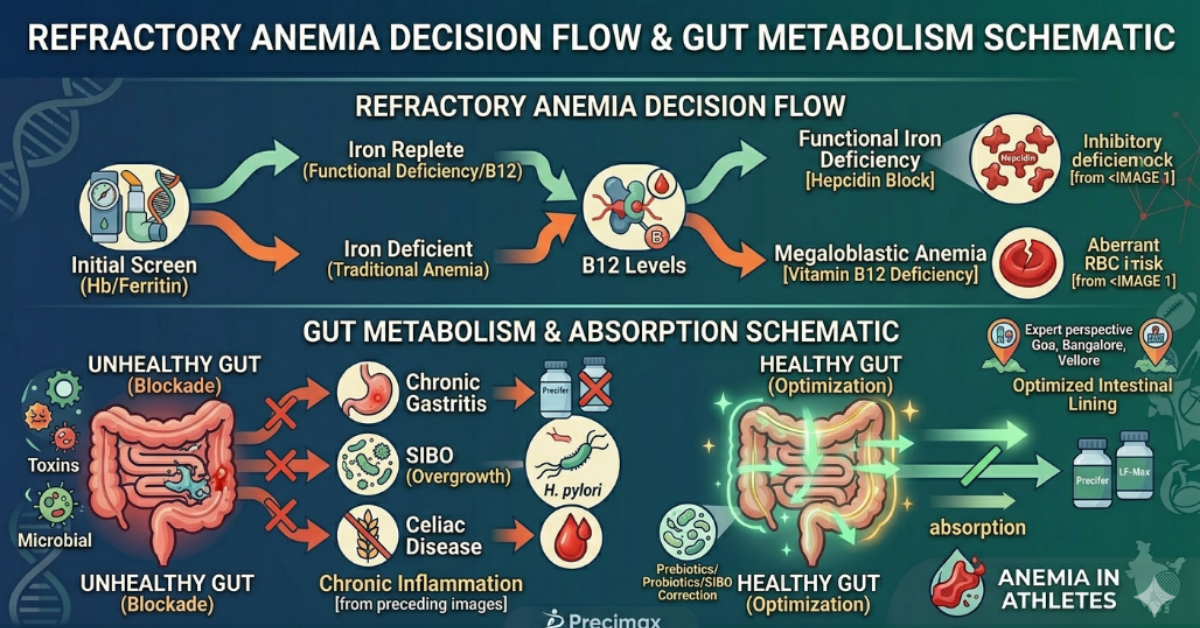
Without adequate B12 levels, the body cannot produce healthy red blood cells, leading to megaloblastic anemia, which does not respond to iron supplementation alone.
Research indicates that B12 deficiency affects up to 47% of Indian vegetarians in some population groups.
Genetic Predisposition to Low Iron Stores
Some individuals have naturally low ferritin levels due to genetic factors or early nutritional deficiencies. These athletes may enter sports training programs with marginal iron stores, making them more vulnerable to anemia during periods of intense physical activity.
Clinical Impact of Anemia on Athletic Performance
Even mild anemia can have significant consequences for athletic performance.
Low hemoglobin levels lead to:
- Reduced oxygen transport capacity
- Lower VO₂ max
- Increased fatigue during training
- Slower recovery after exercise
- Reduced competitive performance
Athletes with anemia may also experience:
- Shortness of breath during training
- Dizziness or light-headedness
- Persistent tiredness despite adequate sleep
- Reduced concentration
For competitive swimmers and endurance athletes, these symptoms can significantly impair performance progression.
Diagnosing Anemia in Athletes: Beyond Hemoglobin
Routine screening often focuses on hemoglobin levels alone. However, anemia evaluation requires a broader set of biomarkers.
Important Diagnostic Markers
Test | Clinical Significance |
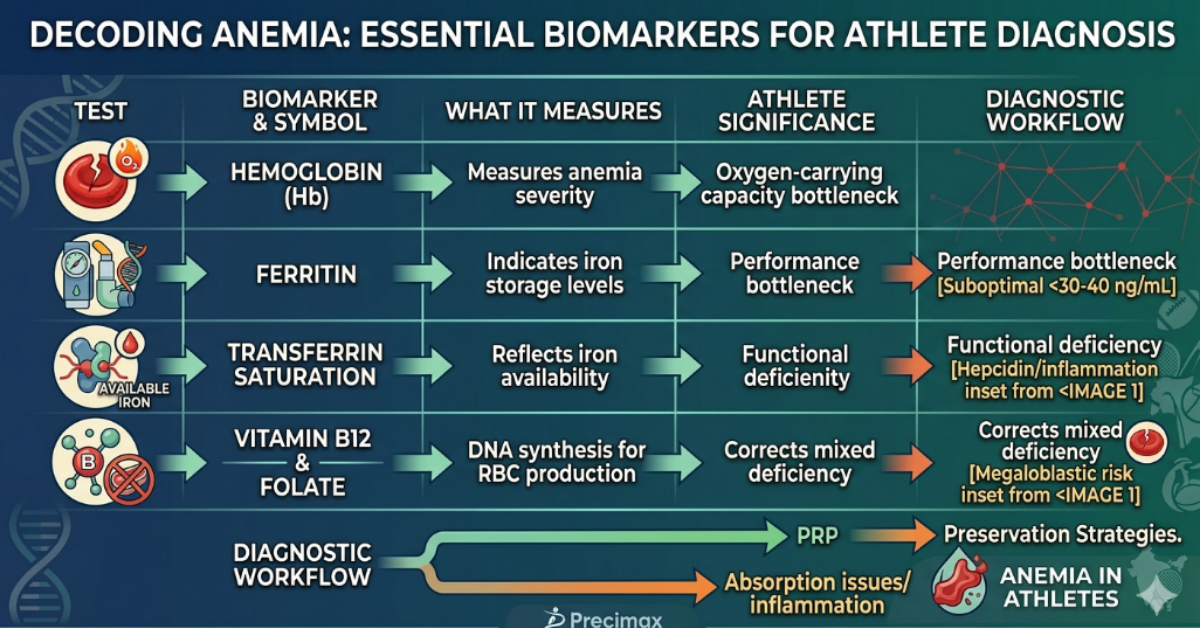
Hemoglobin (Hb) | Measures anemia severity |
Ferritin | Indicates iron storage levels |
Transferrin saturation | Reflects iron availability |
Mean corpuscular volume (MCV) | RBC size |
Vitamin B12 | Essential for RBC formation |
Folate | DNA synthesis for RBC production |
CRP (C-reactive protein) | Detects inflammation |
Reticulocyte count | Bone marrow response |
In athletes, ferritin levels below 30–40 ng/mL are often considered suboptimal for performance.
Types of Anemia Observed in Athletes
Athletic anemia is not always caused by simple iron deficiency. Several conditions can produce similar symptoms.
Iron Deficiency Anemia
This is the most common form of anemia in athletes. It occurs when iron stores are depleted and hemoglobin production declines.
Functional Iron Deficiency
In this condition, iron stores may appear normal, but iron cannot be utilized efficiently due to increased levels of hepcidin, a hormone that blocks iron absorption.
Hepcidin levels can rise during:
- Intense training
- Chronic inflammation
- Infection
Vitamin B12 Deficiency Anemia
B12 deficiency leads to abnormal red blood cell formation and neurological symptoms.
Mixed Nutritional Anemia
Some athletes may have a combination of iron and B12 deficiencies.
Correct classification is essential because treatment approaches differ significantly.
Limitations of Conventional Iron Supplements
Traditional iron formulations have been widely used for decades but present several limitations.
Common Iron Supplements
Iron Formulation | Limitations |
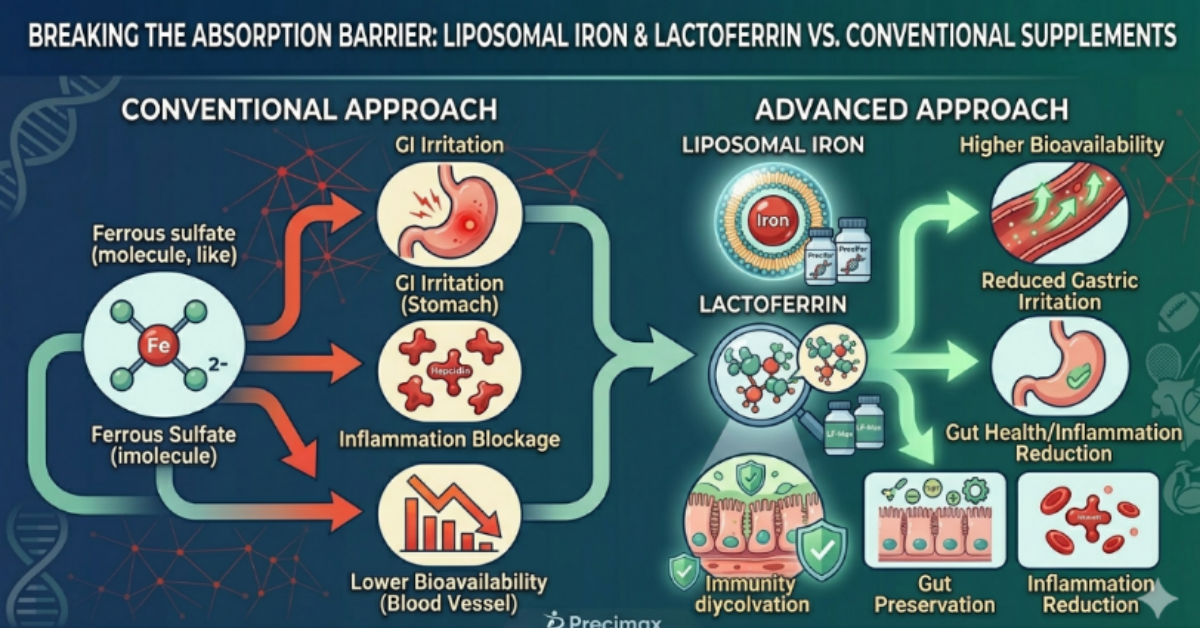
Ferrous sulfate | Gastrointestinal irritation |
Ferrous fumarate | Nausea and constipation |
Ferrous gluconate | Lower bioavailability |
Carbonyl iron | Slow absorption |
Many athletes discontinue iron therapy due to gastrointestinal discomfort.
Furthermore, conventional iron can increase oxidative stress and intestinal microbial imbalance, potentially worsening gut health.
Liposomal Iron: A New Generation Approach
Liposomal iron represents a newer form of iron supplementation designed to improve absorption and reduce gastrointestinal side effects.
In liposomal formulations, iron molecules are enclosed within phospholipid membranes that protect them from digestive degradation and improve intestinal uptake.
Advantages of Liposomal Ferric Pyrophosphate
- Higher bioavailability
- Reduced gastric irritation
- Improved absorption even in compromised gut conditions
- Better compliance among athletes
Formulations such as liposomal ferric pyrophosphate combined with lactoferrin (e.g., Precifer) are increasingly explored for individuals who do not respond well to conventional iron therapy.
Role of Lactoferrin in Iron Metabolism
Lactoferrin is a naturally occurring glycoprotein found in human milk and other bodily fluids.
It has multiple functions relevant to anemia management:
- Regulates iron absorption
- Reduces inflammation
- Supports immune function
- Improves intestinal iron transport
Lactoferrin may be particularly useful in cases of anemia of inflammation, where traditional iron supplementation alone is ineffective.
Advanced liposomal lactoferrin formulations such as LF-Max may help improve iron utilization while supporting gut health.
Gut Health and Iron Absorption
The gastrointestinal tract plays a critical role in iron metabolism.
Conditions that impair absorption include:
- Small intestinal bacterial overgrowth (SIBO)
- Helicobacter pylori infection
- Chronic gastritis
- Celiac disease
Intense athletic training can also affect gut permeability and microbiome balance.
Research suggests that athletes with gut dysbiosis may experience reduced micronutrient absorption, including iron and B12.
Therefore, addressing gut health may be essential for correcting persistent anemia.
Identifying Athletes with Refractory Anemia
Some athletes continue to show low hemoglobin despite months of supplementation.
Possible causes include:
- Chronic inflammation
- Heavy menstrual bleeding
- Parasitic infections
- Vitamin B12 deficiency
- Thalassemia trait
- Poor gut absorption
In such cases, further investigation is necessary before escalating treatment.
Monitoring and Follow-Up
Athletes undergoing treatment for anemia should undergo follow-up testing every 8–12 weeks.
Follow-up markers include:
Hemoglobin
Ferritin
Transferrin saturation
Reticulocyte count
Early monitoring helps determine whether therapy is effective.
Expert Perspectives
Dr Anna Trevesco, Adolescent Health Specialist, Goa
“Adolescents involved in sports training often develop early iron deficiency before anemia becomes obvious. Regular screening can prevent fatigue and performance decline.”
Dr Padma, Gynecologist, Bangalore
“In female athletes, menstrual blood loss combined with dietary iron deficiency is a major contributor to anemia. Evaluation must include menstrual history.”
Dr Eaapen George, Community Medicine Specialist, Vellore
“Public health data shows that anemia in India is multifactorial. Addressing nutrition, infections, and dietary patterns simultaneously is essential for long-term improvement.”
Conclusion
Anemia among athletes in India represents a complex interplay of nutritional, physiological, and genetic factors. Vegetarian diets, vitamin B12 deficiency, inherited low iron reserves, and intense training all contribute to the risk.
Modern diagnostic approaches and advanced nutritional strategies—including liposomal iron and lactoferrin formulations—may help improve outcomes in athletes who fail to respond to conventional supplementation.
Early detection, accurate diagnosis, and individualized management remain key to protecting both athlete health and performance.