Vitamin D deficiency is one of the most common nutritional concerns worldwide. As awareness grows, many people begin taking Vitamin D supplements hoping to improve their health, strengthen bones, support immunity, and increase energy levels.
However, many are surprised when their Vitamin D blood test still shows low or insufficient levels despite taking supplements regularly.
Why does this happen?
The answer is that taking Vitamin D alone doesn’t always guarantee better Vitamin D status. Your dosage, formulation, consistency, absorption, lifestyle, and other nutritional factors all play important roles.
In this evidence-based guide, we’ll explain 7 common reasons why your Vitamin D levels may not improve despite supplementation, what science says about each factor, and how you can make smarter decisions for better results.

Why Vitamin D Matters
Vitamin D is a fat-soluble vitamin involved in numerous biological processes. It contributes to:
- Normal calcium absorption
- Bone and muscle health
- Immune function
- Maintenance of normal blood calcium levels
- Muscle function
Although sunlight remains an important natural source, many people depend on Vitamin D supplements because of indoor lifestyles, sunscreen use, limited sun exposure, increasing age, or dietary limitations.
Yet supplementation isn’t always straightforward.
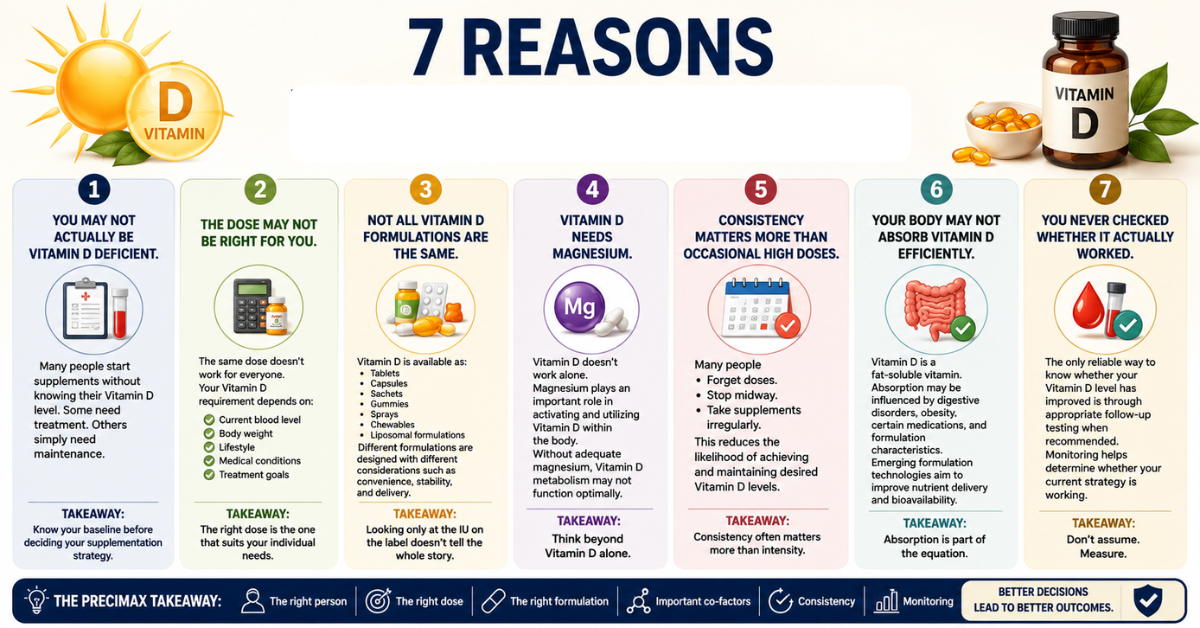
Reason 1: You May Not Actually Be Vitamin D Deficient
One of the biggest mistakes people make is starting supplements without knowing their baseline Vitamin D level.
Many individuals purchase supplements simply because:
- They feel tired
- They experience muscle discomfort
- Someone recommended Vitamin D
- They read about it online
These symptoms can have many different causes.
Without a 25-hydroxy Vitamin D [25(OH)D] blood test, it is impossible to know:
- Whether you are deficient
- Whether you are insufficient
- Whether your Vitamin D level is already adequate
Different individuals require different supplementation strategies.
Someone with severe deficiency may need medical treatment under professional supervision, while someone with adequate levels may only require maintenance or no supplementation at all.
Key Takeaway
Always know your baseline Vitamin D level before deciding your supplementation strategy.
Reason 2: The Dose May Not Be Right for You
Many people assume that if one dose works for someone else, it should work for them too.
Unfortunately, nutrition doesn’t work that way.
Your ideal Vitamin D dosage depends on several individual factors, including:
- Current Vitamin D blood level
- Body weight
- Age
- Lifestyle
- Sun exposure
- Medical conditions
- Treatment goals
- Doctor’s recommendations
For example:
Someone with severe deficiency may require a completely different approach compared with someone who only wants to maintain healthy Vitamin D levels.
Taking too little may not improve your Vitamin D status.
Taking excessive amounts without medical guidance can also be inappropriate.
Key Takeaway
The right Vitamin D dose is the one that matches your individual needs—not someone else’s.
Reason 3: Not All Vitamin D Formulations Are the Same
Many consumers compare supplements based only on the number printed on the label.
For example:
- 1000 IU
- 2000 IU
- 5000 IU
But the formulation itself can also influence the supplementation experience.
Vitamin D is available in many formats, including:
- Tablets
- Capsules
- Sachets
- Gummies
- Oral sprays
- Chewable tablets
- Liposomal Vitamin D formulations
Each formulation has different characteristics regarding:
- Convenience
- Stability
- Delivery system
- User preference
- Intended usage
Emerging technologies such as liposomal nutrient delivery are being explored to improve nutrient delivery characteristics compared with conventional formulations.
Key Takeaway
Looking only at the IU value doesn’t tell the complete story.
Related Reading
Learn more about advanced nutrient delivery technologies in our guide:
Reason 4: Vitamin D Needs Magnesium
Many people focus entirely on Vitamin D while overlooking another important nutrient:
Magnesium.
Magnesium participates in numerous enzymatic reactions within the body, including those involved in Vitamin D metabolism.
Without sufficient magnesium:
- Vitamin D activation may be affected.
- Utilization may not function optimally.
- The body may not efficiently use available Vitamin D.
This doesn’t mean everyone should automatically begin taking magnesium supplements.
Instead, it highlights the importance of evaluating overall nutritional status rather than focusing on a single nutrient.
Key Takeaway
Think beyond Vitamin D alone.
Supporting nutrients also matter.
Related Reading
Read our evidence-based article:
Reason 5: Consistency Matters More Than Occasional High Doses
Many people begin supplementation enthusiastically but struggle with consistency.
Common situations include:
- Forgetting doses
- Stopping midway
- Taking supplements only when they remember
- Skipping several days
- Restarting weeks later
This inconsistent pattern makes it less likely to achieve and maintain desired Vitamin D levels.
Building a sustainable daily routine often works better than relying on occasional large doses without medical guidance.
Simple habits that improve consistency include:
- Taking supplements at the same time every day
- Pairing supplementation with breakfast or dinner
- Using reminders
- Tracking daily intake
Key Takeaway
Consistency often matters more than intensity.
Reason 6: Your Body May Not Absorb Vitamin D Efficiently
Vitamin D is a fat-soluble vitamin, which means absorption can vary between individuals.
Several factors may influence Vitamin D absorption, including:
- Digestive disorders
- Certain gastrointestinal conditions
- Obesity
- Certain medications
- Individual physiological differences
- Formulation characteristics
Scientists continue studying new formulation technologies designed to improve nutrient delivery and bioavailability.
Although research continues to evolve, it is becoming increasingly clear that absorption is an important consideration when selecting nutritional supplements.
Key Takeaway
Absorption is part of the equation—not just the dose.
Related Reading
You may also find helpful:
👉 https://precimax.in/blog/how-to-restore-gut-bacteria-after-antibiotics/
Healthy digestion may contribute to optimal nutrient absorption.
Reason 7: You Never Checked Whether It Actually Worked
Many people begin taking Vitamin D and never repeat their blood test.
Instead, they assume:
“I’ve been taking it for months, so it must be working.”
But assumptions are not measurements.
The only reliable way to know whether your Vitamin D level has improved is through appropriate follow-up testing when recommended by your healthcare professional.
Monitoring helps determine:
- Whether supplementation is effective
- Whether dosage adjustments are needed
- Whether your strategy is working
- Whether your Vitamin D status has improved
Without testing, you’re simply guessing.
Key Takeaway
Don’t assume.
Measure.
Other Factors That Can Affect Vitamin D Levels
Besides supplementation, several lifestyle factors may influence Vitamin D status.
These include:
Limited Sun Exposure
People who spend most of their day indoors may produce less Vitamin D naturally.
Obesity
Higher body fat may influence Vitamin D distribution within the body.
Certain Medications
Some medications may affect Vitamin D metabolism.
Digestive Disorders
Conditions affecting fat absorption may reduce Vitamin D uptake.
Poor Dietary Intake
Food alone usually contributes only a portion of Vitamin D intake.
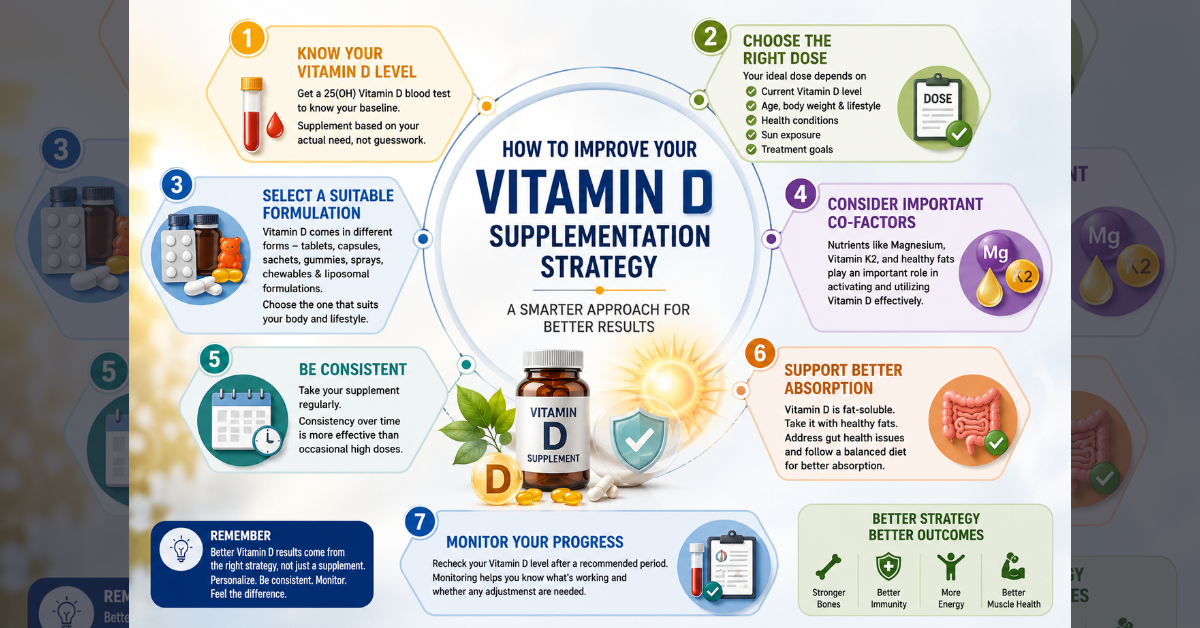
How to Improve Your Vitamin D Supplementation Strategy
Instead of focusing on only one factor, consider the bigger picture.
A smarter approach includes:
- Knowing your Vitamin D blood level
- Choosing an appropriate dose
- Selecting a suitable formulation
- Maintaining consistency
- Considering important nutritional co-factors
- Monitoring progress through follow-up testing
Each person is different.
What works for one individual may not be ideal for another.
The Precimax Approach
At Precimax Life Sciences, we believe supplementation should be evidence-informed and personalized rather than based on guesswork.
Instead of simply choosing the highest IU available, consider asking:
- Is supplementation necessary?
- Is my dose appropriate?
- Is my formulation suitable?
- Am I taking it consistently?
- Have I evaluated other nutritional factors?
- Have I checked whether it is actually working?
Better questions often lead to better health decisions.
If you’re exploring advanced nutritional solutions, you can also browse our complete collection of science-backed supplements:
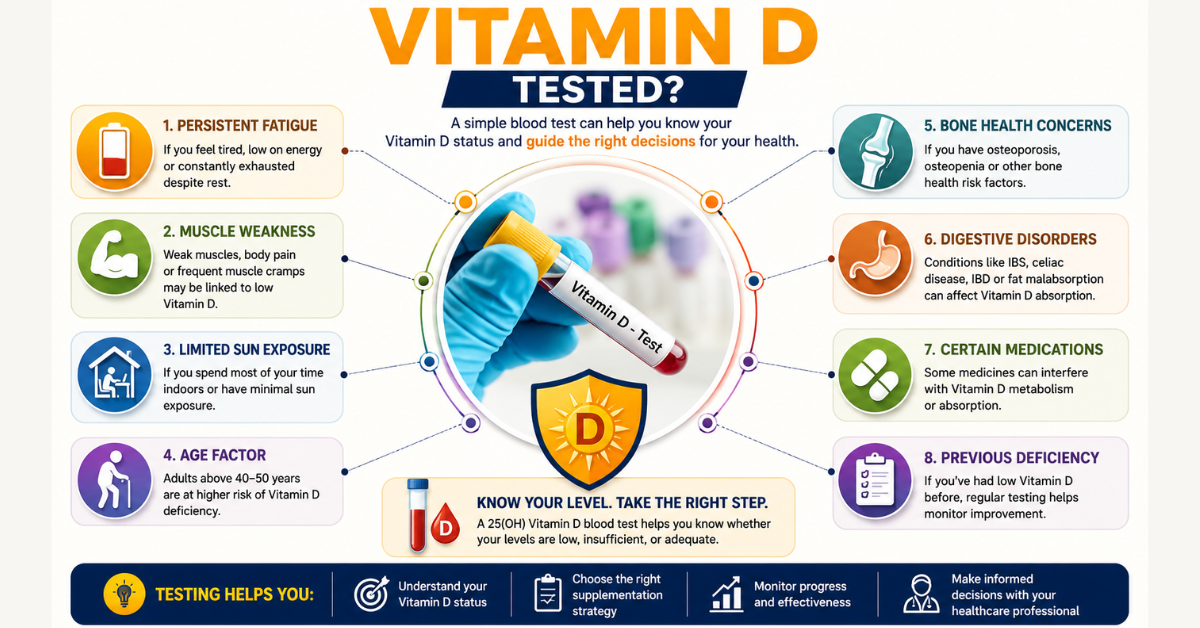
When Should You Get Your Vitamin D Tested?
A healthcare professional may recommend Vitamin D testing if you:
- Have persistent fatigue
- Experience muscle weakness
- Have limited sun exposure
- Are older adults
- Have osteoporosis risk factors
- Have digestive disorders affecting absorption
- Have previously documented Vitamin D deficiency
- Want to evaluate whether supplementation is working
Testing helps guide decisions rather than relying on assumptions.
Final Thoughts
Vitamin D supplementation is not simply about buying the highest-dose product on the shelf.
Achieving and maintaining healthy Vitamin D levels depends on multiple factors, including your baseline status, appropriate dosage, formulation, absorption, nutritional co-factors, consistency, and follow-up monitoring.
By understanding these seven evidence-based reasons, you can make more informed decisions and work with your healthcare professional to develop a supplementation strategy that fits your individual needs.
If you’re unsure about your Vitamin D status, don’t rely on guesswork. Start with appropriate testing, review your results, and build a personalized plan based on evidence—not assumptions.
Upload Your Vitamin D Blood Test Report
Not sure whether your Vitamin D level is low, insufficient, or adequate?
The Precimax team can help you better understand your report and provide evidence-based nutritional guidance.
We can help you understand:
- Whether your Vitamin D level appears low, insufficient, or adequate
- Whether your current supplementation approach seems appropriate
- Factors that may influence your Vitamin D status
- Evidence-based nutritional options that may suit your individual needs
Need a personalized supplementation plan?
Visit https://precimax.in/ or contact the Precimax Life Sciences team for evidence-based guidance tailored to your health goals.