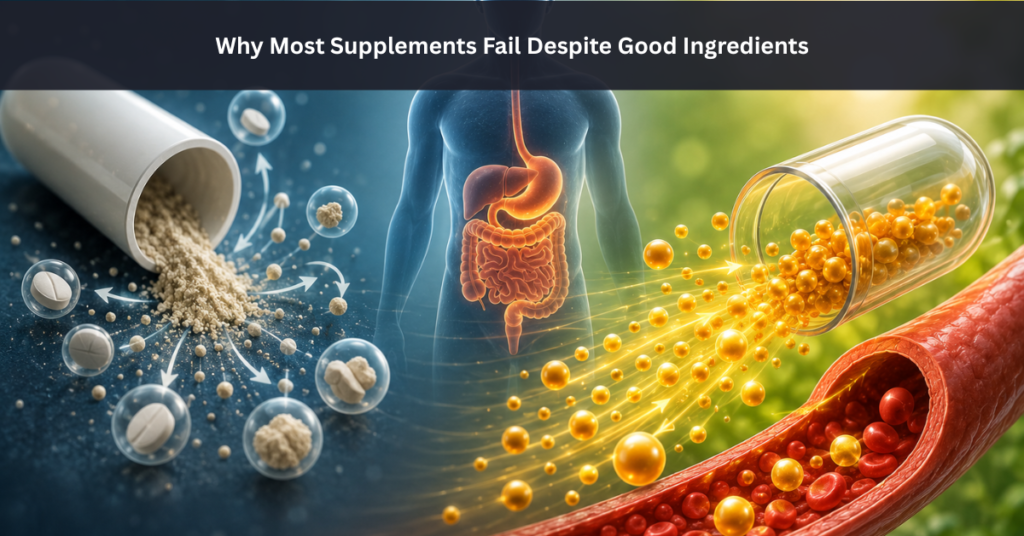
Antibiotics can be life-saving. They treat bacterial infections, prevent complications, and in many cases are absolutely essential. But antibiotics can also disrupt the gut microbiome—the diverse community of bacteria and other microbes that help support digestion, gut barrier function, immune regulation, and metabolic health. That is why many people experience loose stools, bloating, altered bowel habits, abdominal discomfort, or a general “off” feeling during or after a course of antibiotics.
The problem is that post-antibiotic gut recovery is often oversimplified. Many people are told to “just take a probiotic for 7 days” or “eat curd and everything will be fine.” In reality, restoring gut health after antibiotics is more nuanced. Not every antibiotic causes the same degree of microbiome disruption. Not every person needs a probiotic. Not every probiotic works the same way. And in some situations, postbiotics, prebiotics, diet, timing, strain selection, or longer-duration support may matter more than simply buying the first probiotic on the shelf.
This guide explains what actually happens to your gut after antibiotics, which antibiotics are more likely to cause dysbiosis, when probiotics may help, which strains have the best evidence for antibiotic-associated diarrhoea, how long probiotics may need to be taken, and how to think about probiotics vs postbiotics in a modern gut-recovery strategy. It also outlines how an educational gut-health framework can connect to the Precimax portfolio, including options such as PRIZIBIOM, PRIZIBIOM Lite, SIBOWEL, LF-MAX, and CUCIMAX where relevant.

Why Gut Bacteria Matter More Than Most People Realise
Your gut is not just a tube that digests food. It is home to trillions of microbes that interact with digestion, immunity, inflammation, vitamin metabolism, intestinal barrier integrity, and even the gut–brain axis. A healthy gut microbiome helps:
- ferment dietary fibre into beneficial short-chain fatty acids
- maintain the intestinal barrier and reduce “leaky gut” tendencies
- compete with potentially harmful organisms
- support regular bowel function
- influence immune signalling
- contribute to vitamin and metabolite production
- affect bloating, food tolerance, and bowel comfort
When this ecosystem is disturbed, the result may be gut dysbiosis—an imbalance in microbial composition, diversity, or function. Dysbiosis is not a formal diagnosis in the way diabetes or anaemia is, but it is a useful concept for understanding why some people feel worse after antibiotics.
What Happens to the Gut Microbiome During Antibiotic Therapy?
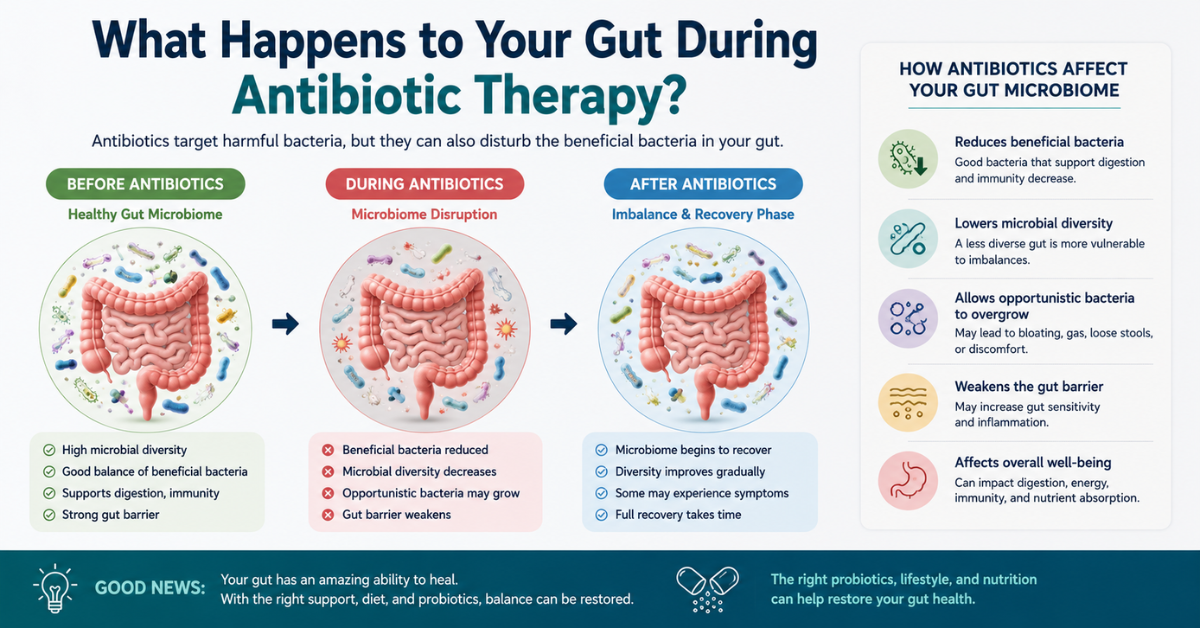
Antibiotics are designed to kill or suppress bacteria. Unfortunately, they do not always distinguish perfectly between the bacteria causing an infection and the beneficial bacteria living in the gut. As a result, antibiotics can temporarily or sometimes more significantly alter the microbiome by:
1) Reducing microbial diversity
Some antibiotics reduce the number and variety of beneficial gut microbes. Lower diversity is one reason people may experience loose stools, bloating, or altered digestion during or after treatment.
2) Depleting beneficial bacteria
Certain bacteria that help with digestion, gut barrier support, and colonisation resistance may decline during treatment.
3) Allowing opportunistic organisms to expand
When “good” bacteria are reduced, other organisms may get a chance to grow more easily. In some cases, this may contribute to antibiotic-associated diarrhoea or post-antibiotic gut upset.
4) Altering metabolism in the gut
Microbes help process fibre, bile acids, and other compounds. Antibiotic disruption may alter these processes, which can affect bowel movements, gas production, and stool consistency.
5) Triggering short-term digestive symptoms
Some people develop:
- loose stools
- diarrhoea
- bloating
- abdominal discomfort
- constipation
- food intolerance
- reduced appetite
- fatigue associated with gut upset
The key point is this: the microbiome often recovers, but the recovery timeline and symptoms vary widely depending on the antibiotic used, treatment duration, baseline gut health, diet, age, and whether the person has underlying IBS, inflammatory gut conditions, diabetes, stress-related gut sensitivity, or repeated antibiotic exposure.
Do All Antibiotics Cause the Same Amount of Gut Disruption? No.
One of the most important points to add to any gut-health article is this:
Not all antibiotics carry the same dysbiosis risk.
Some antibiotic groups are more likely than others to disturb the gut microbiome or trigger antibiotic-associated diarrhoea.
Antibiotic groups commonly associated with higher gut disruption risk include:
1) Clindamycin
Clindamycin is classically associated with a higher risk of antibiotic-associated diarrhoea and Clostridioides difficile infection. It can significantly alter gut microbial balance in some individuals.
2) Broad-spectrum cephalosporins
Certain cephalosporins can affect a wide range of bacteria and may contribute to diarrhoea or microbiome disruption.
3) Fluoroquinolones
This group can also disturb gut microbial communities and has been linked with dysbiosis and C. difficile risk in some settings.
4) Broad-spectrum penicillins / combinations
Agents such as amoxicillin-clavulanate are commonly associated with loose stools or digestive side effects in real-world practice.
5) Longer or repeated multi-antibiotic regimens
Combination therapy or repeated exposure may increase the microbiome burden compared with a single short course.
That said, the exact effect depends on the individual, dose, spectrum, and treatment duration. A 3-day narrow-spectrum course in a healthy adult is not the same as repeated broad-spectrum therapy in an older person with diabetes, IBS, or frequent antibiotic use.
Does Every Person Taking Antibiotics Need a Probiotic? Not Necessarily.
This is one of the most important misconceptions to correct.
No — not every person taking antibiotics automatically needs a probiotic.
And equally important:
Not every antibiotic course requires probiotic supplementation.
The evidence does not support a one-size-fits-all rule that every antibiotic must be paired with a probiotic. Whether a probiotic is worth considering depends on factors such as:
- the type of antibiotic
- the duration of antibiotic therapy
- whether the person has a history of antibiotic-associated diarrhoea
- age (for example, older adults may be more vulnerable in some situations)
- prior C. difficile infection or higher-risk settings
- repeated antibiotic use
- underlying IBS or digestive sensitivity
- whether symptoms have already started
- the quality, strain, and dose of the probiotic being considered
- whether there are contraindications, such as severe immunocompromise or specific medical concerns
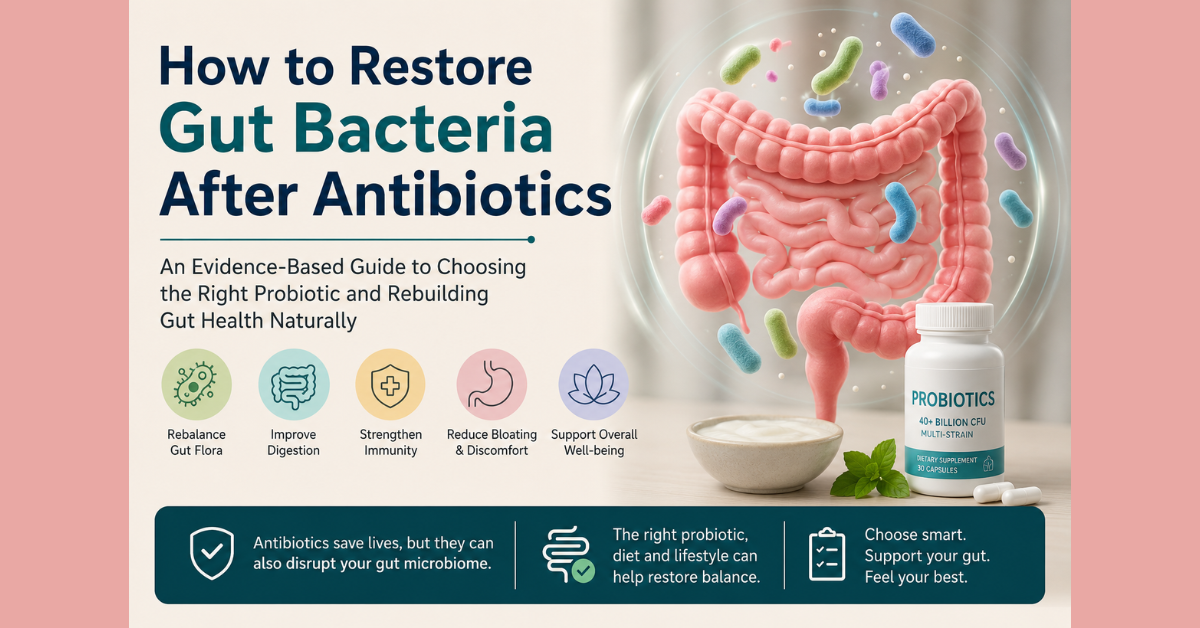
Who may not need a probiotic?
A generally healthy adult taking a short course of a lower-risk antibiotic, with no prior history of antibiotic-associated diarrhoea and no significant gut symptoms, may not necessarily need a probiotic supplement. For some people, focusing on:
- hydration
- a fibre-conscious diet as tolerated
- fermented foods where appropriate
- avoiding unnecessary gut irritants
- and allowing time for natural recovery
may be a reasonable strategy.
Who may be more likely to benefit from probiotic consideration?
Probiotics may be worth discussing more seriously in people with:
- previous antibiotic-associated diarrhoea
- repeated or prolonged antibiotic courses
- higher-risk antibiotic exposure
- H. pylori eradication regimens
- older age
- significant digestive symptoms during treatment
- certain paediatric situations
- higher-risk gut disruption contexts, under clinician guidance
The right message for a pillar article is therefore:
“Probiotics after antibiotics should be individualized—not automatic.”
What Duration of Antibiotic Use Becomes a Practical Risk Point for Dysbiosis?
There is no single universal “day number” after which dysbiosis suddenly begins. Microbiome disruption can happen even with shorter courses, but risk generally increases when one or more of the following are present:
- broad-spectrum antibiotics
- courses longer than 5–7 days
- repeated courses within a short period
- combination antibiotic regimens
- hospital-based or severe infection treatment
- H. pylori eradication protocols
- underlying GI vulnerability or older age
In practical content terms, it is reasonable to frame the “higher microbiome burden” situations as:
Higher-risk antibiotic scenarios
- 7–14 day or longer courses
- repeated courses over weeks or months
- dual-antibiotic therapy
- clindamycin / broad-spectrum cephalosporins / certain fluoroquinolones / amoxicillin-clavulanate when symptoms are prominent
- patients with a prior history of antibiotic-associated diarrhoea
This does not mean a 3-day course cannot cause symptoms. It means that the intensity, duration, and context of antibiotic exposure matter when deciding how aggressively to support gut recovery.
Common Symptoms After Antibiotics
Antibiotic-related gut disturbance does not always look the same. Some people develop diarrhoea; others become bloated or constipated; some simply feel “off.” Common symptoms include:
- loose stools
- diarrhoea
- bloating
- gas
- abdominal discomfort
- urgency
- constipation in some cases
- reduced appetite
- food intolerance
- nausea or unsettled digestion
- fatigue associated with GI disturbance
When symptoms need medical review
Gut symptoms after antibiotics should not always be self-treated with probiotics. Seek medical evaluation if there is:
- severe diarrhoea
- blood in stool
- fever
- severe abdominal pain
- dehydration
- persistent vomiting
- significant weakness
- diarrhoea that continues or worsens after antibiotics
- concern for Clostridioides difficile
Antibiotic-Associated Diarrhoea (AAD): What It Is and Why It Happens
Antibiotic-associated diarrhoea refers to loose stools or diarrhoea that occur during or after antibiotic treatment due to disruption of the gut microbiota and other related mechanisms. It can range from mild and self-limiting to severe and medically important.
Why does AAD happen?
Possible contributors include:
- loss of beneficial bacteria
- altered carbohydrate fermentation
- bile acid changes
- overgrowth of opportunistic organisms
- direct effects of antibiotics on intestinal function
- C. difficile infection in some cases
Who is at higher risk?
Risk may be higher in:
- older adults
- people with prior AAD
- hospitalised patients
- people on broad-spectrum antibiotics
- longer antibiotic courses
- those with underlying illness or frailty
This is where probiotics often enter the discussion—because some strains have evidence for reducing the risk of antibiotic-associated diarrhoea in selected settings.
Which Probiotics Have the Best Evidence for Antibiotic-Associated Diarrhoea?
This is the section most people look for—but it needs to be written carefully.
Not all probiotics work the same. Evidence applies to specific strains, not just to the word “probiotic.”
The best-studied options for reducing antibiotic-associated diarrhoea include:
1) Saccharomyces boulardii
This is one of the most frequently studied organisms for antibiotic-associated diarrhoea. It is a yeast, not a bacterial probiotic, which can be useful because it is not killed by antibacterial antibiotics in the same way bacterial strains may be.
2) Lactobacillus rhamnosus spp.
One of the best-known probiotic strains in the antibiotic-associated diarrhoea literature, especially in paediatric and mixed-population data.
3) Selected Lactobacillus and Bifidobacterium combinations
Some multi-strain products containing Lactobacillus and Bifidobacterium species have evidence for supporting gut balance and lowering diarrhoea risk, but the effect depends on the exact strains, dose, and study population.
4) Certain multi-strain synbiotic formulations
In some real-world settings, especially where microbiome disruption is expected to be broader, multi-strain formulations may be considered—but again, quality and evidence matter.
Important caution
You should avoid writing “this probiotic is the best for everyone.” A more accurate and defensible statement is:
The most evidence-supported probiotic approaches for antibiotic-associated diarrhoea include Saccharomyces boulardii, Lactobacillus rhamnosus GG, and selected multi-strain Lactobacillus/Bifidobacterium combinations—provided the formulation delivers clinically relevant strains, potency, and viability.
Do All Probiotics Work the Same? Definitely Not.
A probiotic is not just a “good bacteria capsule.” Its effectiveness depends on several variables:
1) Strain specificity
Two products may both say Lactobacillus, but they may contain entirely different strains with different evidence.
2) Potency
CFU count matters—but more is not always automatically better. A poorly chosen high-CFU product is not necessarily better than a well-designed evidence-based formula.
3) Viability and quality
The organisms need to survive manufacturing, storage, and delivery. Stability matters.
4) Single-strain vs multi-strain design
A single strain like S. boulardii may be useful for a specific purpose such as AAD risk reduction, while a multi-strain synbiotic may be chosen for broader digestive support.
5) Clinical context
AAD prevention, IBS-type bloating, post-H. pylori gut recovery, recurrent loose stools, or SIBO-like symptoms are not all the same scenario.
That is why a high-quality gut-health article should stop readers from asking only “Which probiotic is best?” and instead ask:
- Best for what situation?
- Best for which symptoms?
- Best for what antibiotic exposure?
- Best for what duration?
Is 7 Days or 10 Days of Probiotics Enough After Antibiotics?
This is another area where oversimplified advice causes confusion.
No single duration works for everyone.
A 7-day or 10-day probiotic course may be enough for some people, but it may be too short for others—especially if the goal is not just “taking something after antibiotics” but actually supporting recovery in a meaningful way.
What should duration depend on?
- the reason you’re taking the probiotic
- whether you’re trying to reduce antibiotic-associated diarrhoea risk or support longer gut recovery
- the type and duration of antibiotics used
- whether symptoms are ongoing after the antibiotic ends
- history of recurrent gut issues
- age, frailty, and baseline digestive health
- the specific strain used
Practical way to explain duration
A useful educational framework is:
Scenario A: Short, lower-risk antibiotic course with no symptoms
A probiotic may not be needed at all, or a shorter support strategy may be enough if one is used.
Scenario B: Antibiotic-associated diarrhoea prevention during a higher-risk course
The probiotic is often started during antibiotic therapy and may be continued for at least 1–2 weeks after the antibiotic course, depending on the strain and situation.
Scenario C: Significant post-antibiotic gut upset
A longer period—sometimes 2–4 weeks or more—may be more rational than a token 7-day course, especially if the goal is broader gut support rather than only short-term diarrhoea prevention.
Scenario D: Recurrent antibiotic use / chronic gut fragility
These cases often need a more individualized plan rather than a standard “10-day probiotic.”
So if you want one clean line for the blog:
“Seven to ten days may be enough for some people, but probiotic duration should be guided by the antibiotic used, symptom burden, recurrence risk, and the goal of therapy—not by an arbitrary one-size-fits-all rule.”
Probiotics vs Postbiotics: What’s the Difference?
This is an important modern addition because “postbiotics” are increasingly discussed in gut-health conversations.
Probiotics
Probiotics are live microorganisms that, when administered in adequate amounts, confer a health benefit on the host.
Postbiotics
Postbiotics are preparations of inanimate microorganisms and/or their components that confer a health benefit on the host. In simple terms, these are non-living microbial preparations or components that may still have biological effects. Scientific definitions have become clearer in recent years, and it is important not to confuse postbiotics with just “fermentation by-products” or marketing language. (ISAPP)
Why does this matter after antibiotics?
Probiotics and postbiotics are not interchangeable, but they raise a useful question: do microbes always need to be alive to be helpful? Not necessarily. Postbiotics may offer potential advantages such as:
- greater stability
- easier formulation
- less concern about viability at the time of use
- possible use in selected populations where live organisms are not ideal
However, the evidence base after antibiotics is still far more established for certain probiotic strains than for postbiotics as a broad replacement strategy. So the right way to present this in a pillar article is:
Probiotic
Best understood as a live, strain-specific intervention with the strongest evidence for certain uses such as selected antibiotic-associated diarrhoea scenarios.
Postbiotic
An emerging and scientifically interesting category of non-living microbial preparations that may support gut and immune health, but should not be treated as a universal substitute for evidence-backed probiotic strains in every post-antibiotic situation.
What About Synbiotics?
A synbiotic combines:
- a probiotic (live beneficial microorganism)
- with a prebiotic (a substrate, often a fibre or selectively used compound, that helps beneficial microbes)
For post-antibiotic recovery, synbiotics may be attractive because they attempt to support both the microbes and the environment they need. In practice, this may be relevant for:
- routine gut maintenance
- recovery after common antibiotic courses
- people with mild digestive disturbances
- those wanting broader microbiome support rather than only diarrhoea prevention
This is where a product category such as PRIZIBIOM Lite or PRIZIBIOM can be positioned educationally, depending on formulation strength, strain profile, and clinical use case.
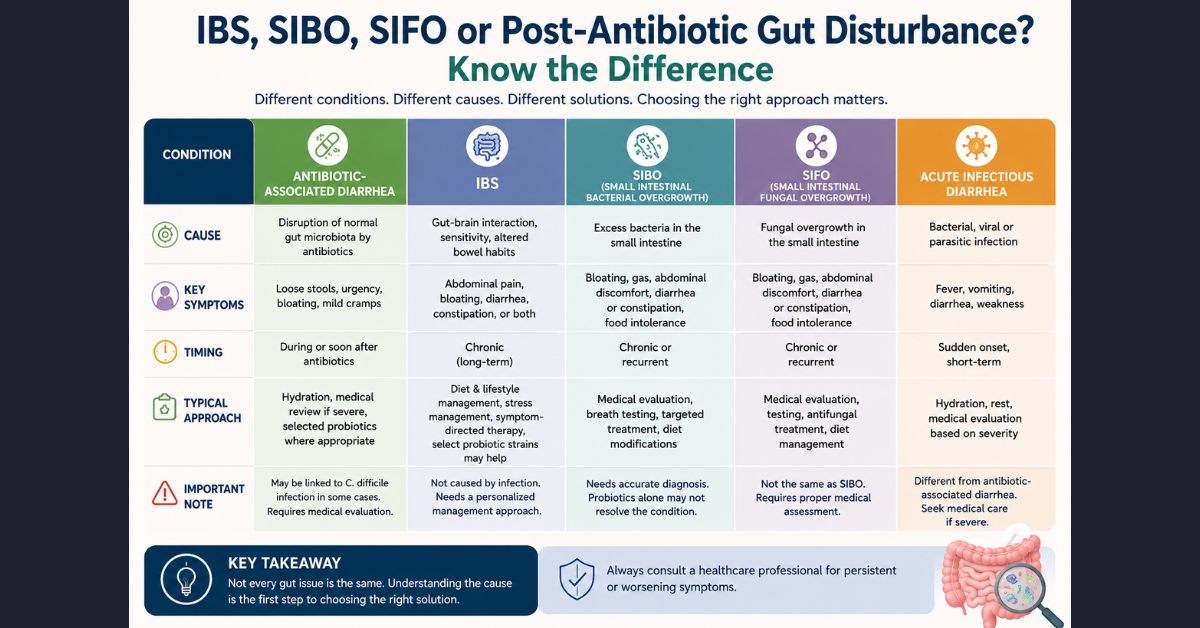
IBS, SIBO, SIFO, and Post-Antibiotic Gut Symptoms Are Not the Same Thing
One of the biggest mistakes in self-treatment is assuming that every gut symptom after antibiotics is “just bad bacteria” and can be fixed with any probiotic. That is not true.
Antibiotic-associated diarrhoea
Often occurs during or soon after antibiotics due to microbiome disruption.
IBS
A chronic gut–brain interaction disorder that may involve bloating, pain, diarrhoea, constipation, or mixed bowel habits.
SIBO
Small intestinal bacterial overgrowth; may require targeted diagnosis and management.
SIFO
Suspected fungal overgrowth in selected situations; not something to self-diagnose casually.
H. pylori treatment recovery
A separate situation where gut support may be useful, but the strategy is not always identical to routine antibiotic recovery.
This is why the article should tell readers not to use over-the-counter probiotics as a blanket solution for every digestive problem. If someone has persistent bloating, severe gas, alternating bowel habits, or long-term post-antibiotic symptoms, they may need evaluation—not just another random probiotic.
How to Choose a Gut Recovery Strategy After Antibiotics
A practical gut-recovery plan should ask five questions:
1) What antibiotic was used?
Broad-spectrum, repeated, or higher-risk regimens deserve more attention than a short lower-risk course.
2) What symptoms are present?
Diarrhoea, bloating, constipation, post-meal discomfort, or chronic gut instability may point to different needs.
3) Is the goal prevention or recovery?
Preventing antibiotic-associated diarrhoea is not the same as rebuilding gut resilience after a disruptive treatment course.
4) Is there a history of recurrent gut issues?
IBS, repeated antibiotics, food intolerance, or prior AAD increase the need for a more thoughtful plan.
5) Does the person need a probiotic, synbiotic, postbiotic, or simply diet-based support?
Not everyone needs all of the above.
A Practical Precimax Gut Health Framework
Below is a clean educational way to integrate the Precimax portfolio without turning the article into a sales page:
Routine gut support / mild post-antibiotic recovery
A standard-potency synbiotic strategy may be considered for routine digestive support and microbiome maintenance.
Relevant category: PRIZIBIOM Lite
Frequent antibiotic use / higher microbiome disruption / broader gut support
A higher-potency multi-strain synbiotic may be more relevant when the microbiome burden is greater or recovery needs are broader.
Relevant category: PRIZIBIOM
Suspected SIBO-type symptoms or complex bloating
These patients may require medical evaluation rather than self-prescribing probiotics. Where appropriate, gut-supportive strategies can be layered into a clinician-guided plan.
Relevant category: SIBOWEL
Post-H. pylori support / gut barrier support contexts
Some patients may benefit from a broader GI-support strategy alongside medical care.
Relevant category: LF-MAX
Inflammatory gut support considerations
Where gut irritation and inflammatory pathways are part of the wider picture, adjunctive nutritional strategies may be relevant.
Relevant category: CUCIMAX
Important: supplements should be framed as supportive tools, not replacements for medical diagnosis or treatment.
Lifestyle Strategies That Matter Just As Much as Supplements
Even the best probiotic cannot compensate for a gut-unfriendly recovery plan. Post-antibiotic recovery should also focus on:
1) Fibre, introduced sensibly
If tolerated, a fibre-rich diet helps feed beneficial bacteria. Go slowly in people who are bloated.
2) Fermented foods when appropriate
Curd, kefir, or fermented foods may help some people, but they are not mandatory and are not tolerated by everyone.
3) Adequate hydration
Especially important if there has been diarrhoea.
4) Protein and overall nutrition
A low-appetite, low-fibre, ultra-processed diet is not ideal for gut recovery.
5) Sleep and stress
The gut–brain axis matters. Stress can amplify post-antibiotic symptoms.
6) Avoid unnecessary repeat antibiotics
One of the best microbiome strategies is simply using antibiotics only when genuinely needed.
So, What Is the Real Answer to “How Do I Restore Gut Bacteria After Antibiotics?”
The evidence-based answer is not “take any probiotic for 7 days.”
The better answer is this:
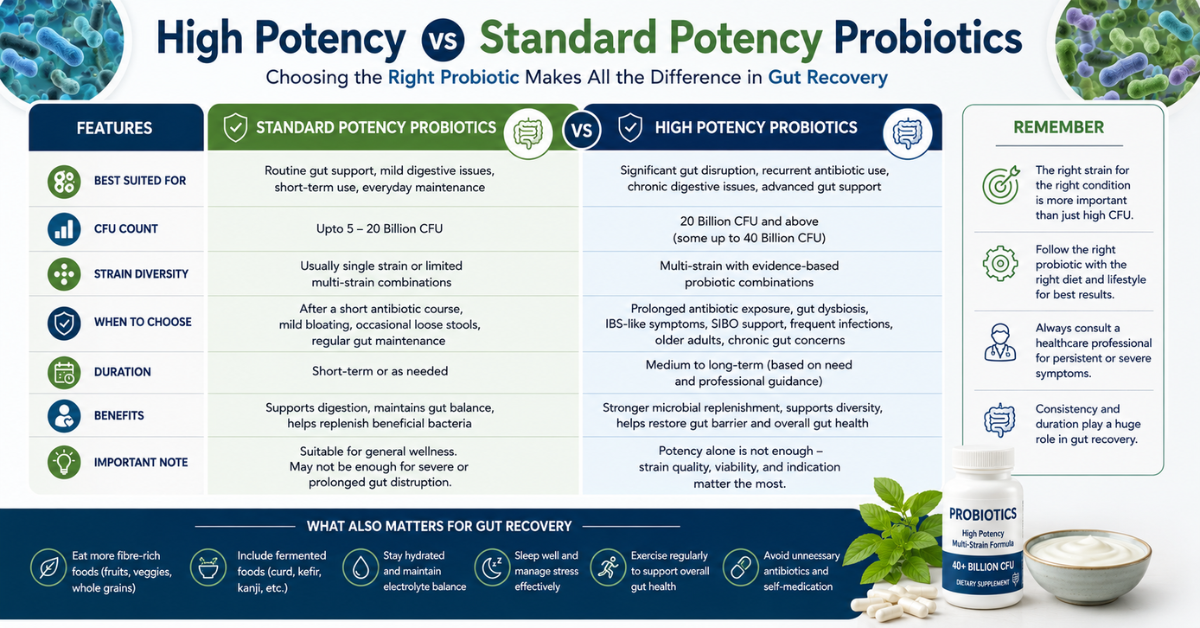
Gut recovery after antibiotics should be individualized.
Some people recover well with time, food, hydration, and minimal intervention. Some benefit from specific probiotics—especially when there is risk of antibiotic-associated diarrhoea or significant digestive symptoms. Some may need longer support than 7–10 days. Some may not need a probiotic at all. Some may actually need evaluation for IBS, SIBO, C. difficile, post-infectious gut dysfunction, or medication-related side effects rather than more supplements.
The most rational approach is to match the strategy to the antibiotic burden, symptoms, risk factors, and evidence for specific strains.
Key Takeaways
- Antibiotics can disrupt the gut microbiome, but the extent varies by antibiotic, duration, and individual factors.
- Not every antibiotic and not every individual automatically needs a probiotic.
- Higher-risk gut disruption is more likely with broad-spectrum antibiotics, repeated courses, longer durations, and prior gut vulnerability.
- Antibiotic-associated diarrhoea is a major reason probiotics are considered—but evidence applies to specific strains, not generic probiotic labels.
- The best-supported options for AAD include Saccharomyces boulardii, Lactobacillus rhamnosus GG, and selected Lactobacillus/Bifidobacterium combinations.
- Seven to ten days is not a universal probiotic duration. Some people may need none, some may need a short course, and others may need a longer recovery strategy.
- Probiotics and postbiotics are not the same thing. Postbiotics are a growing field, but they should not be treated as a blanket replacement for evidence-backed probiotic strains in every post-antibiotic situation.
- Persistent symptoms after antibiotics deserve proper evaluation—especially if there is severe diarrhoea, blood in stool, fever, dehydration, or prolonged GI distress.