
Best Collagen Supplement for Joint Health have become one of the most popular choices for people looking to support joint health, mobility, and healthy ageing. From athletes recovering after intense training to adults experiencing age-related joint stiffness, millions of people now include collagen in their daily wellness routine.
Yet many users stop taking collagen after a few weeks because they don’t notice the improvements they expected.
Does that mean collagen doesn’t work?
Not necessarily.
In many cases, the problem isn’t collagen itself. Instead, it may be the type of collagen you’re taking, the dose, the formulation, how long you’ve been using it, or whether your overall lifestyle is supporting joint health.
Healthy joints rely on much more than a single supplement. Physical activity, balanced nutrition, body weight, muscle strength, and proper joint care all contribute to long-term mobility and comfort.
In this article, we’ll explore seven evidence-based reasons why your collagen supplement may not be delivering the results you expected and what you should look for before choosing your next collagen supplement. Read the clinical evidence on collagen supplementation for joint health.

1. You May Be Taking the Wrong Type of Collagen
One of the most common misconceptions is that all collagen supplements are the same.
In reality, there are several different types of collagen, and each serves a different role in the body. Choosing the wrong type for your health goal may lead to unrealistic expectations.
The most commonly used collagen types include:
Type I Collagen
Primarily found in skin, bones, tendons, and ligaments. It is widely used in beauty and healthy ageing supplements because it supports the body’s structural tissues.
Type II Collagen
The main collagen found in cartilage. This type has been extensively studied for supporting joint comfort and cartilage health.
Type III Collagen
Often found alongside Type I collagen in connective tissues, muscles, blood vessels, and internal organs.
Some supplements also contain mixed collagen types, combining multiple collagen sources in one product. While this approach is popular, there is currently limited scientific evidence to show that mixed collagen products are consistently superior to selecting the collagen type that matches a specific health goal.
The most appropriate collagen depends on why you’re taking it. Someone looking to support skin health may choose a different collagen than someone focusing on joint comfort.
Consumer Takeaway
Rather than buying the first collagen supplement you see, choose a collagen type that matches your individual health goal.
2. Your Collagen Dose May Be Too Low
Another reason collagen supplements may not meet expectations is that the daily serving may not match the amounts evaluated in scientific studies.
Many consumers assume that all collagen products provide similar amounts, but recommended intake varies considerably depending on the collagen source, formulation, and intended use.
For example, research on bovine and marine collagen peptides has commonly evaluated daily servings of up to 10 grams. These larger doses are often used because collagen peptides supply amino acids that support connective tissue.
In contrast, undenatured Type II collagen, commonly derived from chicken sternum cartilage, is typically studied in milligram quantities rather than grams. This is because it works through a different biological mechanism than hydrolyzed collagen peptides.
Simply comparing the number on the label without considering the collagen type can therefore be misleading.
Another important consideration is consistency. Even when using an appropriate dose, Best Collagen Supplement for Joint Health is intended as part of a long-term nutritional routine rather than a short-term solution.
Consumer Takeaway
The right dose depends on the type of collagen you’re taking. More is not always better, and different collagen sources are studied using different serving sizes.
3. Hydrolyzed Collagen May Be Easier to Absorb
Collagen is a large structural protein. In its natural form, these large protein molecules are difficult for the digestive system to utilize efficiently.
To address this challenge, many supplements use hydrolyzed collagen, also known as collagen peptides.
Hydrolysis is a process that breaks collagen into much smaller peptide fragments. These smaller peptides dissolve more easily and are generally considered easier for the body to digest and absorb.
This is why many modern collagen supplements use hydrolyzed collagen rather than intact collagen proteins.
The concept highlights an important principle in nutritional science:
The formulation of a supplement can be just as important as the ingredient itself.
Simply seeing the word “collagen” on the label does not tell you whether the product has been processed in a way that supports efficient utilization.
This is particularly relevant for marine (fish) collagen and bovine collagen, where hydrolyzed collagen peptides are commonly used to improve digestibility.
Consumer Takeaway
When comparing collagen supplements, look beyond the ingredient list. Choosing hydrolyzed collagen peptides may offer advantages in terms of digestibility and absorption compared with non-hydrolyzed collagen.
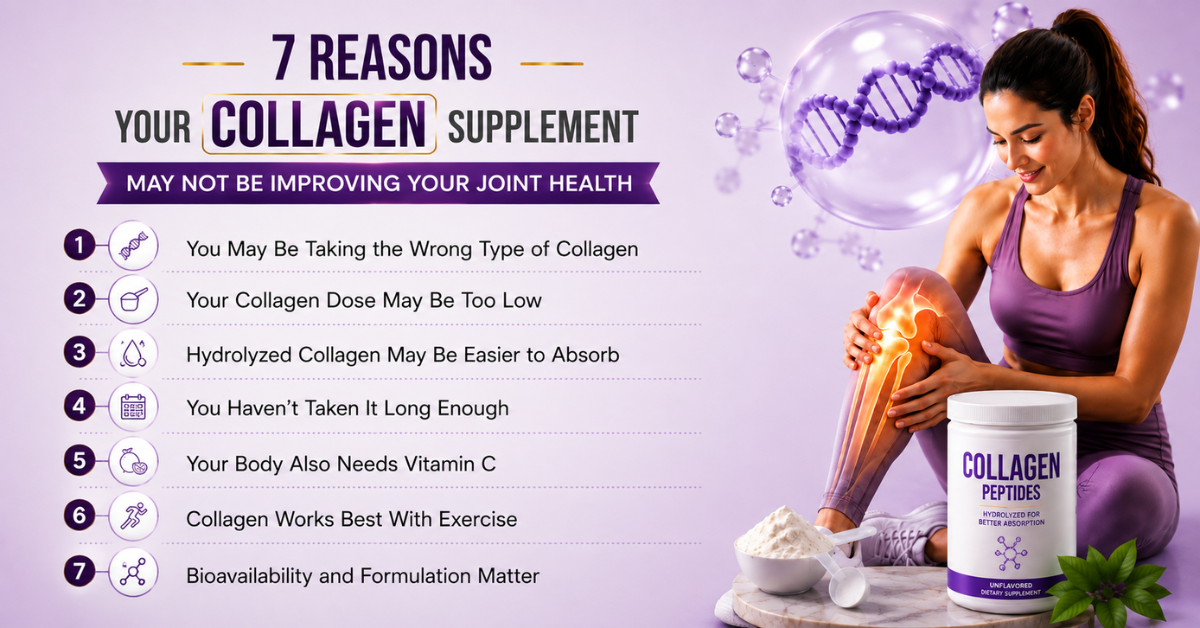
4. You Haven’t Taken It Long Enough
One of the biggest reasons people feel disappointed with collagen is expecting immediate results.
Unlike pain-relief medications, collagen does not provide instant effects. It supplies amino acids that contribute to the body’s normal connective tissue structure, and these biological processes take time.
Many people take collagen for only a week or two before deciding it isn’t working. However, this is usually much shorter than the duration evaluated in clinical research.
Numerous studies investigating collagen supplementation for joint health have followed participants for 8 to 12 weeks, with some extending even longer.
Just as muscles require regular training to become stronger, connective tissues also need time to respond to consistent nutritional support.
Other factors—including age, physical activity, body weight, and the severity of joint changes—can also influence how quickly noticeable improvements occur.
Stopping supplementation too early may prevent you from experiencing the potential benefits that require longer-term, consistent use.
Consumer Takeaway
Consistency matters. If collagen is appropriate for your health goals, use it regularly for the recommended duration before evaluating the results
5. Your Body Also Needs Vitamin C
Collagen is an important structural protein, but your body also requires the right nutrients to produce and maintain it effectively. One of the most important of these nutrients is Vitamin C.
Vitamin C plays an essential role in normal collagen formation. It helps activate enzymes involved in collagen synthesis, contributing to the strength and stability of connective tissues. Without adequate Vitamin C, the body’s natural collagen production may not function optimally.
However, Vitamin C is only one part of the picture. Other nutrients also support healthy connective tissues, including:
- Protein – provides the amino acids needed for collagen production.
- Zinc – supports tissue repair and normal immune function.
- Copper – contributes to the formation and maintenance of connective tissue.
Many collagen supplements contain small amounts of these nutrients, but the quantities included may not always meet an individual’s daily nutritional needs. A balanced diet rich in fruits, vegetables, lean protein, nuts, seeds, and whole grains remains the best foundation for supporting collagen formation.
Consumer Takeaway
Collagen works best when combined with the right nutritional support. Don’t rely solely on the small amounts of Vitamin C, Zinc, or Copper included in some collagen supplements—ensure your overall diet provides adequate nutrition.
6. Collagen Works Best With Exercise
While collagen provides nutritional support for connective tissues, it cannot replace movement.
Healthy joints depend on muscles, ligaments, tendons, cartilage, and bones working together. Regular physical activity helps maintain this system by improving joint mobility, strengthening supporting muscles, and encouraging normal tissue remodeling.
- Research consistently shows that exercise is one of the most effective long-term strategies for maintaining joint health. Low-impact activities such as walking, swimming, cycling, yoga, and resistance training can all contribute to better mobility when performed appropriately.
The type of exercise should match your age, fitness level, and the nature of your joint condition or injury. Someone recovering from a sports injury may require a different rehabilitation program than someone managing age-related osteoarthritis.
Combining appropriate exercise with good nutrition and collagen supplementation may provide greater support than relying on supplements alone.
Consumer Takeaway
Collagen and movement work together. Regular exercise supports healthy joints, muscle strength, and connective tissues far more effectively than supplements alone.
7. Bioavailability and Formulation Matter
Two collagen supplements may list similar ingredients on the label but perform differently because of how they are formulated.
Bioavailability refers to how efficiently nutrients are digested, absorbed, and utilized by the body. Even if two products contain the same amount of collagen, differences in manufacturing, ingredient quality, and formulation may influence how well the body can use them.
Modern collagen supplements increasingly focus on formulation science rather than simply increasing the dose. Features that may influence product quality include:
- Hydrolyzed collagen peptides for improved digestibility.
- Quality sourcing of collagen raw materials.
- Evidence-based formulations supported by scientific research.
- Manufacturing standards that help ensure consistency and purity.
Consumers often compare products based only on the grams of collagen per serving. However, formulation quality, ingredient processing, and manufacturing practices are equally important considerations.
This reflects a broader trend in nutritional science: better delivery and formulation can be just as important as the ingredient itself.
Consumer Takeaway
Quality matters—not just the number of grams listed on the label. Choose products that emphasize scientifically developed formulations and high manufacturing standards.
The Practical Collagen Buying Guide
Before purchasing your next collagen supplement, compare products using these eight practical parameters rather than focusing only on price or marketing claims.
Parameter | Why It Matters |
Collagen Type | Match the collagen type to your health goal. |
Hydrolyzed Collagen | May improve digestibility and absorption. |
Dose Per Serving | Appropriate doses vary depending on collagen type. |
Scientific Evidence | Look for formulations supported by published research. |
Bioavailability | Better formulations may improve nutrient utilization. |
Ingredient Quality | Reliable sourcing supports product consistency. |
Supporting Nutrients | Vitamin C, Zinc, Copper, and Protein complement collagen metabolism. |
Value, Not Just Price | Consider formulation quality and evidence rather than choosing the cheapest option. |
A well-formulated collagen supplement should be selected based on your individual health goals and overall nutritional needs—not simply because it contains the highest dose.
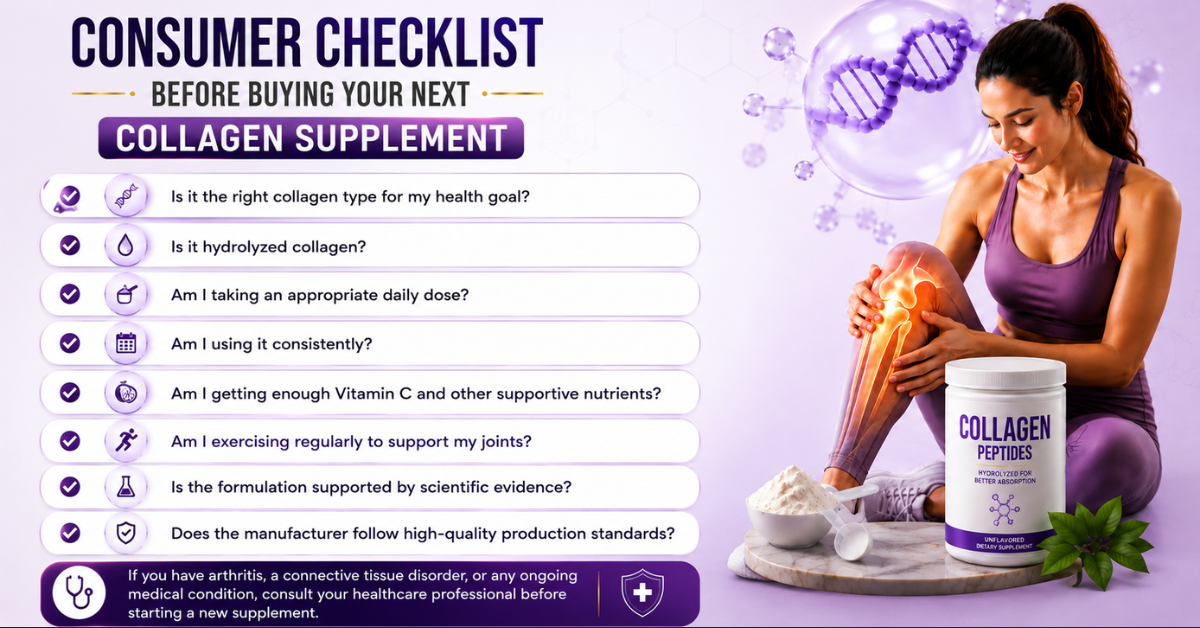
Consumer Checklist Before Buying Your Next Collagen Supplement
Before buying a collagen supplement, ask yourself:
✔ Is it the right collagen type for my health goal?
✔ Is it hydrolyzed collagen?
✔ Am I taking an appropriate daily dose?
✔ Am I using it consistently?
✔ Am I getting enough Vitamin C and other supportive nutrients?
✔ Am I exercising regularly to support my joints?
✔ Is the formulation supported by scientific evidence?
✔ Does the manufacturer follow high-quality production standards?
If you have arthritis, a connective tissue disorder, or any ongoing medical condition, consult your healthcare professional before starting a new supplement.
how to choose the right supplement
Conclusion
Collagen is one of the most widely used nutritional supplements for supporting joint health, but achieving the desired results depends on much more than simply taking a daily scoop or capsule.
The right collagen type, an appropriate dose, hydrolyzed formulation, adequate nutritional support, regular exercise, and consistent use all contribute to how well collagen fits into a joint health routine.
Modern research also highlights the growing importance of formulation science. Rather than focusing only on the grams of collagen listed on the label, consumers should consider ingredient quality, bioavailability, manufacturing standards, and whether the product is supported by scientific evidence.
Most importantly, remember that joint health is multifactorial. Maintaining a healthy body weight, staying physically active, eating a balanced diet, and following professional medical advice when needed are just as important as choosing the right supplement. Best Collagen Supplement for Joint Health
Instead of asking, “Which collagen supplement has the most grams?”, ask yourself:
“Is this the right type, dose, and formulation for my specific joint health goals?”
Making informed choices today can help support healthier joints and better mobility in the years ahead.
AEO
Which collagen is best for joints?
The best collagen for joints depends on your health goal. Type II collagen is commonly studied for cartilage health, while hydrolyzed bovine and marine collagen peptides are widely researched for supporting connective tissues.
Why isn’t my collagen working?
Your collagen supplement may not be the right type, dose, or formulation. Results also depend on consistency, adequate Vitamin C intake, exercise, and overall joint health management.
Is hydrolyzed collagen better than regular collagen?
Hydrolyzed collagen is broken into smaller peptides that are generally easier to digest and absorb compared with intact collagen proteins.
Which collagen has the highest bioavailability?
Hydrolyzed collagen peptides are designed to improve digestibility and absorption. Bioavailability also depends on manufacturing quality and formulation.
Is marine collagen better than bovine collagen?
Neither is universally better. Marine collagen is rich in Type I collagen, while bovine collagen typically provides Types I and III. The right choice depends on your health objective.
Is Type II collagen better for knees?
Type II collagen has been widely studied for cartilage and knee joint health because it is the primary collagen found in cartilage.
Can I take collagen every day?
Yes. Daily collagen supplementation is commonly recommended, and many studies evaluate collagen over several weeks or months.
Can collagen reduce joint pain?
Some studies suggest collagen supplementation may support joint comfort and mobility as part of a comprehensive joint health plan. Individual results vary.
15 Key Takeaways
- Not all collagen supplements are the same.
- Choose the collagen type based on your health goal.
- Type II collagen is commonly researched for joint health.
- Hydrolyzed collagen peptides may improve digestibility.
- Bioavailability influences effectiveness.
- The right daily dose depends on the collagen source.
- Results often require 8–12 weeks of consistent use.
- Vitamin C is essential for normal collagen formation.
- Protein, Zinc, and Copper also support connective tissue health.
- Exercise remains vital for healthy joints.
- Joint health requires a comprehensive approach.
- Quality sourcing and formulation matter.
- Don’t compare supplements by grams alone.
- Look for products supported by scientific evidence.
- Better choices today can help support long-term joint health.