Liposomal Vitamin D3
Vitamin D is often discussed as a single nutrient, but not all vitamin D supplements use the same form or delivery system. Liposomal Vitamin D3 combines cholecalciferol—the D3 form of vitamin D—with liposomal delivery technology designed to support efficient nutrient delivery.
Recent research has renewed interest in the differences between Vitamin D2 and D3, including how effectively they maintain vitamin-D status. At the same time, advances in supplement technology have brought attention to liposomal formulations and their potential role in improving nutrient bioavailability.
So, if you need vitamin D, does the form matter? And could the way Vitamin D3 is delivered also make a difference?
This guide explores Vitamin D2 vs D3, the latest research perspective, liposomal delivery, and what vitamin D means for muscle, bone, cardiovascular and overall health.
What Are Vitamin D2 and Vitamin D3?
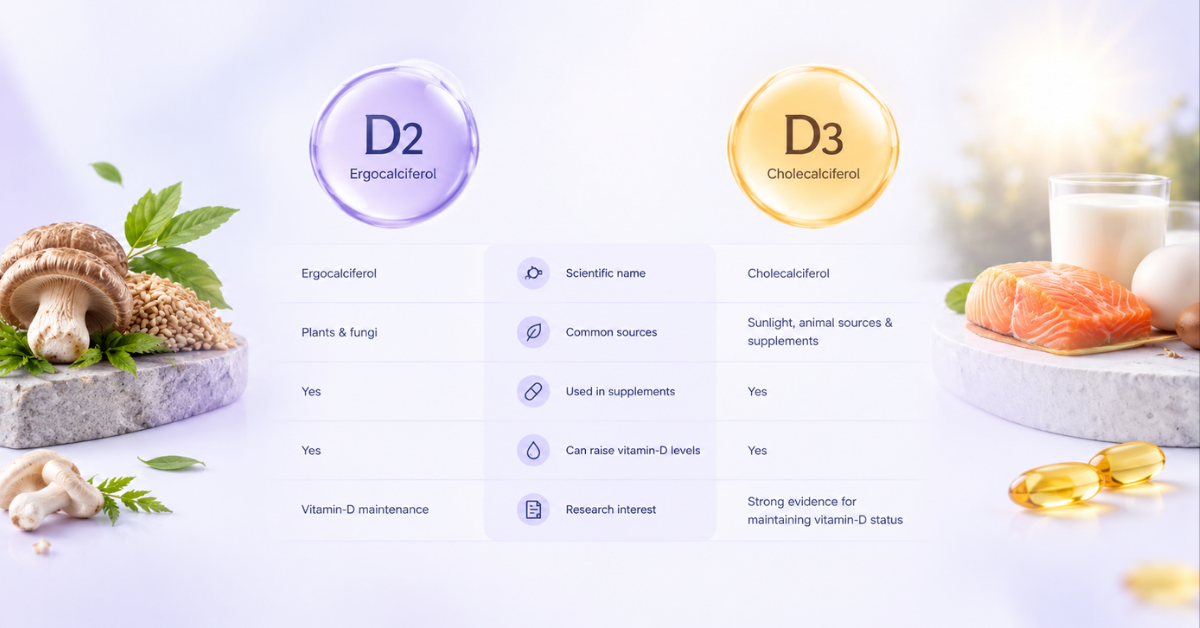
Vitamin D is available primarily in two forms: Vitamin D2 (ergocalciferol) and Vitamin D3 (cholecalciferol).
Vitamin D2
Vitamin D2, or ergocalciferol, is commonly associated with plant and fungal sources. It is also used in fortified foods and some dietary supplements.
Vitamin D3
Vitamin D3, or cholecalciferol, is produced naturally in the skin following exposure to sunlight. It is also available through certain foods and dietary supplements.
Both forms can increase vitamin-D levels, but research has suggested that they may not have identical effects on maintaining circulating vitamin-D status.
This is one reason Vitamin D3 is commonly used in supplementation.
Vitamin D2 vs D3: What’s the Difference?
The main difference is the form of vitamin D and how the body processes it.
Feature | Vitamin D2 | Vitamin D3 |
Scientific name | Ergocalciferol | Cholecalciferol |
Common sources | Plants & fungi | Sunlight, animal sources & supplements |
Used in supplements | Yes | Yes |
Can raise vitamin-D levels | Yes | Yes |
Research interest | Vitamin-D maintenance | Strong evidence for maintaining vitamin-D status |
While both forms can be useful, research generally suggests that Vitamin D3 can be more effective than D2 at raising and maintaining circulating 25-hydroxyvitamin D levels in many circumstances.
But choosing D3 is only one part of the equation.
The next question is: how is that Vitamin D3 delivered?
What Is Liposomal Vitamin D3?
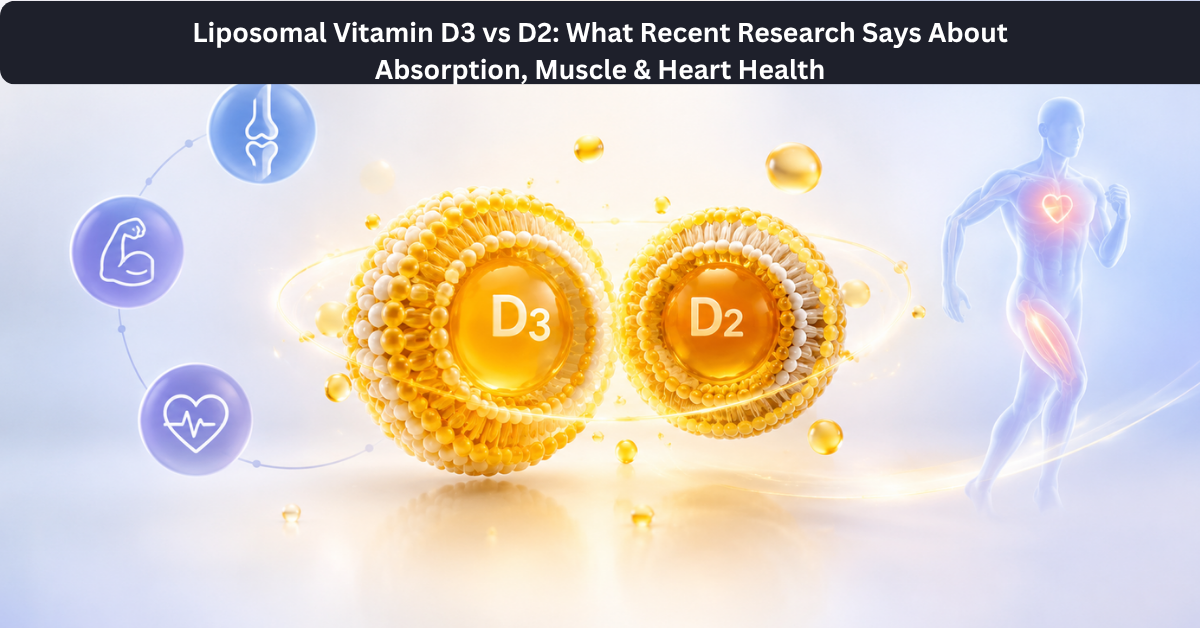
Liposomal Vitamin D3 is Vitamin D3 formulated using liposomal delivery technology.
Liposomes are tiny structures made primarily from phospholipids. They can be used to encapsulate or carry active ingredients and are designed to help facilitate their delivery through the gastrointestinal environment.
In simple terms:
Vitamin D3
↓
Liposomal Encapsulation
↓
Advanced Delivery
↓
Potentially Improved Bioavailability
This approach is different from simply adding Vitamin D3 to a conventional capsule.
The objective of liposomal technology is to create a delivery environment that may help improve the availability of the active ingredient.
How Does Liposomal Vitamin D3 Work?
1. Liposomal Encapsulation
Liposomal formulations use phospholipid structures to surround or carry active ingredients.
This creates a specialized delivery system for Vitamin D3.
2. Protection During Gastrointestinal Transit
After consumption, nutrients pass through a complex digestive environment.
Liposomal technology is designed to help protect and deliver the active ingredient during this process.
3. Focus on Bioavailability
Bioavailability refers to the amount of an active nutrient that becomes available for the body to use.
This distinction is important:
The amount of Vitamin D3 consumed is not necessarily the same as the amount that becomes available to the body.
Therefore, modern supplement development increasingly focuses not only on dosage but also on delivery technology.
4. Advanced Vitamin D3 Supplementation
Liposomal Vitamin D3 offers an alternative formulation approach for people looking beyond conventional Vitamin D3 supplements.
However, the performance of a liposomal formulation depends on its specific formulation, manufacturing process and supporting evidence.
What Does Recent Research Say About Vitamin D3?
Recent research, including the ICMR-NIN research highlighted in the news coverage that prompted this article, has contributed to renewed discussion around Vitamin D3 and its potential relevance to muscle and cardiovascular health.
The broader research question is important because vitamin D is involved in several physiological processes—not only bone health.
Research continues to investigate the relationship between vitamin-D status and:
- Muscle function
- Physical performance
- Bone health
- Cardiovascular health
- Overall metabolic and physiological health
However, it is important to distinguish between maintaining adequate vitamin-D levels and claiming that Vitamin D3 itself prevents or treats a particular disease.
Research findings should therefore be interpreted in context, including the population studied, dosage, baseline vitamin-D status and study design.
Why Vitamin D3 Matters for Muscle Health
Vitamin D is important for normal muscle function.
Adequate vitamin-D status is associated with several aspects of musculoskeletal health, including:
Normal Muscle Function
Vitamin D contributes to normal physiological processes involved in muscle function.
Strength & Mobility
Maintaining adequate vitamin-D status may be particularly relevant as people age and maintaining mobility becomes increasingly important.
Physical Performance
Vitamin D status has been studied in relation to physical performance and muscle strength.
It is important not to overstate this relationship.
Vitamin D3 does not simply “build muscle.” Rather, adequate vitamin-D status is one component of maintaining normal muscle and skeletal function.
Vitamin D3 and Bone Health
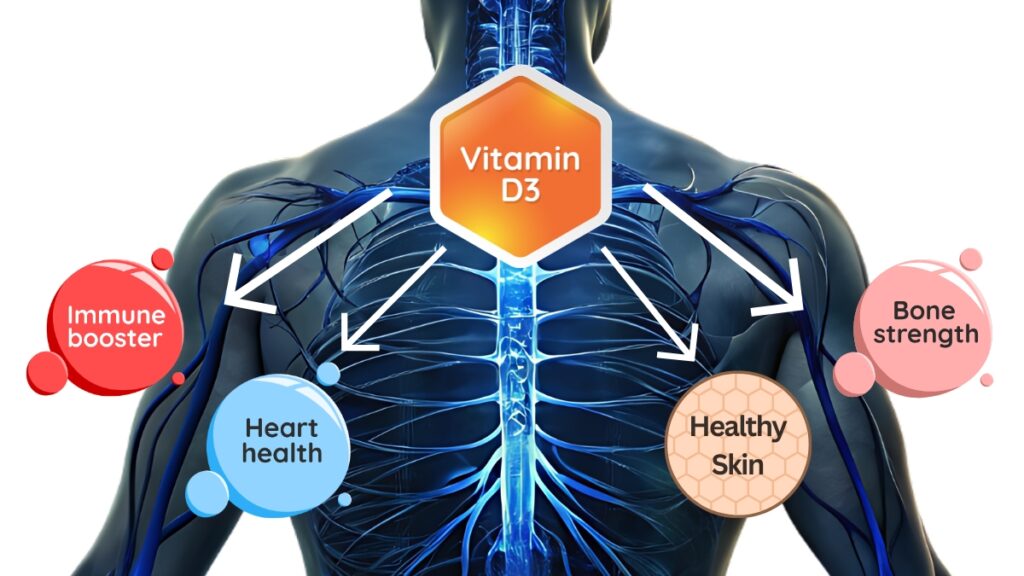
Bone health remains one of the best-established areas of vitamin-D research.
Vitamin D helps the body absorb calcium, an essential mineral for maintaining normal bones.
Adequate vitamin-D status therefore contributes to:
- Calcium absorption
- Normal bone mineralization
- Skeletal health
- Maintenance of bone strength
Vitamin D works alongside other nutrients, particularly calcium, rather than functioning independently.
What Does Vitamin D3 Have to Do With Heart Health?
The relationship between vitamin D and cardiovascular health is an active area of research.
Vitamin D receptors are present in various tissues throughout the body, which has led researchers to investigate potential connections between vitamin-D status and cardiovascular function.
Studies have examined associations involving:
- Blood pressure
- Cardiovascular risk factors
- Vascular function
- Metabolic health
However, an association between vitamin-D status and cardiovascular outcomes does not automatically prove that taking Vitamin D3 prevents cardiovascular disease.
More research is needed to understand exactly how supplementation affects cardiovascular outcomes in different populations.
Is Vitamin D3 Better Than Vitamin D2?
Vitamin D3 and Vitamin D2 can both increase vitamin-D levels, but research generally suggests that Vitamin D3 may be more effective at raising and maintaining circulating vitamin-D status in many situations.
Individual response can depend on factors such as:
- Dose
- Baseline vitamin-D status
- Age
- Diet
- Health status
- Supplement formulation
For consumers considering supplementation, the evidence around D3 makes it an important option to discuss with a healthcare professional.
But there is another consideration: delivery technology.
Liposomal Vitamin D3 vs Conventional Vitamin D3
Both products provide Vitamin D3, but the formulation can differ.
Conventional Vitamin D3
- Uses cholecalciferol
- Available in tablets, capsules, drops and other formats
- Established supplementation approach
- Absorption can vary according to formulation and individual factors
Liposomal Vitamin D3
- Uses cholecalciferol
- Incorporates liposomal delivery technology
- Uses phospholipid-based structures
- Designed to support advanced delivery
- Focuses on bioavailability and nutrient availability
This does not mean conventional Vitamin D3 is ineffective.
Instead, liposomal Vitamin D3 represents a different delivery approach designed to optimize how Vitamin D3 is presented to the body.
Why Choose Liposomal Vitamin D3?
When choosing a Vitamin D supplement, consumers often focus only on the number printed on the label.
But there are several factors worth considering.
Form of Vitamin D
Look for whether the product contains D2 or D3.
Delivery Technology
Liposomal Vitamin D3 uses an advanced phospholipid-based delivery approach.
Bioavailability
Consider whether the manufacturer provides evidence supporting its bioavailability or absorption claims.
Dosage
More Vitamin D is not automatically better. The appropriate amount depends on individual requirements.
Supporting Nutrients
Some Vitamin D3 products combine D3 with nutrients such as Vitamin K2 or magnesium.
Quality
Look for transparent labeling, appropriate testing and reliable manufacturing standards.
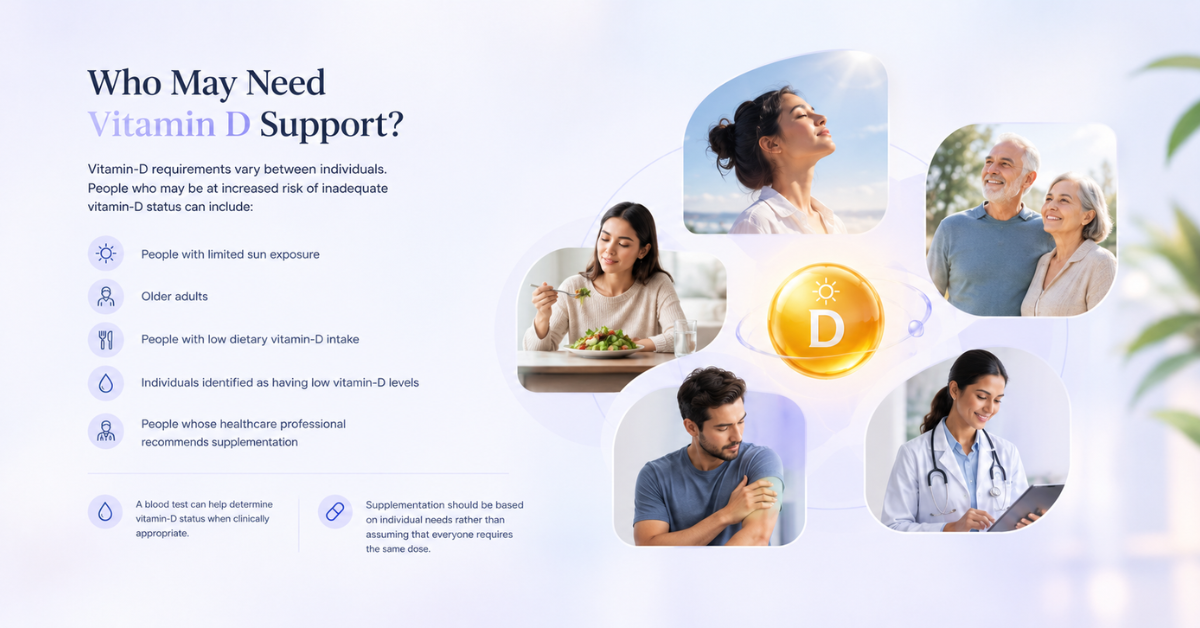
Who May Need Vitamin D Support?
Vitamin-D requirements vary between individuals.
People who may be at increased risk of inadequate vitamin-D status can include:
- People with limited sun exposure
- Older adults
- People with low dietary vitamin-D intake
- Individuals identified as having low vitamin-D levels
- People whose healthcare professional recommends supplementation
A blood test can help determine vitamin-D status when clinically appropriate.
Supplementation should be based on individual needs rather than assuming that everyone requires the same dose.
How to Choose a Liposomal Vitamin D3 Supplement
Before purchasing a supplement, consider five important questions:
1. Does it contain Vitamin D3?
Check whether the active ingredient is cholecalciferol.
2. Is it genuinely liposomal?
Look for clear information about the delivery technology rather than relying only on marketing terminology.
3. What is the dosage?
Check the actual Vitamin D3 amount per serving.
4. Is there evidence behind the formulation?
Look for transparent information supporting absorption, bioavailability and quality claims.
5. Is the product quality tested?
Manufacturing standards and testing information can help consumers make a more informed choice.
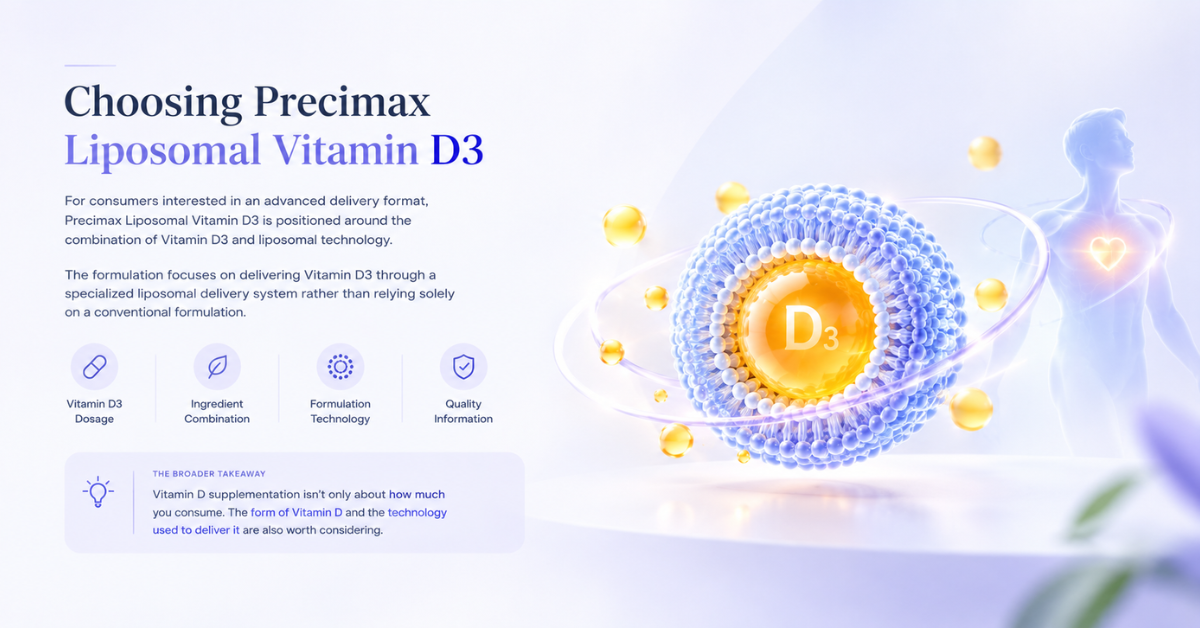
Choosing Precimax Liposomal Vitamin D3
For consumers interested in an advanced delivery format, Precimax Liposomal Vitamin D3 is positioned around the combination of Vitamin D3 and liposomal technology.
The formulation focuses on delivering Vitamin D3 through a specialized liposomal delivery system rather than relying solely on a conventional formulation.
When evaluating the product, consumers should consider its actual Vitamin D3 dosage, ingredient combination, formulation technology and available quality information.
The broader takeaway is simple:
Vitamin D supplementation isn’t only about how much you consume. The form of Vitamin D and the technology used to deliver it are also worth considering.
Quick Answers About Liposomal Vitamin D3
1. Is Liposomal Vitamin D3 better than regular Vitamin D3?
Liposomal Vitamin D3 uses a specialized phospholipid delivery system designed to support the delivery and bioavailability of Vitamin D3. Whether it performs better than a conventional formulation depends on the specific formulation and evidence. Consumers should evaluate product-specific research rather than assuming all liposomal products have identical absorption.
2. Is Vitamin D3 better than Vitamin D2?
Both Vitamin D2 and D3 can increase vitamin-D levels. However, research generally suggests that D3 may be more effective at raising and maintaining circulating vitamin-D status in many situations. Individual response can vary depending on dose, baseline vitamin-D levels and other factors.
3. What is Liposomal Vitamin D3?
Liposomal Vitamin D3 is Vitamin D3 formulated using liposomal delivery technology. Liposomes are microscopic phospholipid structures that can carry active ingredients. The technology is designed to support the delivery of Vitamin D3 through the gastrointestinal environment and potentially improve its bioavailability.
4. How does Liposomal Vitamin D3 improve absorption?
Liposomal technology uses phospholipid structures to encapsulate or carry Vitamin D3. This delivery approach is designed to protect and facilitate delivery of the nutrient through the digestive environment. However, the degree of improved absorption depends on the specific formulation, manufacturing process and individual factors.
5. What are the benefits of Liposomal Vitamin D3?
Liposomal Vitamin D3 provides the benefits associated with adequate Vitamin D3 while using a specialized delivery system. Vitamin D contributes to normal bone and muscle function and supports calcium absorption. Liposomal technology is designed to provide an advanced approach to delivering Vitamin D3.
6. Which Vitamin D is better for muscle health?
Vitamin D3 is commonly used to maintain adequate vitamin-D status, which is important for normal muscle function. Research has examined vitamin-D status in relation to muscle strength and physical performance. However, Vitamin D3 should not be considered a standalone muscle-building supplement.
7. Does Vitamin D3 support bone health?
Yes. Vitamin D contributes to normal calcium absorption and is important for maintaining healthy bones. Adequate vitamin-D status supports normal bone mineralization and skeletal health. Vitamin D works together with nutrients such as calcium as part of an overall approach to maintaining healthy bones.
8. Does Vitamin D3 support heart health?
Vitamin D has biological roles that have led researchers to investigate its relationship with cardiovascular health. Some studies have found associations between vitamin-D status and cardiovascular outcomes, but this does not establish that Vitamin D3 prevents heart disease. Cardiovascular benefits of supplementation remain an area of ongoing research.
9. How much Vitamin D3 should you take?
The appropriate Vitamin D3 intake varies according to age, dietary intake, sun exposure, vitamin-D status and individual health circumstances. Some people may require supplementation based on professional advice or blood-test results. Avoid assuming that a higher dose is automatically more beneficial.
10. Can Vitamin D3 be taken every day?
Vitamin D3 can be included in daily supplementation routines when appropriate, but the correct dosage depends on individual requirements. Some people may need supplementation while others may obtain sufficient vitamin D from diet and sunlight. Follow the product directions or healthcare professional’s advice.
11. How do you know if you need Vitamin D supplementation?
A healthcare professional can assess your individual circumstances and may recommend a blood test to evaluate vitamin-D status. Factors such as limited sun exposure, age, dietary intake and certain health circumstances can influence vitamin-D requirements.
12. What is the difference between Vitamin D2 and D3?
Vitamin D2 is ergocalciferol, while Vitamin D3 is cholecalciferol. They come from different sources and may differ in how effectively they maintain circulating vitamin-D levels. Both can raise vitamin-D status, but research often finds D3 more effective for maintaining levels.
13. Can Liposomal Vitamin D3 help with Vitamin D deficiency?
Liposomal Vitamin D3 provides Vitamin D3 through an advanced delivery formulation. It may be used as part of a supplementation strategy when Vitamin D intake is inadequate. Diagnosed vitamin-D deficiency should be evaluated by a healthcare professional to determine the appropriate treatment and dose.
14. What does liposomal delivery mean?
Liposomal delivery refers to using microscopic phospholipid structures to carry an active ingredient. These structures are designed to interact with the gastrointestinal environment and facilitate delivery of the ingredient. In Liposomal Vitamin D3, this technology is used to provide an alternative delivery system for Vitamin D3.
15. Should I choose Liposomal Vitamin D3 or regular Vitamin D3?
The choice depends on your individual needs and the quality of the specific formulation. Conventional Vitamin D3 is an established supplementation option, while Liposomal Vitamin D3 uses an advanced delivery approach. Compare dosage, formulation, quality testing and evidence before choosing a product.