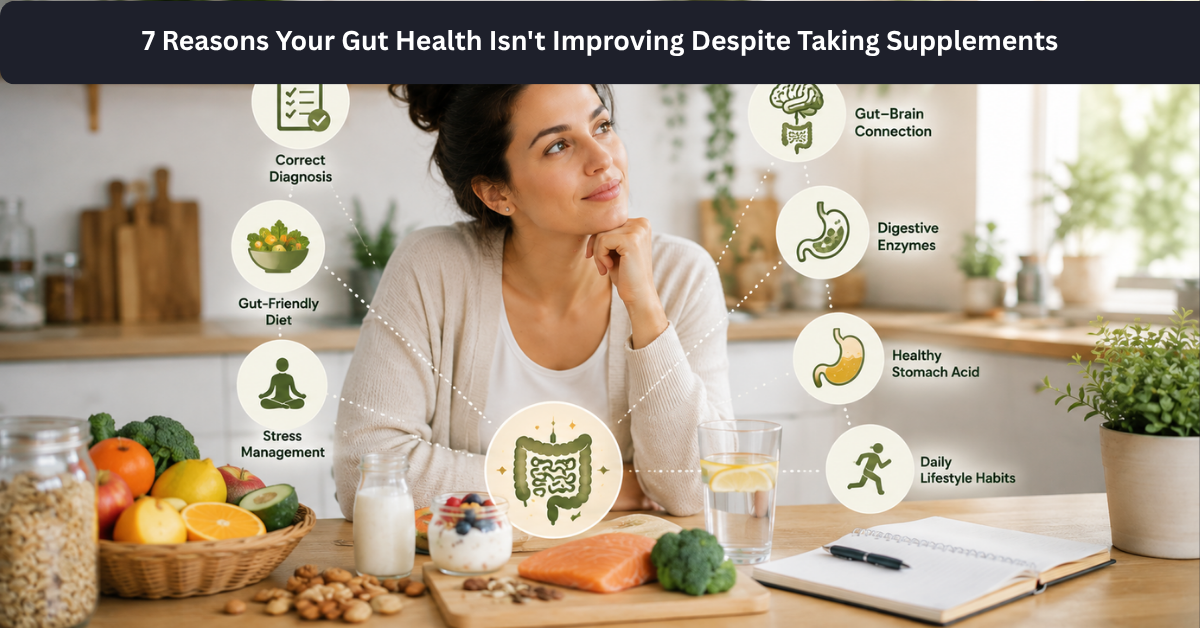
Gut Health Isn’t Improving Despite Taking Supplements. Taking supplements alone may not be enough to improve gut health. Digestive symptoms can have many causes, including an incorrect diagnosis, poor diet, chronic stress, digestive enzyme insufficiency, low stomach acid, and unhealthy lifestyle habits. Addressing these underlying factors alongside appropriate supplementation may provide better long-term digestive health.
Key Takeaways
- Supplements are only one part of gut health.
- Getting the correct diagnosis is essential.
- Diet plays a major role in maintaining a healthy gut.
- Stress and the gut-brain connection affect digestion.
- Digestive enzymes and stomach acid support nutrient absorption.
- Healthy lifestyle habits enhance the effectiveness of supplements.
Gut Health Is About More Than Supplements
Many people start taking probiotics or other gut health supplements expecting quick improvements in bloating, constipation, gas, or digestive discomfort.
However, despite taking supplements consistently, some people continue to experience digestive symptoms.
The reason is simple:
Gut health depends on much more than the supplement you take.
Your diagnosis, eating habits, digestion, stress levels, sleep quality, physical activity, and overall lifestyle all influence how well your digestive system functions.
Supplements may support gut health, but they are generally most effective when used alongside evidence-based nutrition, healthy habits, and appropriate medical guidance.
Let’s explore seven common reasons why your gut health may not be improving despite taking supplements.
1. You May Have the Wrong Diagnosis
Many digestive symptoms look similar, but they don’t always have the same cause.
Experiencing bloating, abdominal discomfort, constipation, diarrhea, or excessive gas does not automatically mean you have poor gut bacteria or need probiotics.
Several different digestive conditions can produce similar symptoms.
Common Causes of Digestive Symptoms
- Irritable Bowel Syndrome (IBS)
- Small Intestinal Bacterial Overgrowth (SIBO)
- Food intolerances
- Acid reflux (GERD)
- Functional dyspepsia
- Inflammatory bowel diseases
- Celiac disease
- Lactose intolerance
Each condition requires a different treatment approach.
For example, while probiotics may be beneficial for some individuals, they may not be appropriate for every digestive condition. Taking supplements without identifying the underlying cause may delay effective treatment.
If symptoms persist or worsen, consult a qualified healthcare professional for a proper evaluation rather than relying solely on supplements.
Key Takeaway: The right treatment starts with the right diagnosis.
2. Your Diet May Be Working Against You
Even the highest-quality supplement cannot replace a healthy diet.
The foods you eat every day directly influence your gut microbiome, digestion, and overall digestive health.
A diet high in ultra-processed foods, refined sugars, and unhealthy fats may negatively affect the diversity of beneficial gut bacteria.
At the same time, inadequate fiber intake may reduce the nutrients available for beneficial microbes.
Support Your Gut With
- Fruits and vegetables
- Whole grains
- Legumes
- Fiber-rich foods
- Fermented foods (when appropriate)
- Adequate hydration
Instead of depending entirely on supplements, focus on building healthy eating habits that nourish your digestive system every day.
Remember, supplements are designed to complement—not replace—a balanced diet.
Key Takeaway: Food is the foundation of gut health.
3. Stress Can Affect Your Gut
Stress doesn’t just affect your mind—it also affects your digestive system.
The digestive tract and the brain constantly communicate through what’s known as the gut-brain axis. As a result, emotional stress can influence digestive function in several ways.
Chronic stress may contribute to:
- Digestive discomfort
- Bloating
- Changes in bowel habits
- Increased gut sensitivity
- Altered gut motility
Some people notice that their digestive symptoms worsen during stressful periods, even if their diet hasn’t changed.
Supporting gut health therefore involves caring for both your digestive system and your mental well-being.
Simple stress-management practices such as mindfulness, breathing exercises, regular physical activity, and adequate sleep may help support overall digestive health.
Key Takeaway: Managing stress is an important part of supporting gut health.

4. Don’t Ignore the Gut–Brain Connection
Your gut and brain are constantly communicating through a complex network known as the gut–brain axis. This two-way connection means that emotional well-being and digestive health can influence each other.
When you’re under stress or not sleeping well, you may notice digestive symptoms such as bloating, abdominal discomfort, or changes in bowel habits becoming more noticeable.
Supporting both your mind and your gut can contribute to better digestive health.
Ways to Support the Gut–Brain Connection
- Prioritize quality sleep
- Stay physically active
- Practice relaxation techniques such as meditation or deep breathing
- Manage daily stress effectively
- Maintain a consistent daily routine
While supplements may support gut health, they work best alongside healthy lifestyle habits.
Key Takeaway: A healthier mind can support a healthier gut.
5. Digestive Enzymes May Also Matter
Good digestion begins before nutrients reach your intestines. how the digestive system works
Digestive enzymes help break down carbohydrates, proteins, and fats into smaller molecules that your body can absorb efficiently.
In some individuals, reduced digestive enzyme activity may contribute to symptoms such as:
- Bloating
- Feeling overly full after meals
- Indigestion
- Gas
- Difficulty digesting certain foods
Depending on the underlying cause, digestive enzyme support may be beneficial for some people. However, supplementation should only be considered when appropriate and under the guidance of a healthcare professional.
Improving digestion at the source may help maximize the benefits of a healthy diet and nutritional supplements.
Key Takeaway: Good digestion starts before nutrients reach the gut.
6. Stomach Acid Plays an Important Role
Many people associate stomach acid with acid reflux, but healthy stomach acid is essential for normal digestion.
It helps your body:
- Digest proteins
- Absorb important nutrients such as iron and vitamin B12
- Support mineral absorption
- Act as a natural barrier against harmful microbes
Too little stomach acid may affect digestion in some individuals and contribute to digestive discomfort.
It’s important to remember that digestive symptoms are not always caused by excessive stomach acid. Self-medicating without proper evaluation may not address the underlying issue.
. A healthcare professional can help determine the most appropriate treatment based on your symptoms.
Key Takeaway: Healthy digestion begins in the stomach.
7. Your Lifestyle Matters More Than You Think
Daily habits have a significant influence on digestive health.
Even the best supplements may provide limited benefits if your lifestyle doesn’t support a healthy gut.
Healthy habits that support gut function include:
- Regular physical activity
- Adequate sleep
- Stress management
- Balanced nutrition
- Staying hydrated
- Consistent meal timings
- Avoiding smoking
- Limiting excessive alcohol intake
Small, consistent lifestyle improvements often have a greater long-term impact than relying on supplements alone.
Key Takeaway: Supplements work best as part of a healthy lifestyle.
Final Takeaway
Improving gut health requires looking beyond supplements.
Instead of focusing on a single product, consider your overall digestive health by addressing:
- The correct diagnosis
- A gut-friendly diet
- Stress management
- The gut–brain connection
- Digestive enzymes
- Healthy stomach acid
- Daily lifestyle habits
A comprehensive approach often provides the best support for long-term digestive wellness.
References
- World Gastroenterology Organisation (WGO)
- American Gastroenterological Association (AGA)
- British Society of Gastroenterology (BSG)
- National Institute of Diabetes and Digestive and Kidney Diseases (NIDDK)
- PubMed – Clinical studies on gut microbiota, probiotics, digestive enzymes, and the gut–brain axis
- how the digestive system works
Need Help Choosing the Right Gut Health Support?
Gut Health Isn’t Improving Despite Taking Supplements If you’re experiencing ongoing digestive symptoms, don’t rely on supplements alone. Understanding the root cause of your symptoms is the first step toward better gut health.
The Precimax Health Team can help you understand:
- Possible causes of digestive symptoms
- How nutrition and lifestyle affect gut health
- Choosing the right gut health supplement
- Building a healthier daily routine
Evidence-based guidance. Personalized recommendations. Better gut health.
📞 Call: +91 74066 22710
🌐 Website: www.precimax.in