Executive Summary
Most consumers assume that higher dosage automatically means better results. However, modern nutraceutical science demonstrates a very different reality.
A supplement becomes effective only when the nutrient is:
- Properly absorbed
- Transported into circulation
- Delivered to target tissues
- Utilized at the cellular level
This entire process is defined by one critical concept:
Bioavailability
Two supplements may contain the same ingredient and the same dosage, yet produce completely different outcomes because of differences in absorption efficiency, formulation technology, and nutrient delivery systems.
What Is Bioavailability?
Bioavailability refers to the proportion of a nutrient that becomes available for physiological function after consumption.
Simple Definition
“How much of the nutrient your body can actually use.”
Scientific Definition
Bioavailability is defined as the fraction of an administered nutrient that reaches systemic circulation and becomes biologically active.
Absorption vs Bioavailability
Many people use these terms interchangeably, but they are not identical.
Feature | Absorption | Bioavailability |
Definition | Nutrient enters bloodstream | Nutrient becomes biologically usable |
Focus | Transport | Functionality |
Process Stage | Initial | Final outcome |
Clinical Importance | Partial step | True effectiveness |
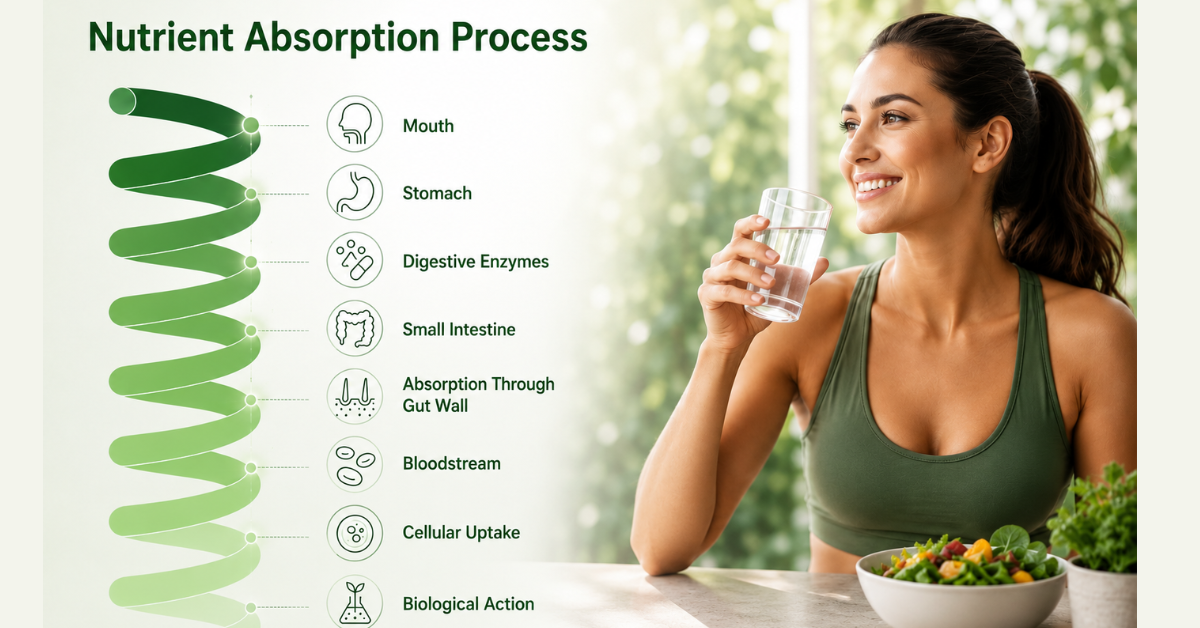
The Journey of a Nutrient
A supplement does not become effective immediately after swallowing.It must survive multiple biological barriers before reaching the cells.
Key Scientific Insight
“At every stage of digestion and transport, nutrient loss may occur.”
This explains why:
- High dosage alone is not enough
- Some supplements fail despite good ingredients
- Delivery systems matter significantly
Factors Affecting Bioavailability
- Digestive Health
Poor digestion reduces nutrient breakdown and intestinal absorption.
- Age
Enzyme secretion and digestive efficiency decline with age.
- Gut Microbiome
Healthy microbiota improve nutrient metabolism and absorption.
- Inflammation
Inflamed intestinal lining reduces permeability and nutrient uptake.
- Food Interactions
Some foods enhance absorption, while others inhibit it.
- Drug Interactions
Certain medications interfere with nutrient transport pathways.
Why Two Similar Supplements Produce Different Results
Even when two products contain the same ingredient and dosage, the outcomes may differ significantly due to:

Comparison Example: Curcumin Bioavailability
Curcumin is one of the best examples of why absorption matters more than dosage.
Why Curcumin Is Challenging
Curcumin naturally exhibits:
- Poor water solubility
- Rapid metabolism
- Low systemic absorption
Comparison Table: Standard vs Liposomal Curcumin
Factor | Standard Curcumin | Liposomal Curcumin |
Active Ingredient | Curcumin | Curcumin |
Label Dosage | 1000 mg | 1000 mg |
Water Solubility | Poor | Improved |
Stability During Digestion | Low | High |
Estimated Absorption | 8–15% | 50–70% |
Cellular Uptake | Limited | Enhanced |
Clinical Efficiency | Variable | Improved |
Modern Technologies That Improve Bioavailability
Modern nutraceutical science now focuses heavily on delivery systems.
✔ Liposomal Delivery
Nutrients are encapsulated inside phospholipid layers.
✔ Micellar Technology
Improves transport of fat-soluble nutrients.
✔ Chelation
Minerals are bound to amino acids for enhanced uptake.
✔ Microencapsulation
Protects nutrients from gastric degradation.
✔ Phospholipid Complexes
Improve membrane transport and cellular delivery.
✔ Bioenhancers
Natural compounds increase nutrient absorption efficiency.
Innovative Liposomal Technology
What Is Liposomal Technology?
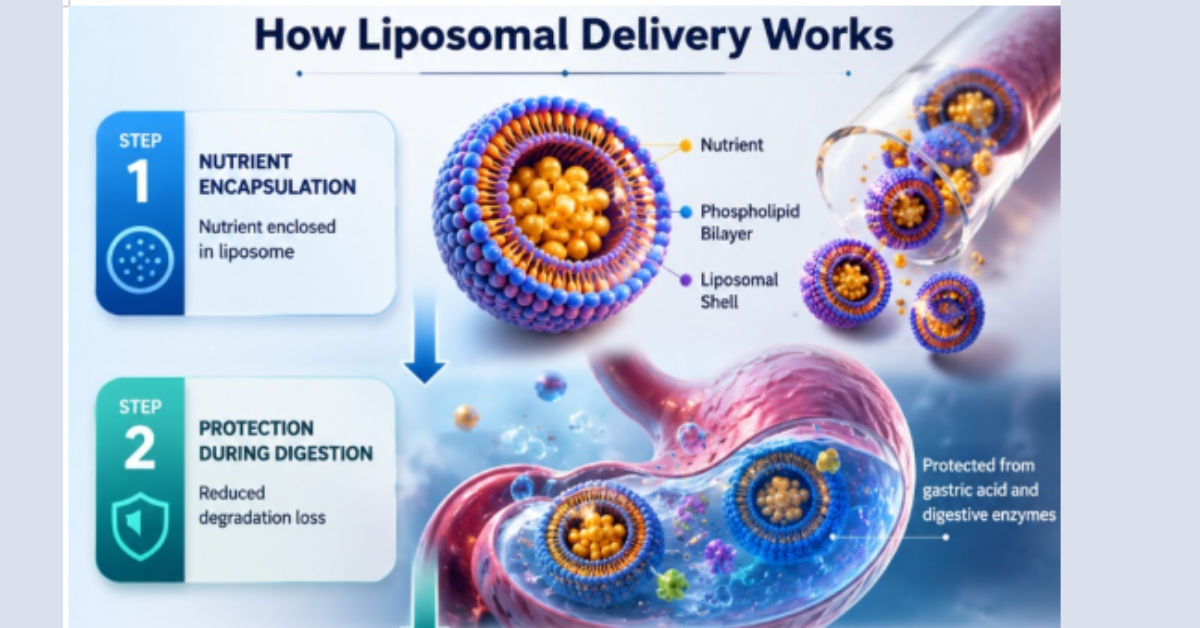
Liposomal technology is an advanced nutrient delivery system where active ingredients are enclosed within microscopic phospholipid vesicles called liposomes.
These lipid structures resemble human cell membranes, allowing more efficient absorption and transport.
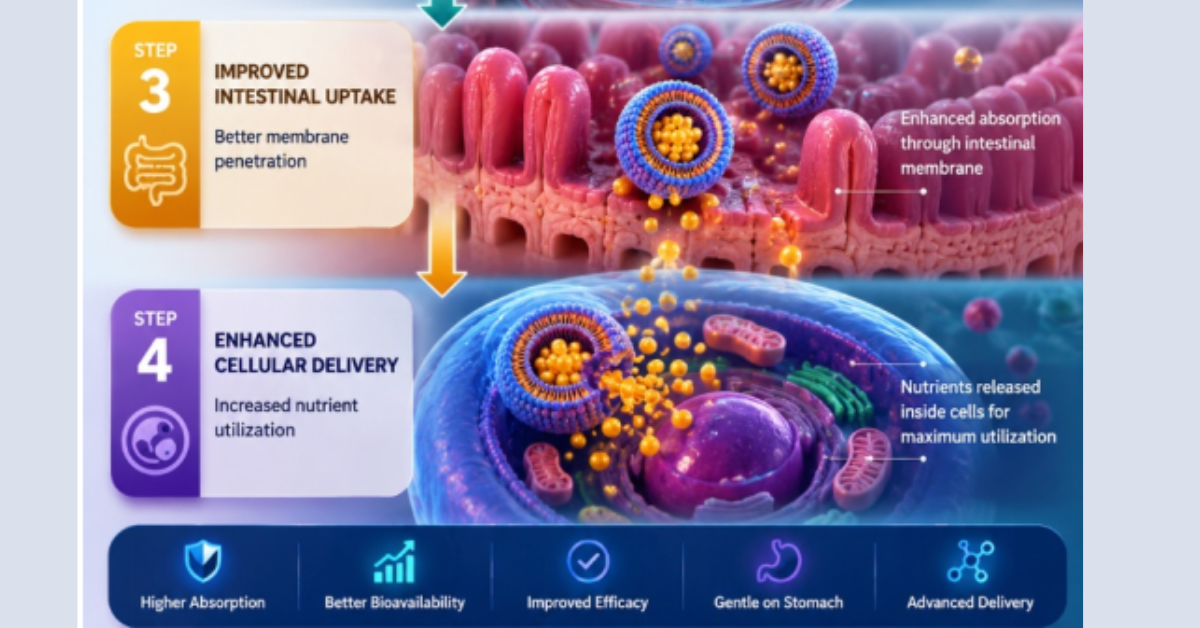
How Liposomal Delivery Works
Benefits of Liposomal Technology
Benefit |
| Scientific Advantage |
· Improved Absorption |
| · Better intestinal uptake |
· Enhanced Stability |
| · Protection from degradation |
· Increased Bioavailability |
| · Higher usable nutrient fraction |
· Reduced Nutrient Loss |
| · Less destruction during digestion |
· Better Cellular Delivery |
| · Improved membrane transport |
· Improved Tolerability |
| · Reduced GI discomfort |
Clinical Examples
- Liposomal Vitamin C
Traditional Vitamin C absorption may plateau at higher doses.
Liposomal Approach
May improve:
- Cellular delivery
- Absorption efficiency
- Stability during digestion
- Liposomal Iron
Conventional iron is commonly associated with:
- Gastric discomfort
- Constipation
- Poor tolerability
Liposomal Iron Advantages
May help:
- Improve absorption
- Reduce gastric irritation
- Enhance compliance
- Liposomal Curcumin
Curcumin naturally has poor bioavailability.
Advanced Delivery Approaches
- Liposomal encapsulation
- Micellar systems
- Phospholipid complexes
- Bioenhancers like Piperine
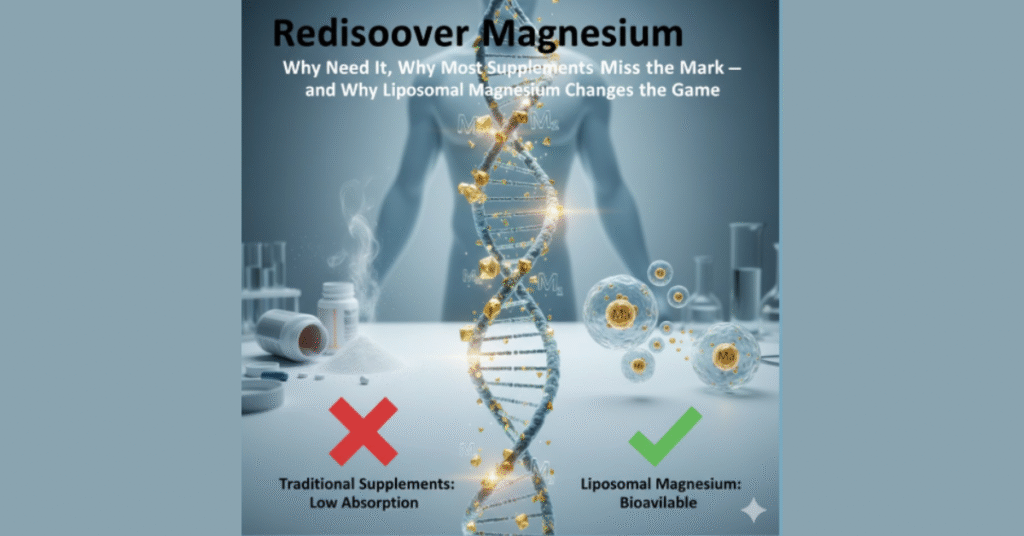
- Magnesium Bioavailability Comparison
Different magnesium forms demonstrate different absorption characteristics.
Feature | Magnesium Oxide | Magnesium Glycinate | Liposomal Magnesium |
Absorption | Low | Moderate-High | Very High |
GI Tolerability | Lower | Better | Excellent |
Cellular Uptake | Limited | Improved | Enhanced |
Delivery Technology | Conventional | Chelated | Liposomal |
Magnesium Delivery Efficiency Comparison
Scientific Perspective
Modern clinical nutrition increasingly recognizes that:
- Ingredient quality alone is insufficient
- Delivery systems influence effectiveness
Bioavailability determines physiological outcome
Why Absorption Science Matters More in Nutraceuticals Than Pharmaceuticals
In pharmaceutical science, most active drug molecules are developed through highly controlled systems designed to achieve predictable therapeutic outcomes. Drug delivery, pharmacokinetics, dosage precision, and absorption pathways are extensively optimized during pharmaceutical development to ensure measurable clinical efficacy.
Nutraceuticals operate within a far more complex biological environment.
Unlike pharmaceutical compounds, many nutraceutical ingredients are naturally derived molecules that inherently face significant absorption challenges. Poor water solubility, instability within the gastrointestinal tract, rapid metabolism, enzymatic degradation, and limited intestinal permeability often reduce the amount of nutrient that ultimately becomes available for physiological function.
As a result, the effectiveness of a nutraceutical cannot be judged solely by the amount listed on the label.
This is where absorption science becomes critically important.
In nutraceuticals, clinical effectiveness depends not only on ingredient selection, but also on:
- Delivery technology
- Gastrointestinal stability
- Solubility enhancement
- Cellular transport efficiency
- Bioavailability optimization
Unlike pharmaceuticals, where even microgram quantities may produce strong therapeutic action, nutraceuticals frequently require efficient absorption mechanisms to overcome biological barriers before meaningful physiological benefits can occur.
For example, several widely recognized nutraceutical compounds — including curcumin, CoQ10, omega-3 fatty acids, magnesium, glutathione, and fat-soluble vitamins — are scientifically known to demonstrate absorption limitations despite their broad clinical interest.
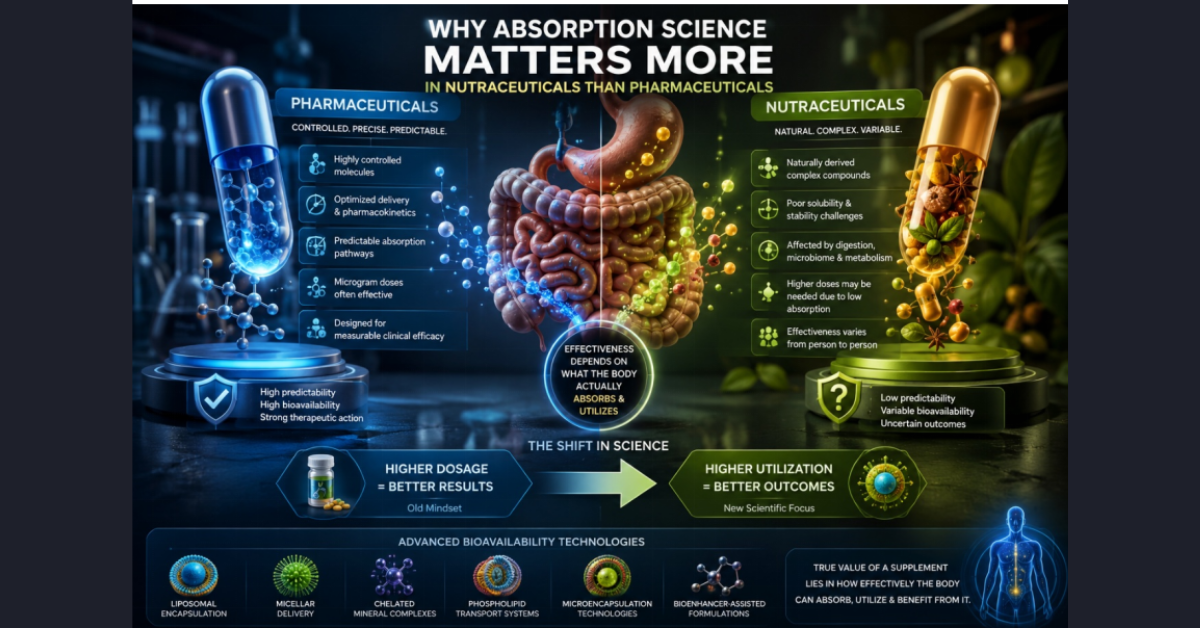
This explains why two supplements containing the same ingredient and dosage may produce completely different outcomes in real-world use.
Modern nutraceutical science is therefore evolving beyond the traditional concept of:
“Higher Dosage = Better Results.”
The new scientific focus is:
“Higher Utilization = Better Outcomes.”
This paradigm shift has accelerated the development of advanced bioavailability technologies such as:
- Liposomal encapsulation
- Micellar delivery systems
- Chelated mineral complexes
- Phospholipid transport systems
- Microencapsulation technologies
- Bioenhancer-assisted formulations
These innovations are designed not merely to deliver nutrients, but to improve the probability that nutrients survive digestion, enter circulation efficiently, reach target tissues, and become biologically active.
In the future of evidence-based nutraceutical science, formulation intelligence and absorption efficiency may become just as important as the active ingredient itself.
Ultimately, the true value of a supplement lies not in how much is consumed — but in how effectively the body can absorb, utilize, and benefit from it.
Clinical Insight from Precimax
The future of nutraceutical science is moving toward:
- Precision nutrient delivery
- Advanced absorption technologies
- Bioavailability-focused formulations
- Science-driven supplementation strategies
This scientific approach helps bridge the gap between:
“What is consumed” and “What the body actually utilizes.”