The Future of Precision Nutraceutical Care from Precimax
Walk into any pharmacy or browse online wellness stores and you’ll find hundreds of supplements promising better immunity, stronger bones, improved energy, or healthier joints. Yet most people take these supplements without checking their lab reports, without knowing whether they actually need them, and without understanding whether their body can absorb them efficiently.
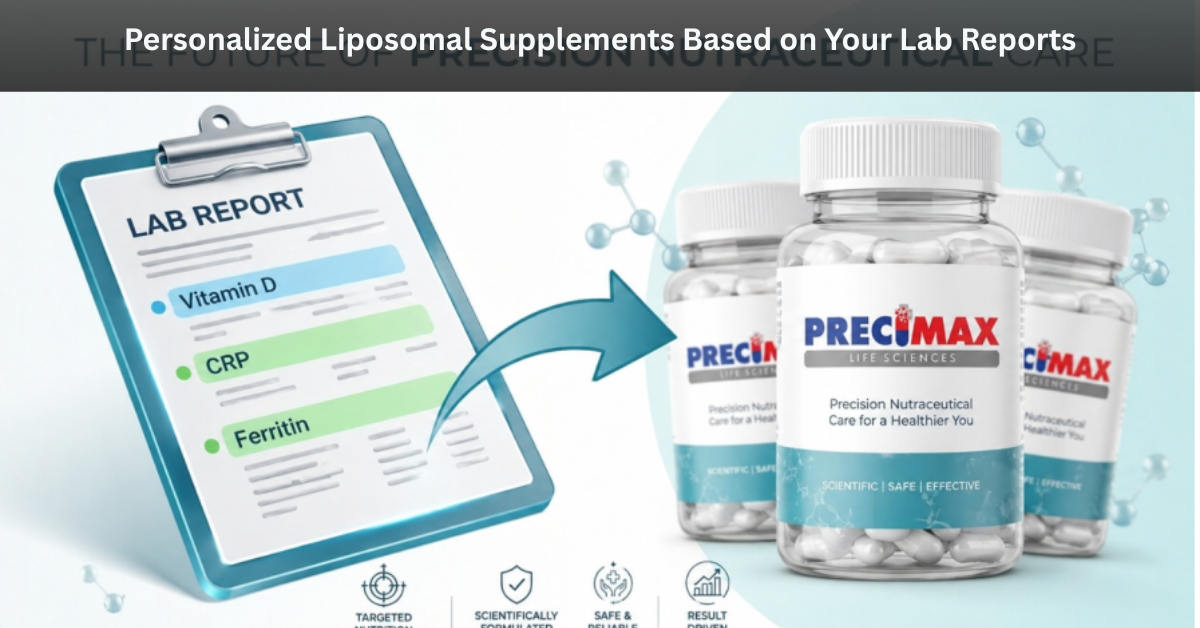
This is where personalized liposomal supplementation represents the next evolution in preventive healthcare. Instead of guessing what your body needs, Precimax follows a precision nutraceutical approach—selecting supplements based on your blood parameters, symptoms, lifestyle risks, and clinical goals. The result is targeted correction, faster outcomes, and better long-term health.
This blog explains how lab-based supplement planning works, why liposomal formulations are uniquely suited for personalization, and how Precimax enables evidence-based, clinically guided nutraceutical strategies for both individuals and healthcare professionals.
What Is Personalized Supplement Planning?
Personalized supplement planning means recommending nutrients based on:
- Laboratory findings
- Clinical symptoms
- Metabolic profile
- Disease risks
- Treatment goals
…rather than generic wellness trends. For example, instead of recommending Vitamin D to everyone, Precimax evaluates Vitamin D level, magnesium status, bone health risk, muscle symptoms, and inflammatory markers, and then recommends liposomal Vitamin D3 with magnesium support when appropriate. This transforms supplements from optional wellness aids into precision therapeutic tools.
Why Precimax Can Deliver Personalized Nutraceutical Plans
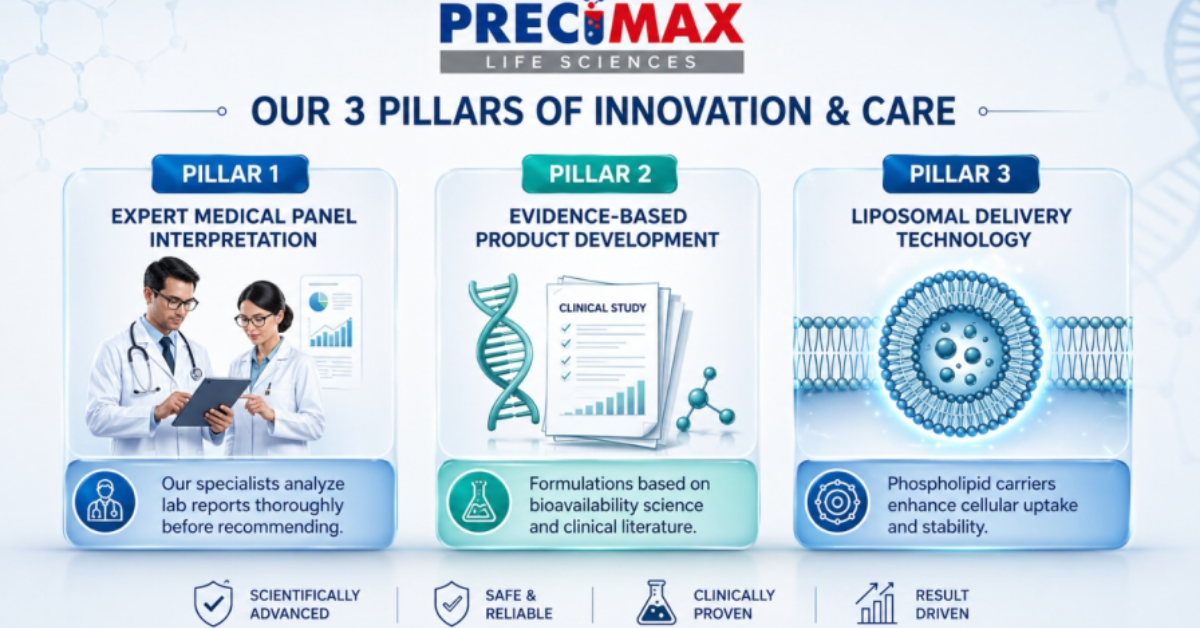
Precimax’s approach rests on three pillars:
- Expert Medical Panel Interpretation
Precimax integrates clinical insights from orthopedic specialists, physicians, nutrition experts, integrative medicine practitioners, and physiotherapy collaborators who interpret lab reports before suggesting supplements. This ensures recommendations are not just nutritional—but clinically meaningful.
- Evidence-Based Product Development
Precimax formulations are designed around published clinical literature, bioavailability science, target-condition relevance, and optimal dosing strategies. Examples include:
- Liposomal Vitamin D3 for deficiency correction
- Liposomal Magnesium for neuromuscular stability
- Liposomal Glutathione for oxidative stress
- Micellar Curcumin for inflammatory regulation
- Lactoferrin for anemia and immune modulation
These are not lifestyle supplements—they are precision nutraceutical interventions.
- Liposomal Delivery Technology Advantage
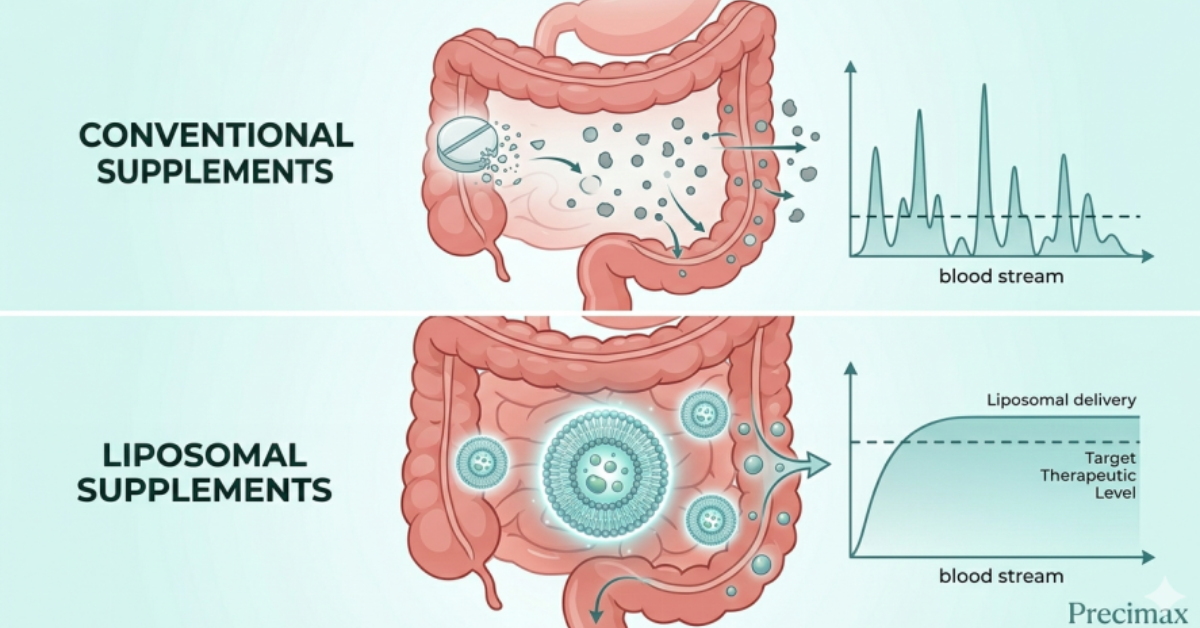
Traditional supplements often suffer from poor absorption, gut degradation, dose variability, and inconsistent outcomes. Liposomal technology encapsulates nutrients inside phospholipid carriers that improve:
- Cellular uptake
- Stability
- Bioavailability
- Predictability of response
This makes liposomal supplements ideal for lab-guided correction protocols.
Why Liposomal Supplements Are Better for Test-Based Recommendations
When clinicians prescribe supplements based on lab values, they need predictable results. Liposomal delivery ensures this.
Feature | Conventional Supplements | Liposomal Supplements |
Absorption | Variable | High |
Dose requirement | Higher | Lower |
GI irritation | Possible | Minimal |
Clinical predictability | Moderate | Strong |
Suitability for correction protocols | Limited | Excellent |
This allows more accurate correction of Vitamin D deficiency, magnesium depletion, oxidative stress, inflammatory markers, and iron imbalance.
Key Liposomal Nutrients Used in Personalized Planning
Liposomal Vitamin D3
Recommended when: Vitamin D < 30 ng/ml, osteoporosis risk, muscle weakness, recurrent infections, diabetes, or thyroid dysfunction. Vitamin D deficiency affects more than 70% of Indians, and correction improves bone strength, immunity, and metabolic function.
Liposomal Magnesium
Useful when lab reports or symptoms indicate: Muscle cramps, poor sleep, migraine, insulin resistance, stress-related fatigue, or vitamin D resistance. Magnesium is essential for over 300 enzymatic reactions in the body.
Liposomal Glutathione
Indicated when oxidative stress markers or clinical symptoms suggest: Fatty liver, PCOS, chronic fatigue, post-viral weakness, skin pigmentation, or environmental toxin exposure. Glutathione is often called the body’s master antioxidant.
Liposomal Curcumin
Recommended when inflammatory markers such as CRP are elevated or when symptoms include: Arthritis, joint stiffness, gut inflammation, metabolic syndrome, or sports injuries. Curcumin regulates inflammatory signaling pathways including NF-kB.
Conditions Where Lab-Based Liposomal Supplementation Is Most Effective
- Gut Health Disorders: Relevant markers include Vitamin B12, CRP, and Ferritin. Nutrients like lactoferrin and liposomal magnesium support gut barrier integrity.
- Knee Health and Joint Preservation: Markers include Vitamin D, CRP, ESR, and uric acid. Supplements like liposomal Vitamin D3 and curcumin improve cartilage metabolism.
- Anemia Correction: Markers include hemoglobin and serum ferritin. Lactoferrin improves iron absorption while reducing GI irritation.
- Platelet Support and Immune Recovery: Markers include platelet count and CRP. Liposomal Vitamin C, lactoferrin, and zinc help immune recovery after viral illness.

Common Lab Tests That Guide Supplement Recommendations
Lab Test | Recommended Nutrient |
Vitamin D | Liposomal Vitamin D3 |
Ferritin | Lactoferrin |
CRP | Curcumin |
Magnesium | Liposomal Magnesium |
HbA1c | Magnesium + Vitamin D |
Vitamin B12 | Liposomal B12 |
SGPT/SGOT | Glutathione |
Platelet count | Vitamin C + Zinc |
This structured mapping allows clinicians to recommend supplements confidently.
Who Benefits Most from Personalized Supplement Plans?
- Patients with arthritis
- People with metabolic syndrome
- Women with anemia
- Elderly individuals
- Athletes
- Post-surgical recovery patients
- Recurrent infection cases
- Thyroid dysfunction and PCOS patients
Generic supplements support populations. Personalized supplements support individuals.
When to Start and Stop Supplementation
Typical triggers to start include Vitamin D below 30 ng/ml, Ferritin below 30 ng/ml, high CRP, or borderline B12 with fatigue.
Supplementation should not be indefinite. Precimax recommends:
- Repeat testing after 8–12 weeks
- Dose tapering once corrected
- Maintenance dosing if required
Precimax Personalized Supplement Workflow
- Step 1: Upload lab reports
- Step 2: Clinical evaluation by expert panel
- Step 3: Identification of deficiencies
- Step 4: Selection of liposomal formulations
- Step 5: Duration planning
- Step 6: Follow-up testing
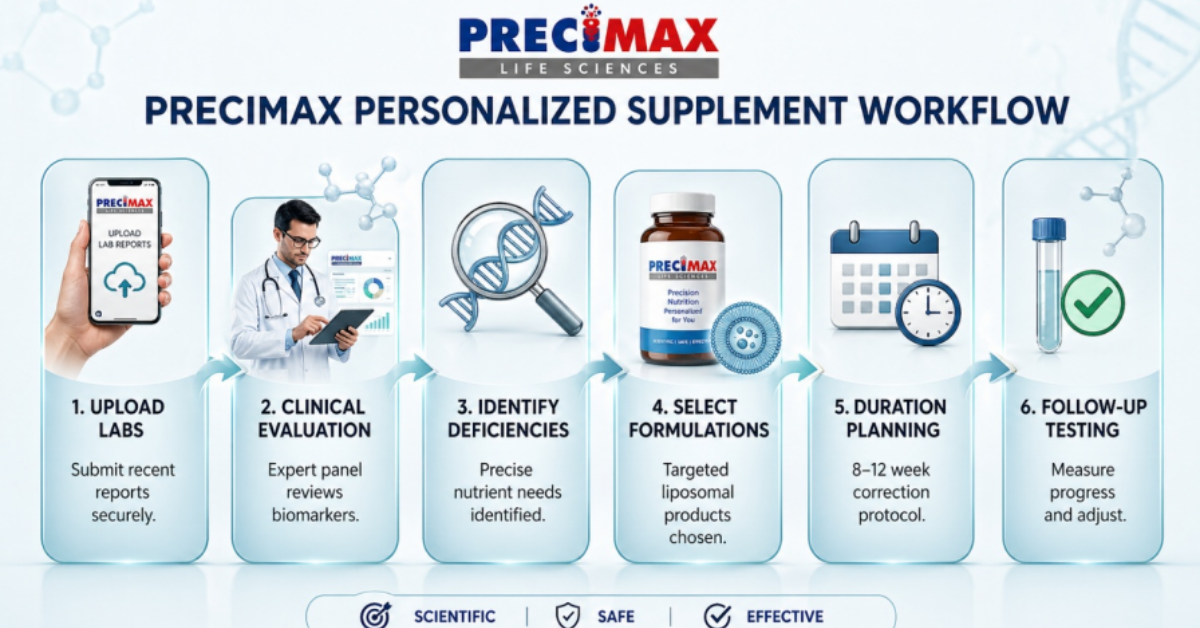
This ensures measurable results—not guesswork.
Do’s and Don’ts of Lab-Based Supplement Planning
- Do: Test before supplementing; use bioavailable formats; monitor progress; combine with lifestyle changes.
- Don’t: Self-prescribe high doses; combine multiple overlapping supplements; ignore borderline deficiencies; continue indefinitely without reassessment.
Take-Home Messages
- For Readers: Check lab reports before choosing supplements; choose liposomal formats for better absorption; correct deficiencies early; monitor progress regularly.
- For Healthcare Professionals: Improves compliance; enhances physiotherapy outcomes; supports chronic disease management; reduces drug burden.