Because no single diet, supplement, meal replacement, protein powder, or fat burner works for everyone.
Most people begin their weight-loss journey with the same question: 7 Personalized Weight Loss Strategies
“Which supplement should I take?”
But that may not be the most important question.
A better question is:
“Which weight-loss strategy matches my body, lifestyle, nutrition, activity level, and individual needs?”
Weight loss is not a one-size-fits-all process. Two people can follow the same diet and exercise routine yet experience very different results.
One person may need better meal structure. Another may need more protein and resistance training. Someone else may struggle mainly with hunger, poor sleep, digestive issues, or an underlying medical condition.
That is why personalized weight management can be more useful than simply searching for the “best” weight-loss supplement.
In this guide, we explore 7 personalized weight-loss strategies and explain which type of person each approach may suit.
STOP COPYING OTHER PEOPLE’S WEIGHT LOSS PROGRAMS
Social media makes weight loss look simple.
Someone loses 10 kg using a particular diet. Another person recommends a fat burner. Someone else promotes intermittent fasting, meal replacements, protein shakes, or a particular supplement.
But what worked for one person may not be appropriate for another.
Weight management can be influenced by multiple factors, including:
- Food choices and portion sizes
- Protein and fibre intake
- Physical activity
- Sleep quality
- Stress
- Appetite and eating patterns
- Digestive health
- Age and body composition
- Certain medications
- Underlying health conditions
For example, someone who regularly skips meals may need better meal planning, while someone who constantly snacks may need an approach focused on satiety and appetite management.
Similarly, someone losing weight rapidly while also losing muscle may need to prioritize protein intake and resistance training, rather than simply trying to reduce calories further.
The best weight-loss strategy is not necessarily the most popular one. It is the one that addresses the factors most relevant to you.
The 7 Personalized Weight Loss Strategies
7 Personalized Weight Loss Strategies
Think of these strategies as different pathways rather than rigid categories. Some people may benefit from combining more than one.
1. The Lifestyle Reset Program
Best suited for:
- Busy professionals
- IT and corporate employees
- People with irregular schedules
- Late-night eaters
- People with poor sleep habits
- Weekend overeaters
Sometimes the biggest obstacle to weight loss isn’t a lack of supplements. It’s an inconsistent lifestyle.
A person may eat reasonably well during the week but consume significantly more food on weekends. Another may work late, skip dinner, order food at night, and sleep only a few hours.
In these situations, the first priority may be creating a sustainable routine.
The focus should be on:
Better meal timing → improved food choices → adequate sleep → regular movement → consistency
This does not require an expensive diet plan.
Simple changes can include planning meals in advance, reducing frequent late-night eating, increasing daily movement, improving sleep routines, and creating realistic meal schedules.
Lifestyle correction should come before relying heavily on weight-loss supplements.
2. The Protein Preservation Program
Best suited for:
- People losing muscle while dieting
- Adults over 40
- Beginners starting resistance training
- People following aggressive calorie-restricted diets
- People who frequently feel weak during dieting
Weight loss should not simply mean seeing a lower number on the weighing scale.
Body composition matters too.
When someone loses weight, preserving lean muscle can be an important consideration. Protein intake and resistance exercise can support muscle maintenance when combined with an appropriate overall diet.
The goal is not simply:
“Lose as much weight as possible.”
It is:
“Reduce excess body fat while supporting lean mass.”
A protein-focused strategy may include:
- Adequate dietary protein
- Protein-rich meals
- Resistance training
- Better meal distribution
- Appropriate calorie intake
Depending on individual dietary needs, protein supplements such as whey or plant protein may be convenient options when food alone does not provide enough protein.
Other supplements should not automatically be added simply because someone is trying to lose weight.
The foundation remains nutrition and resistance exercise.
3. The Appetite Management Program
Best suited for:
- Constant hunger
- Frequent snacking
- Large portion sizes
- Cravings
- Emotional eating
- Difficulty maintaining calorie control
For some people, the biggest challenge isn’t knowing what to eat.
It’s sticking to the plan when hunger and cravings appear.
Appetite management should begin with basic nutrition and lifestyle habits.
Start with:
Protein + fibre + adequate fluids + balanced meals + better sleep
Foods rich in protein and fibre can help create more satisfying meals. Eating regularly and developing awareness around emotional or stress-related eating can also be useful.
Only after these foundations are addressed should someone consider whether specific appetite-support ingredients are appropriate.
Some formulations may contain ingredients such as:
- Glucomannan
- Caralluma
- Saffron extract
However, these ingredients should be viewed as supportive—not magical solutions.
A supplement cannot compensate for a consistently unbalanced diet or an eating pattern driven by stress, boredom, or inadequate sleep.
4. The Smart Meal Replacement Program
Best suited for:
- Corporate professionals
- Frequent travelers
- People with unpredictable schedules
- People who regularly skip meals
- People who struggle with meal preparation
Some people don’t struggle with weight management because they eat too much at every meal.
They struggle because their eating schedule is chaotic.
Breakfast gets skipped.
Lunch becomes a quick snack.
Then hunger builds throughout the day, followed by a large dinner or frequent evening snacking.
A properly formulated meal replacement can sometimes provide a convenient, structured alternative when preparing a balanced meal isn’t practical.
But there is one important distinction:
A meal replacement should replace a meal—not simply be added on top of your normal meals.
For example:
Balanced meal → meal replacement when appropriate → balanced meal
rather than:
Breakfast → meal replacement → lunch → snack → dinner
The objective is convenience and structure, not simply adding more calories or products to the diet.
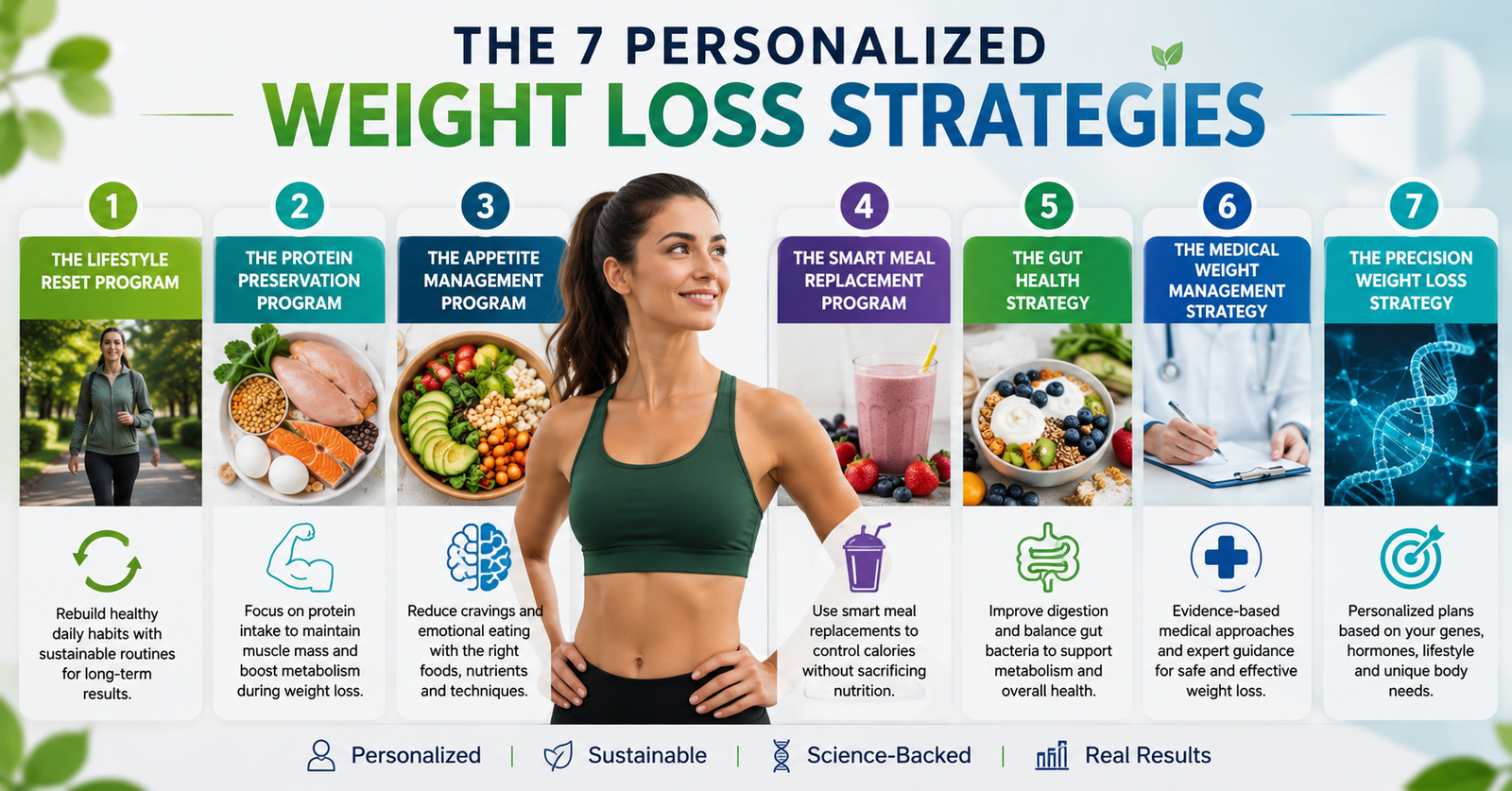
5. The Gut Health Strategy
Best suited for people experiencing:
- Bloating
- Constipation
- Digestive discomfort
- Irregular bowel habits
- A history of frequent antibiotic use
- Poor dietary fibre intake
The digestive system can influence eating habits, comfort, and overall quality of life.
However, digestive symptoms should not automatically be blamed on “poor gut health.”
Persistent or severe symptoms may require appropriate medical evaluation.
For general digestive support, foundational habits can include:
- Adequate dietary fibre
- A varied diet
- Sufficient fluid intake
- Regular physical activity
- Fermented foods when tolerated
- Appropriate prebiotic and probiotic foods or supplements when suitable
For someone whose digestive symptoms are interfering with their ability to maintain a healthy eating pattern, addressing those issues may be more useful than immediately reaching for a fat burner.
6. The Medical Weight Management Strategy
Best suited for people with:
- PCOS
- Hypothyroidism
- Menopause-related weight changes
- Prediabetes
- Fatty liver
- Vitamin D deficiency
- Iron deficiency
- Certain medication-related weight changes
- Other health conditions that may affect weight
Not everyone should approach weight loss by simply cutting calories and exercising more.
Certain medical conditions and medications can influence appetite, energy levels, metabolism, body composition, or the ability to lose weight.
For example, someone with PCOS may have different weight-management challenges than someone whose main issue is irregular eating. Similarly, thyroid disorders, menopause-related changes, insulin resistance, or certain medications may require professional evaluation.
This is why people with relevant symptoms or diagnosed conditions should avoid blindly copying diets or supplement routines promoted on social media.
A medical weight-management approach may involve:
Medical assessment → appropriate testing → nutrition → physical activity → sleep → monitoring → targeted intervention
The exact approach depends on the individual.
Supplements may have a role when a genuine nutritional need exists, but they should not be used to replace diagnosis or medical treatment.
If an underlying health issue is contributing to weight changes, identifying and managing that issue can be more important than simply adding another weight-loss product.
7. The Precision Weight Loss Strategy
Best suited for:
- People who have tried multiple approaches without lasting results
- People with multiple factors affecting weight
- People who want an individualized plan
- People who don’t know where to start
- People who want to track and adjust their progress
This is where weight management becomes truly personalized.
Instead of starting with:
“Which supplement should I buy?”
start with:
“What is actually preventing me from reaching my goal?”
A precision approach looks at several areas together.
Assessment
↓
Lifestyle
↓
Nutrition
↓
Movement
↓
Sleep
↓
Body composition
↓
Targeted supplementation, when appropriate
↓
Review
↓
Adjust
This approach recognizes that your strategy may need to change as your body, lifestyle, and goals change.
For example, someone may initially need help creating a consistent eating routine. Later, the focus may shift toward preserving muscle, improving exercise performance, or addressing a specific nutritional gap.
Personalization is not about making weight loss complicated. It’s about making the strategy relevant.
Where Each Supplement Actually Fits
Supplements can be useful in specific situations, but they should support a broader weight-management strategy rather than become the strategy itself.
Goal | First Step | Supplement May Help? |
Constant hunger | Protein, fibre & balanced meals | Appetite-support ingredients may provide additional support |
Meal skipping | Create a consistent meal routine | Meal replacement may be convenient |
Low protein intake | Improve protein-rich foods | Whey or plant protein |
Bloating / digestive concerns | Evaluate diet and digestive health | Probiotics or prebiotics may help in appropriate situations |
Low physical activity | Increase daily movement | Supplements are not a substitute for exercise |
Poor sleep | Improve sleep routine and sleep duration | Avoid relying on stimulant-based weight-loss products |
Muscle loss | Resistance training + adequate protein | Protein/EAA/other targeted nutrition may be considered |
Nutritional deficiency | Identify the deficiency | Appropriate supplementation under suitable guidance |
The key message is simple:
Don’t start with the supplement. Start with the problem.
Which Weight Loss Strategy Fits You?
One of the easiest ways to understand personalized weight management is to identify your biggest challenge.
“My schedule is chaotic and I eat late.”
→ Lifestyle Reset Program
Focus on meal structure, sleep, planning, and daily habits.
“I’m always hungry or constantly snacking.”
→ Appetite Management Program
Focus first on protein, fibre, balanced meals, hydration, sleep, and eating behaviour.
“I’m losing muscle while trying to lose weight.”
→ Protein Preservation Program
Prioritize adequate protein and resistance exercise.
“I regularly skip meals because I don’t have time.”
→ Smart Meal Replacement Program
Use a suitable meal replacement strategically when a balanced meal isn’t practical.
“I feel bloated and my digestion is irregular.”
→ Gut Health Strategy
Review dietary fibre, food quality, hydration, digestive habits, and seek evaluation when symptoms persist.
“I have PCOS, thyroid problems, prediabetes, or another health condition.”
→ Medical Weight Management Strategy
Don’t copy a social-media diet. Get appropriate professional guidance.
“I’ve tried several approaches and still don’t know what works for me.”
→ Precision Weight Loss Strategy
Step back, assess the bigger picture, identify the limiting factors, and build a strategy around them.
Why Personalized Weight Management Matters
The biggest mistake in weight loss is assuming that everyone needs the same solution.
A person who eats enough protein but sleeps five hours a night may need a different strategy from someone who sleeps well but frequently overeats.
Someone who is physically active but has poor meal structure may need a different intervention from someone who eats well but has very low activity levels.
And someone with an underlying medical condition may need a completely different approach.
That’s why effective weight management should consider the whole picture.
Think beyond the supplement:
Nutrition
What are you actually eating?
Movement
Are you building activity and maintaining muscle?
Sleep
Are you getting enough quality sleep?
Lifestyle
Can you realistically maintain your routine?
Medical factors
Could a health condition or medication be affecting your weight?
Body composition
Are you losing primarily fat, or are you also losing valuable lean mass?
Targeted supplementation
Is there a specific nutritional gap where supplementation could provide support?
The Precimax Approach to Precision Weight Management
A better weight-loss philosophy isn’t:
Diet → supplement → hope for results
Instead, think:
ASSESS
Understand your current lifestyle, nutrition, goals, and potential challenges.
↓
PLAN
Build a realistic nutrition and activity strategy.
↓
SUPPORT
Use targeted nutritional support when appropriate.
↓
TRACK
Monitor progress instead of relying only on the weighing scale.
↓
ADJUST
Change the strategy when your needs or results change.
This is the idea behind Precision Weight Management:
The goal isn’t to find the most powerful supplement. It’s to find the right strategy for the right person.
AEO: Common Questions About Personalized Weight Loss
What is personalized weight loss?
Personalized weight loss is an approach that considers an individual’s lifestyle, nutrition, activity level, body composition, goals, eating patterns, and relevant health factors rather than using the same diet or supplement plan for everyone.
Which weight-loss strategy is best?
There is no single weight-loss strategy that is best for everyone. The appropriate approach depends on factors such as eating habits, activity level, muscle mass, sleep, digestive health, medical conditions, and personal goals.
Can supplements help with weight loss?
Some supplements may provide targeted nutritional or functional support, but they should not replace a balanced diet, physical activity, adequate sleep, or appropriate medical care. Their usefulness depends on the individual and the specific ingredient.
Is a meal replacement the same as a protein shake?
Not necessarily. A meal replacement is generally formulated to provide a broader range of nutrients than a basic protein shake. A protein shake primarily helps increase protein intake and may not provide everything needed to replace a complete meal.
Why am I losing muscle instead of just fat?
Rapid calorie restriction, inadequate protein intake, insufficient resistance training, and other factors can contribute to loss of lean mass during weight loss. A suitable nutrition and exercise strategy can help support muscle preservation.
Can gut health affect weight management?
Digestive health can influence eating patterns, comfort, dietary quality, and overall wellbeing. However, digestive symptoms should not automatically be assumed to be the cause of weight gain. Persistent symptoms should be appropriately evaluated.
Should people with PCOS or thyroid problems follow normal weight-loss diets?
People with diagnosed medical conditions may have additional factors affecting weight management. They should discuss an appropriate nutrition and treatment approach with a qualified healthcare professional rather than blindly following social-media diets.
How long does it take to see weight-loss results?
The timeline varies significantly between individuals. Sustainable weight management generally requires consistency over time rather than expecting dramatic overnight changes.
Final Takeaway: Weight Loss Isn’t About Buying Better Supplements
It’s about choosing:
The right strategy.
The right nutrition.
The right movement.
The right sleep.
The right support.
And, when appropriate:
The right supplement.
Your friend may need a protein-focused approach.
Your colleague may need better meal planning.
Someone else may need appetite-management support.
Another person may need medical evaluation.
And you may need something completely different.
That’s why the most important question isn’t:
“Which weight-loss supplement is best?”
It’s:
“Which weight-loss strategy is right for me?”
Because when weight management becomes personalized, the goal isn’t simply to lose weight.
It’s to build a strategy you can understand, follow, monitor, and sustain.
Precision Weight Management starts with the person—not the product.
7 Personalized Weight Loss Strategies