The 2026 update of the European Alliance of Associations for Rheumatology (EULAR) recommendations marks a major shift in arthritis management.
Physical activity is no longer considered supportive therapy.
It is now part of standard treatment for inflammatory arthritis and osteoarthritis.
EULAR clearly recommends:
- 150–300 minutes of weekly aerobic activity
- plus muscle-strengthening exercises 2–3 times per week
- plus reduction in sedentary time

The guideline highlights that structured movement improves:
- pain
- fatigue
- mobility
- joint stiffness
- mental health
- cardiovascular risk
- overall disease outcomes
In simple terms:
Movement is medicine.
But medicine works only when the body is biologically prepared to respond.
Why Nutrition Determines Whether Patients Can Follow EULAR Activity Guidelines
Many arthritis patients want to stay active but struggle due to:
- fatigue
- muscle weakness
- persistent inflammation
- slow recovery
- bone fragility
- joint discomfort

These are not motivation problems.
They are metabolic readiness problems.
Precision nutraceutical adequacy helps patients start, tolerate, and sustain physical activity safely.
The Role of Liposomal Nutrient Delivery in Supporting Physical Activity Outcomes
One important limitation in conventional supplementation is variable absorption, especially in arthritis patients with inflammation, gut dysbiosis, aging metabolism, or medication use.
Precimax uses liposomal delivery technology, where nutrients are enclosed within phospholipid vesicles that resemble natural cell membranes.
This improves:
- absorption efficiency
- cellular uptake
- bioavailability
- consistency of response
- clinical reliability
In the context of EULAR physical activity recommendations, this matters because:
- muscle activation depends on nutrient availability
- bone loading depends on mineral signaling
- immune modulation depends on antioxidant delivery
- recovery depends on mitochondrial support
Better delivery means better physiological readiness for movement.
Supporting EULAR Physical Activity Goals with Precision Nutraceutical Strategies
Structured Meal Replacement for Weight Reduction and Muscle Preservation
EULAR emphasizes maintaining optimal body composition to improve joint function.
A protein-rich structured meal replacement helps:
- reduce excess joint load
- preserve lean muscle
- improve satiety
- stabilize glucose metabolism
- support exercise initiation confidence
This is especially helpful in overweight osteoarthritis patients beginning rehabilitation programs.
Liposomal Vitamin D3 for Muscle Strength, Bone Adaptation, and Pain Regulation
Vitamin D deficiency is one of the most common hidden barriers to exercise tolerance in India.
Liposomal Vitamin D3 supports:
- muscle contraction efficiency
- bone remodeling response
- fall risk reduction
- immune regulation
- pain sensitivity control
Reliable absorption is critical for rehabilitation success.
PRIZIBIOM Synbiotic Support for Inflammation Control and Energy Stability
The EULAR update acknowledges the importance of reducing systemic disease burden to sustain activity participation.
Microbiome balance influences:
- inflammation signaling
- nutrient absorption
- fatigue perception
- immune resilience
- exercise recovery
Synbiotic correction supports long-term adherence to movement prescriptions.
HEALOJOINT for Comfortable Movement Initiation
Pain is the most common reason patients discontinue exercise programs.
Joint-support nutraceutical strategies help:
- reduce stiffness
- improve functional confidence
- support cartilage metabolism
- enhance physiotherapy tolerance
This improves compliance with EULAR activity targets.
HEALOBONE for Safe Skeletal Loading During Activity
Bone responds positively to exercise only when mineral metabolism is adequate.
Bone-support nutrients assist:
- bone density adaptation
- micro-architecture stability
- fall-related injury prevention
- confidence during strengthening exercises
Precimax Creatine for Muscle Strength and Functional Independence
Creatine is now recognized as a clinical rehabilitation nutrient.
It supports:
- strength recovery
- muscle endurance
- sarcopenia prevention
- neuromuscular efficiency
- exercise sustainability in elderly patients
This directly improves adherence to resistance training recommendations from EULAR.
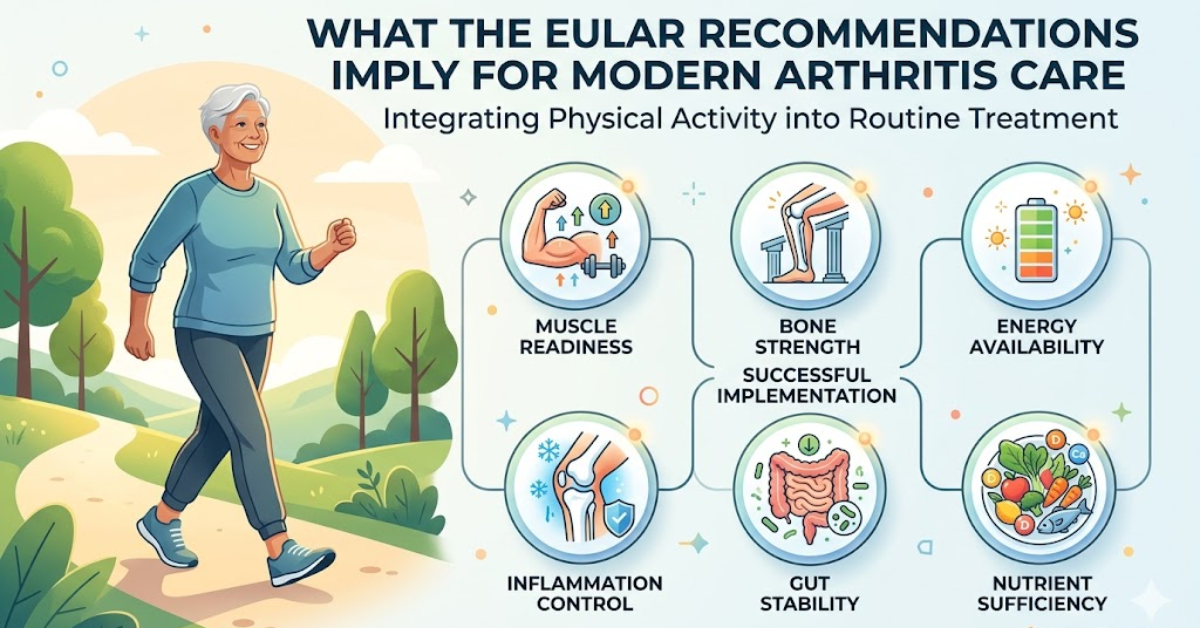
What the EULAR Recommendations Imply for Modern Arthritis Care
EULAR clearly states that physical activity must be integrated into routine treatment.
However, successful implementation depends on:
- muscle readiness
- bone strength
- energy availability
- inflammation control
- gut stability
- nutrient sufficiency
Precision nutraceutical support helps translate exercise recommendations into achievable daily practice.
Expert Clinical Perspectives
Dr Prasann Rao, Orthopedic Surgeon, Bangalore
“In routine orthopedic practice we see that patients who correct vitamin D deficiency, improve protein intake, and reduce inflammation tolerate strengthening programs far better. Nutritional readiness significantly improves rehabilitation outcomes.”
Dr Anil Thomas, Physiotherapy and Sports Medicine Specialist, Chennai
“Exercise is now prescribed earlier in arthritis care than before. But recovery support determines whether patients continue programs long term. Targeted supplementation improves compliance with strengthening protocols.”
Dr Ebraham Thomas, Orthopedic Surgeon, Kochi
“Bone health, muscle reserve, and cartilage support must be addressed together. When metabolic readiness improves, patients remain active longer and respond better to physiotherapy.”
Take-Away Messages
Physical activity is medicine
Nutritional readiness determines whether patients can take that medicine consistently
Liposomal nutrient delivery improves absorption reliability and supports faster functional recovery
Joint comfort improves movement confidence
Muscle strength improves independence
Bone stability improves long-term safety during exercise
Precision nutraceutical support converts exercise advice into sustainable therapy.