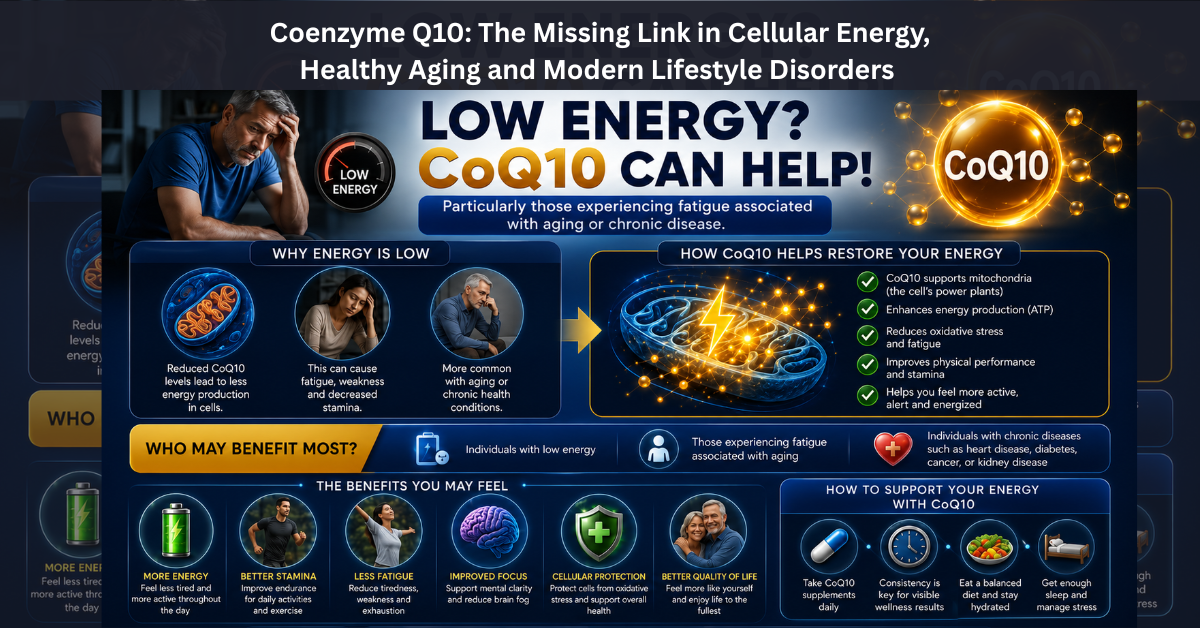
Coenzyme Q10 (CoQ10) is often described as an antioxidant, but its biological significance extends far beyond free radical protection. CoQ10 is an essential component of mitochondrial energy production and plays a central role in generating adenosine triphosphate (ATP), the energy currency of every cell. Because organs such as the heart, brain, liver, kidneys, muscles, and reproductive tissues require substantial energy, CoQ10 has become a topic of growing interest in cardiovascular health, healthy aging, exercise performance, fertility, and metabolic wellness.
Modern lifestyle factors—including aging, statin therapy, diabetes, chronic inflammation, and oxidative stress—may reduce CoQ10 levels or increase the body’s demand for this nutrient. Understanding how CoQ10 works, who may benefit most, and why bioavailability matters can help consumers make more informed decisions regarding supplementation and mitochondrial health.
Why CoQ10 Is Becoming Relevant in Modern India
Case 1: The 52-Year-Old Businessman
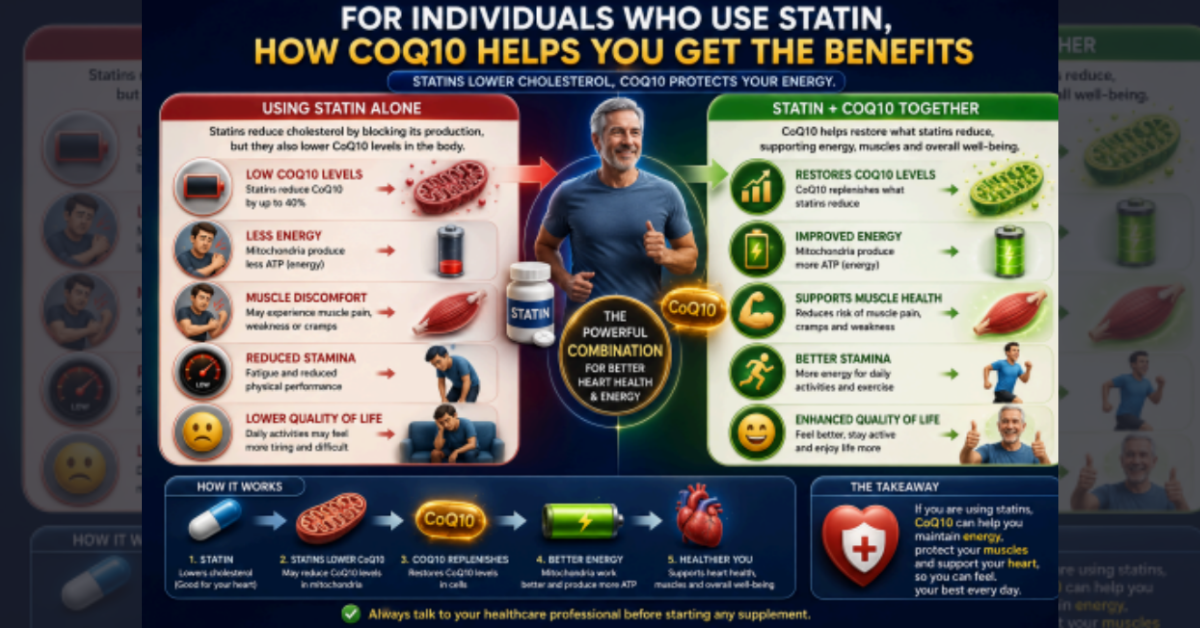
Mr. Ramesh is a successful businessman taking rosuvastatin for cholesterol and metformin for diabetes. His laboratory reports appear stable, yet he complains of fatigue, reduced stamina, and occasional muscle discomfort.
One possible explanation may involve mitochondrial energy production. Statins inhibit the mevalonate pathway, which is involved in endogenous CoQ10 synthesis. Reduced CoQ10 availability may affect cellular energy generation in some individuals.
Case 2: The Vegetarian Badminton Player
A 48-year-old badminton enthusiast maintains a healthy diet and exercises regularly. However, recovery after intense games takes longer than expected.
Muscle contraction and recovery require substantial ATP production. Because CoQ10 is involved in mitochondrial energy generation, it has attracted attention in sports nutrition and exercise physiology.
Case 3: The Fertility-Focused Professional
A 35-year-old woman planning pregnancy learns that egg quality depends partly on mitochondrial function. Researchers are increasingly investigating CoQ10 as a factor in reproductive health because oocytes contain large numbers of mitochondria.
Case 4: The Active Retiree
A 60-year-old retiree wants to remain energetic and independent. Natural age-related declines in CoQ10 levels have been reported in several tissues, making healthy aging an important area of CoQ10 research.
Why CoQ10 Is Different from Vitamins, Minerals and Antioxidants
Why CoQ10 Is Different from Vitamins, Minerals and Antioxidants
Every second, trillions of cells in the human body are performing highly energy-dependent activities. The heart beats over 100,000 times per day. The brain continuously processes information. Muscles contract and recover. The liver detoxifies, the kidneys filter, and reproductive cells prepare for future life.
Behind all these activities lies one fundamental requirement: cellular energy.
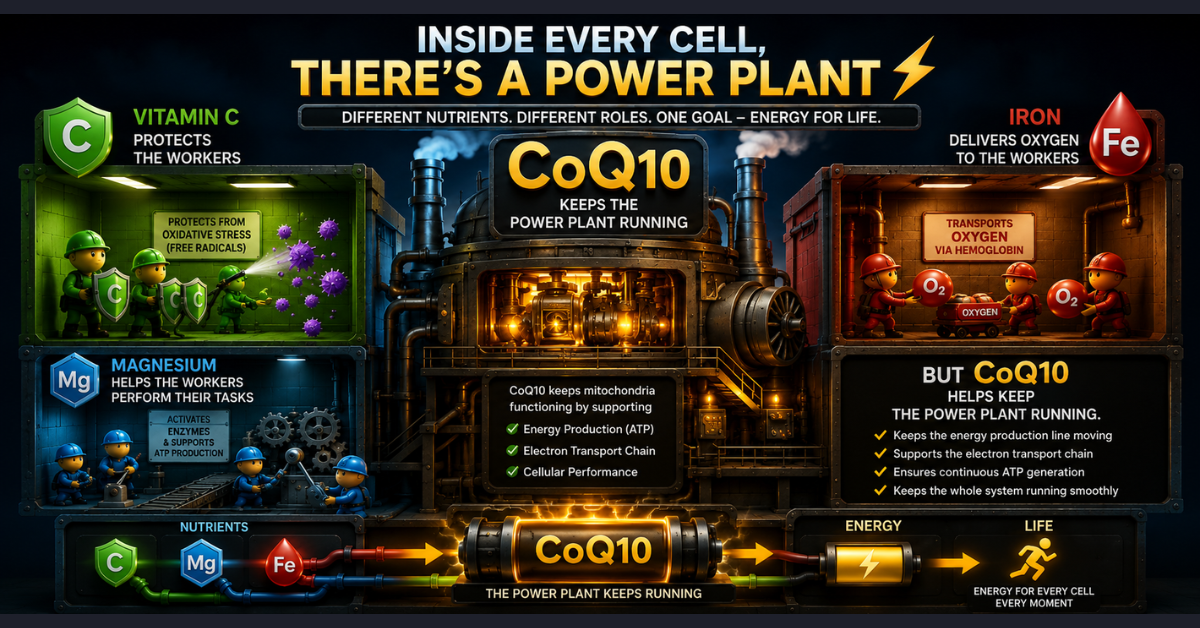
Most nutrients contribute to health by supporting specific biochemical functions. Vitamin C helps protect cells from oxidative damage. Magnesium acts as a cofactor in hundreds of enzymatic reactions. Iron transports oxygen. Omega-3 fatty acids support membrane structure and cellular signaling.
CoQ10 occupies a completely different position.
Rather than supporting a single pathway, CoQ10 sits at the very center of mitochondrial energy production—the process that powers virtually every cell in the body.
In scientific terms, CoQ10 acts as an essential electron carrier within the mitochondrial electron transport chain, helping convert nutrients derived from food into ATP (adenosine triphosphate), the universal energy currency of life.
Without ATP, cells cannot function efficiently.
Without CoQ10, ATP production may become less efficient.
This is what makes CoQ10 unique among nutraceuticals.
CoQ10: More Than an Antioxidant
Many antioxidants function primarily as “cellular bodyguards,” protecting tissues from oxidative stress.
CoQ10 is both a bodyguard and a power generator.
It not only helps neutralize oxidative damage but also supports the very machinery responsible for energy production.
This dual role has attracted growing scientific interest in conditions characterized by high energy demand, accelerated aging, mitochondrial dysfunction, and increased oxidative stress.
Why Multiple Organ Systems Depend on CoQ10
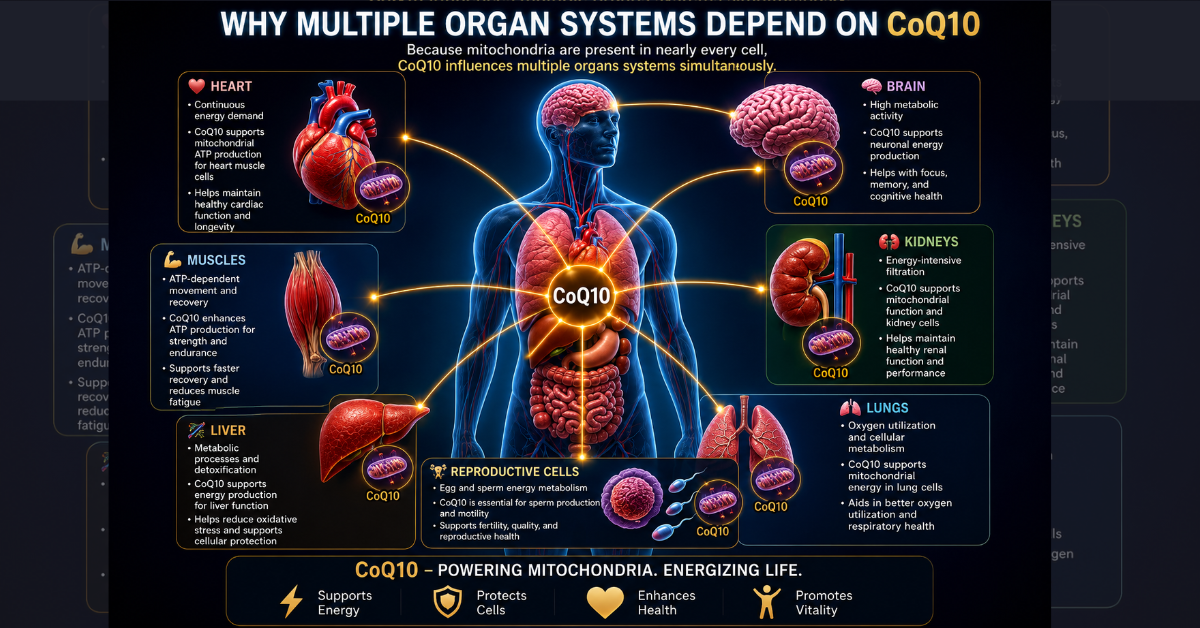
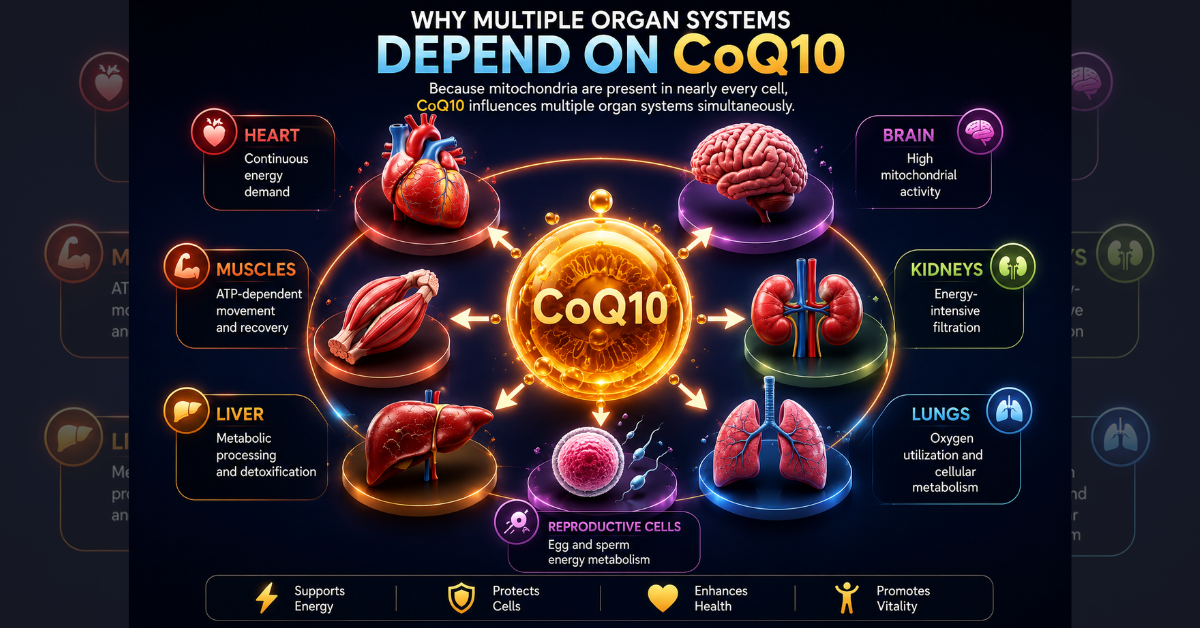
Because mitochondria are present in nearly every cell, CoQ10 influences multiple organ systems simultaneously.
Unlike nutrients that target a specific organ, CoQ10 supports a biological process shared by all organs: energy generation.
The Mitochondrial Connection
Aging, chronic disease, statin therapy, diabetes, inflammation, oxidative stress, and environmental factors may all affect mitochondrial efficiency.
As mitochondrial performance declines, tissues with the highest energy requirements are often affected first.
This explains why researchers continue to investigate CoQ10 in
A Better Way to Think About CoQ10
And when the power plant slows down, every system connected to it may begin to feel the effects.
That is why CoQ10 is not simply another antioxidant.
It is one of the body’s most important mitochondrial nutrients and a key link between cellular energy, healthy aging, and long-term physiological resilience.
Unlike many nutrients that provide support functions, CoQ10 directly participates in the electron transport chain, a fundamental process that converts nutrients into cellular energy.
CoQ10 and ATP Production
The mitochondria are often called the “power plants” of the cell.
Food → Electron Transport Chain → CoQ10 → ATP Generation
Without adequate CoQ10, mitochondrial energy production may become less efficient. Latest Evidence Supporting CoQ10 Cardiovascular Health
The heart has one of the highest energy requirements in the body. Researchers have investigated CoQ10 in heart failure, hypertension, endothelial function, and cardiovascular aging.
Statin-Associated CoQ10 Depletion
Multiple studies have shown that statin therapy may reduce circulating CoQ10 concentrations because both cholesterol and CoQ10 share portions of the mevalonate biosynthetic pathway.
Exercise Performance
Research suggests CoQ10 may support exercise recovery and reduce exercise-induced oxidative stress in certain populations.
Male Fertility
Sperm cells require large amounts of mitochondrial energy for motility. Several studies have explored the relationship between CoQ10 supplementation and sperm parameters.
Female Fertility
Mitochondria are critical for oocyte maturation and embryo development. CoQ10 is increasingly discussed within reproductive medicine.
Healthy Aging
Because mitochondrial efficiency and CoQ10 concentrations may decline with age, researchers are investigating its role in supporting healthy aging and cellular resilience.
When People May Notice the Most Benefit
CoQ10’s Best Friends and Enemies
Complementary Nutrients
Nutrient Potential Synergy
Magnesium Cellular energy metabolism Vitamin D3 Metabolic support
Omega-3 Cardiovascular support L-Carnitine Fatty acid transport into mitochondria Resveratrol Cellular health pathways
Factors That May Reduce CoQ10 Status
- Aging
- Statin use
- Chronic disease
- Oxidative stress
- Poor absorption
What Is an Effective Dose?
Dose Typical Consideration 30 mg General wellness
100 mg Common maintenance range 200 mg Frequently used in research
300 mg Specialized applications under professional guidance
Supplement selection should always consider individual needs and professional advice. The Biggest Problem: Bioavailability
One of the most important but overlooked aspects of CoQ10 supplementation is absorption.
Because CoQ10 is fat-soluble and poorly soluble in water, only a fraction of an ingested dose may be absorbed.
Standard CoQ10 vs Advanced Delivery Systems
Parameter Standard CoQ10 Enhanced Formulations Solubility Low Improved Absorption Variable Potentially higher Consistency Variable More predictable
This explains why formulation quality may be as important as dosage.
Ubiquinone vs Ubiquinol
Myth Fact
Ubiquinol is always superior Formulation quality, stability, delivery system and patient context all matter
Higher cost always means better results Not necessarily
All CoQ10 products are equivalent Bioavailability differs substantially
Indian climatic conditions may also influence product stability and storage considerations.
The Pharmacoeconomics of CoQ10: Is It Worth the Investment?
One of the most common concerns surrounding CoQ10 supplementation is cost. Compared with many vitamins and minerals, CoQ10 products often appear expensive. However, the true
question is not “How much does CoQ10 cost?” but rather “How much value does the consumer receive from each dose?”
Maximizing Value from CoQ10
- Appropriate Dosing Matters
More is not always better.
A person taking 300 mg of poorly absorbed CoQ10 may receive less biological benefit than someone taking 100 mg of a well-formulated product with superior bioavailability.
- Duration Is Important
CoQ10 is not an instant-energy supplement.
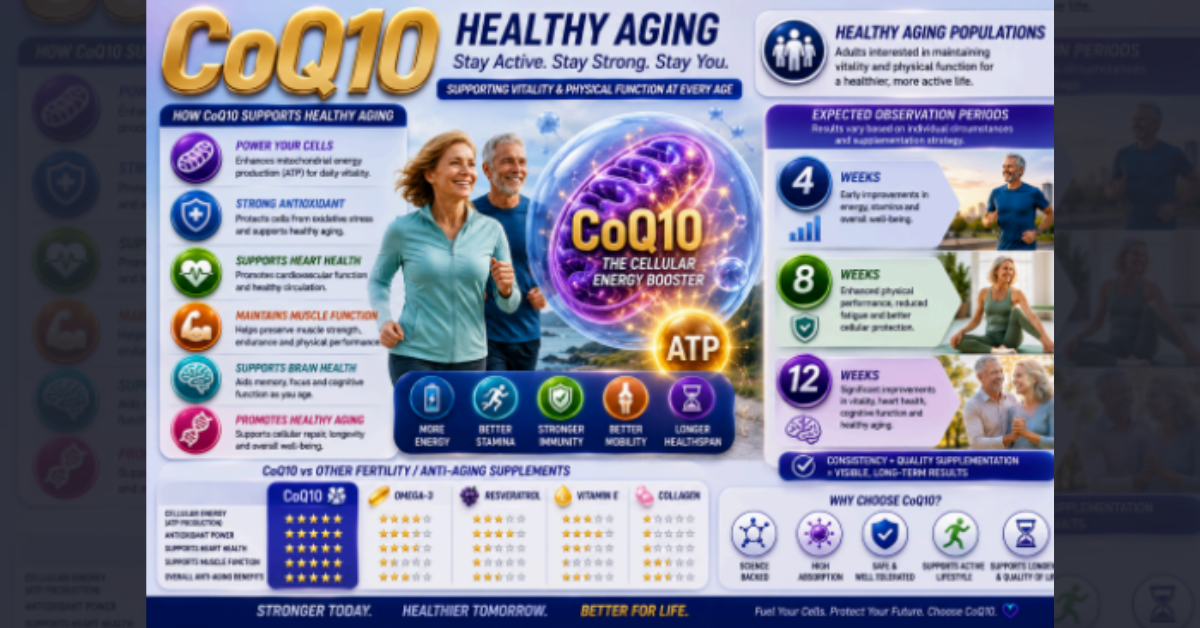
Because it works through mitochondrial pathways, benefits are often observed gradually over several weeks or months.
Many studies evaluate outcomes after:
- 4 weeks
- 8 weeks
- 12 weeks
or longer.
- Bioavailability Determines Real Value
The most expensive supplement is often the one that is not absorbed.
Consumers should consider:
- Formulation quality
- Delivery technology
- Stability
- Absorption characteristics
rather than dosage alone.
- Choosing Quality Products
When selecting a CoQ10 supplement, consumers may consider:
✔ Reputable manufacturers
✔ Evidence-based formulations
✔ Appropriate dosing
✔ Stability and storage considerations
✔ Absorption technology
The Bottom Line
The goal is not to purchase the highest-dose CoQ10 product, but to select a formulation that delivers meaningful amounts of CoQ10 to the cells where it is needed.
The Future: Diagnostic-Guided CoQ10
Modern healthcare is increasingly moving toward personalized nutrition and precision medicine.
In the future, clinicians may be able to use biomarkers and advanced testing to better understand an individual’s mitochondrial function and nutritional needs.
Emerging Areas of Interest
Personalized Nutrition
Different individuals may respond differently to the same supplement.
Factors such as age, genetics, metabolic health, and medication use can influence CoQ10 requirements.
Biomarkers
Researchers continue to explore biomarkers related to:
- Oxidative stress
- Mitochondrial function
- Cellular aging
- Energy metabolism
Mitochondrial Testing
Advanced laboratories are investigating techniques to assess mitochondrial performance and cellular bioenergetics.
Should Consumers Wait for These Tests?
The practical answer is no.
Most clinicians currently rely on:
- Clinical history
- Medication use
- Age
- Energy status
- Lifestyle factors
- Existing evidence
to guide decision-making.
Waiting for perfect testing may delay action unnecessarily.
A balanced approach combining scientific evidence and clinical observation remains the most practical strategy today.
Key Takeaways
- CoQ10 is far more than an antioxidant; it is a critical component of cellular energy production.
- Mitochondria depend on CoQ10 to generate ATP, the energy currency of life. 3. Organs with high energy demands—including the heart, brain, muscles, liver, kidneys, and reproductive tissues—contain particularly high levels of CoQ10.
- Aging, statin therapy, diabetes, chronic inflammation, and oxidative stress may influence CoQ10 status.
- Bioavailability may be just as important as dosage when selecting a CoQ10 supplement. 6. Benefits are typically observed over weeks rather than days, making consistency important.
- CoQ10 continues to be one of the most extensively researched nutraceuticals in cardiovascular health, fertility, healthy aging, and mitochondrial medicine.