Iron deficiency is one of the most common nutritional deficiencies worldwide. Many people begin taking iron supplements expecting their energy levels and blood test results to improve quickly. However, after weeks or even months of supplementation, some individuals continue to have low ferritin, low hemoglobin, or persistent symptoms of iron deficiency.
Why does this happen?
The answer is that taking an iron supplement alone isn’t always enough. Your iron status depends on several factors, including the correct diagnosis, dosage, formulation, absorption, consistency, and follow-up monitoring.
In this evidence-based guide, we’ll discuss 7 common reasons why your iron levels may not improve despite taking supplements and how to make better decisions for optimal iron health.
Why Is Iron Important?
Iron is an essential mineral that helps your body:
- Produce healthy red blood cells
- Transport oxygen throughout the body
- Support energy production
- Maintain cognitive function
- Support immune health
Reason 1: You May Not Actually Be Iron Deficient
Feeling tired doesn’t automatically mean you have iron deficiency.
Fatigue may result from:
- Vitamin B12 deficiency
- Folate deficiency
- Thyroid disorders
- Vitamin D deficiency
- Poor sleep
- Chronic illness
- Stress
The only reliable way to determine your iron status is through appropriate blood tests such as:
- Serum Ferritin
- Hemoglobin (Hb)
- Complete Blood Count (CBC)
- Iron Profile (when recommended)
Starting supplements without knowing your baseline can lead to unnecessary treatment or delayed diagnosis of another condition.
Key Takeaway
Always confirm iron deficiency before beginning supplementation.
Reason 2: The Dose May Not Be Right for You
Iron requirements vary significantly between individuals.
The ideal dose depends on factors such as:
- Ferritin level
- Hemoglobin level
- Severity of deficiency
- Age
- Gender
- Pregnancy
- Blood loss
- Medical conditions
- Treatment goals
Someone with severe iron deficiency anemia may require a very different approach compared with someone who simply has low ferritin stores.
Key Takeaway
The right dose should be personalized—not copied from someone else.
Reason 3: Not All Iron Supplements Are the Same
are available in many formulations, including:
- Tablets
- Capsules
- Syrups
- Sachets
- Gummies
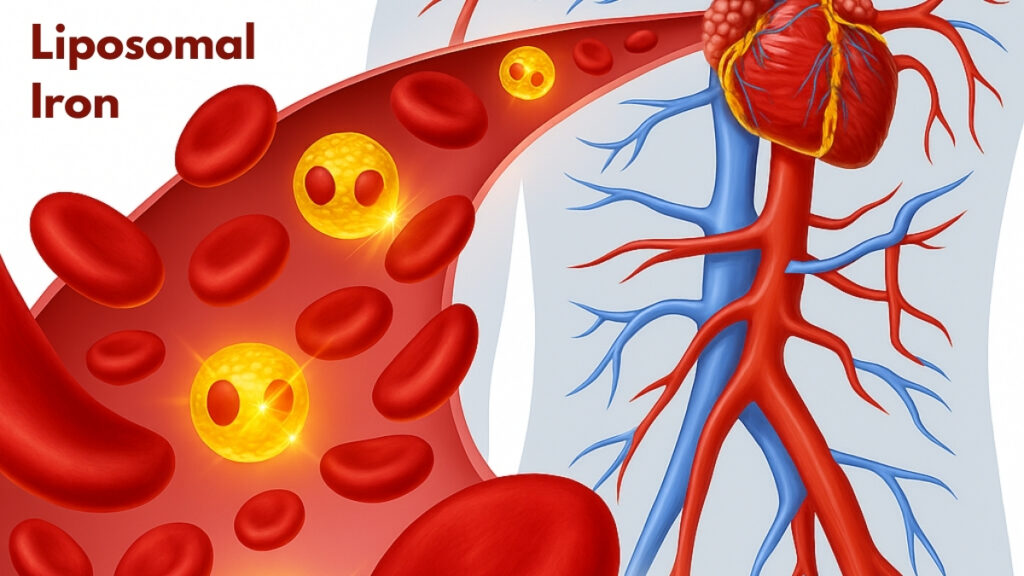
- Liposomal Iron
Different formulations vary in:
- Elemental iron content
- Tolerability
- Gastrointestinal comfort
- Delivery technology
- Absorption characteristics
Newer delivery technologies such as liposomal iron are being explored to improve nutrient delivery while reducing gastrointestinal discomfort associated with conventional iron supplements.
Key Takeaway
Choosing the right formulation can make a meaningful difference.
Reason 4: Not All Iron Supplements Are the Same
Even when you take enough iron, your body may not absorb it effectively.
Iron absorption can be affected by:
- Tea or coffee taken with meals
- Calcium supplements
- Low stomach acid
- Celiac disease
- Inflammatory bowel disease
- Certain medications
- Gastric surgery
Vitamin C-rich foods may help improve non-heme iron absorption when consumed appropriately.
Key Takeaway
Absorption matters just as much as dosage.
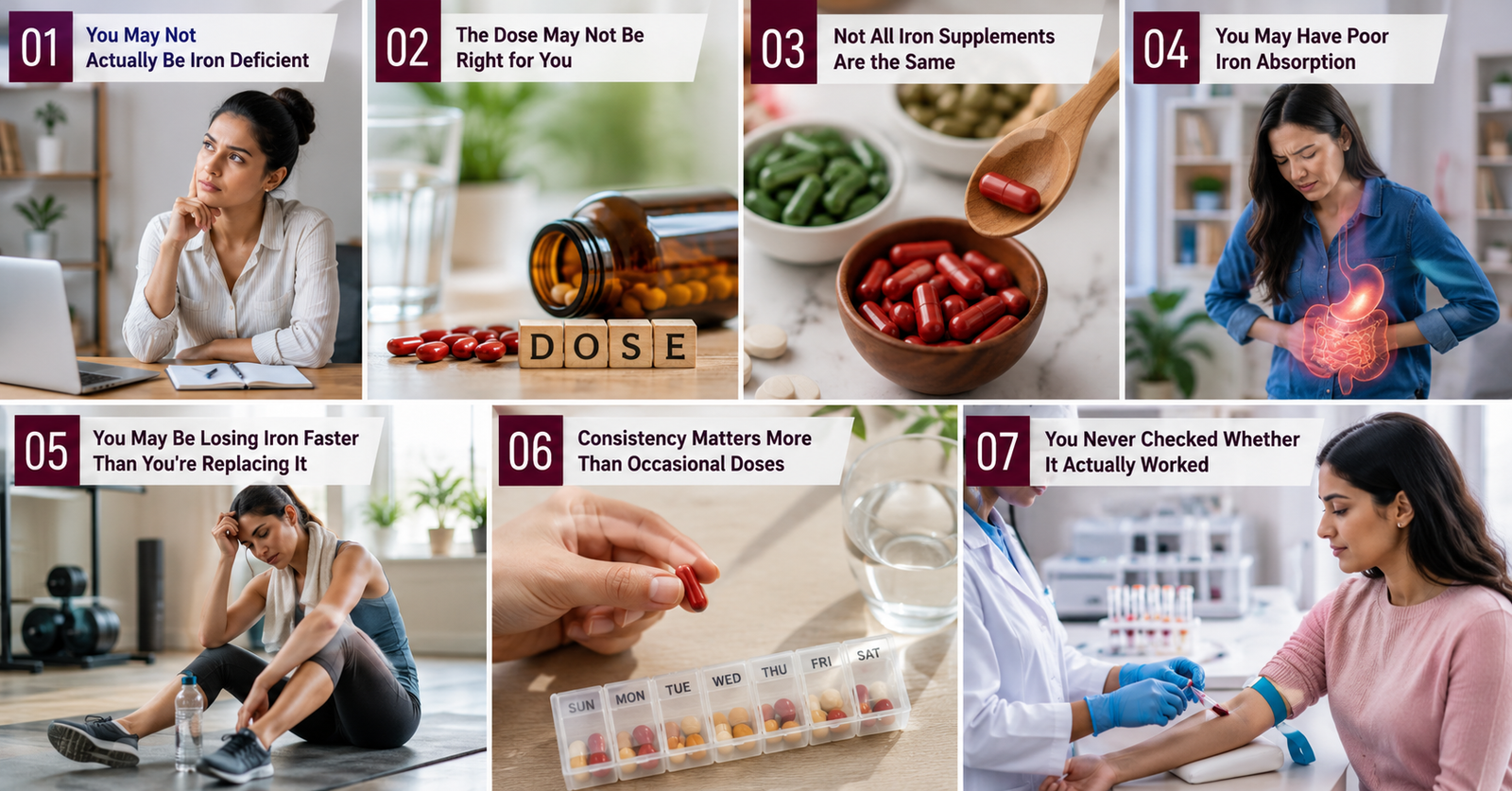
Reason 5: You May Be Losing Iron Faster Than You’re Replacing It
Some people continue losing iron while taking supplements.
Common causes include:
- Heavy menstrual bleeding
- Gastrointestinal bleeding
- Pregnancy
- Frequent blood donation
- Chronic inflammatory conditions
Unless the underlying cause is identified and managed, supplementation alone may not fully restore iron stores.
Key Takeaway
Treat the cause—not just the deficiency.
Reason 6: Consistency Matters More Than Occasional Doses
Many people:
- Miss doses
- Stop supplements once they feel better
- Take iron only occasionally
This can slow recovery and reduce the chances of rebuilding iron stores effectively.
Simple strategies include:
- Taking supplements as advised
- Setting daily reminders
- Following the recommended treatment duration
- Attending follow-up appointments
Key Takeaway
Consistency is essential for restoring iron levels.
Reason 7: You Never Checked Whether It Actually Worked
Many people take iron supplements for months without repeating blood tests.
Monitoring is important because it helps determine:
- Whether iron stores are improving
- Whether hemoglobin is recovering
- Whether dosage adjustments are needed
- Whether further evaluation is necessary
Key Takeaway
Don’t assume your iron levels have improved—measure them.
How to Improve Your Iron Supplementation Strategy
A smarter approach includes:
- Confirming iron deficiency through testing
- Choosing an appropriate dose
- Selecting a suitable formulation
- Improving iron absorption
- Identifying ongoing blood loss
- Taking supplements consistently
- Monitoring progress through follow-up blood tests
The Precimax Approach
At Precimax Life Sciences, we believe iron supplementation should be evidence-based and personalized.
Rather than simply choosing the highest-dose supplement, consider:
- Do I actually have iron deficiency?
- Is my dose appropriate?
- Is my formulation suitable?
- Am I absorbing iron effectively?
- Am I taking it consistently?
- Have I addressed the underlying cause?
- Have I monitored my progress?
Better decisions lead to better outcomes.
Explore our science-backed nutritional solutions at:
https://precimax.in/shop/
When Should You Get Your Iron Levels Tested?
Speak with your healthcare professional if you experience:
- Persistent fatigue
- Low hemoglobin
- Heavy menstrual bleeding
- Pregnancy
- Frequent blood donation
- Pale skin
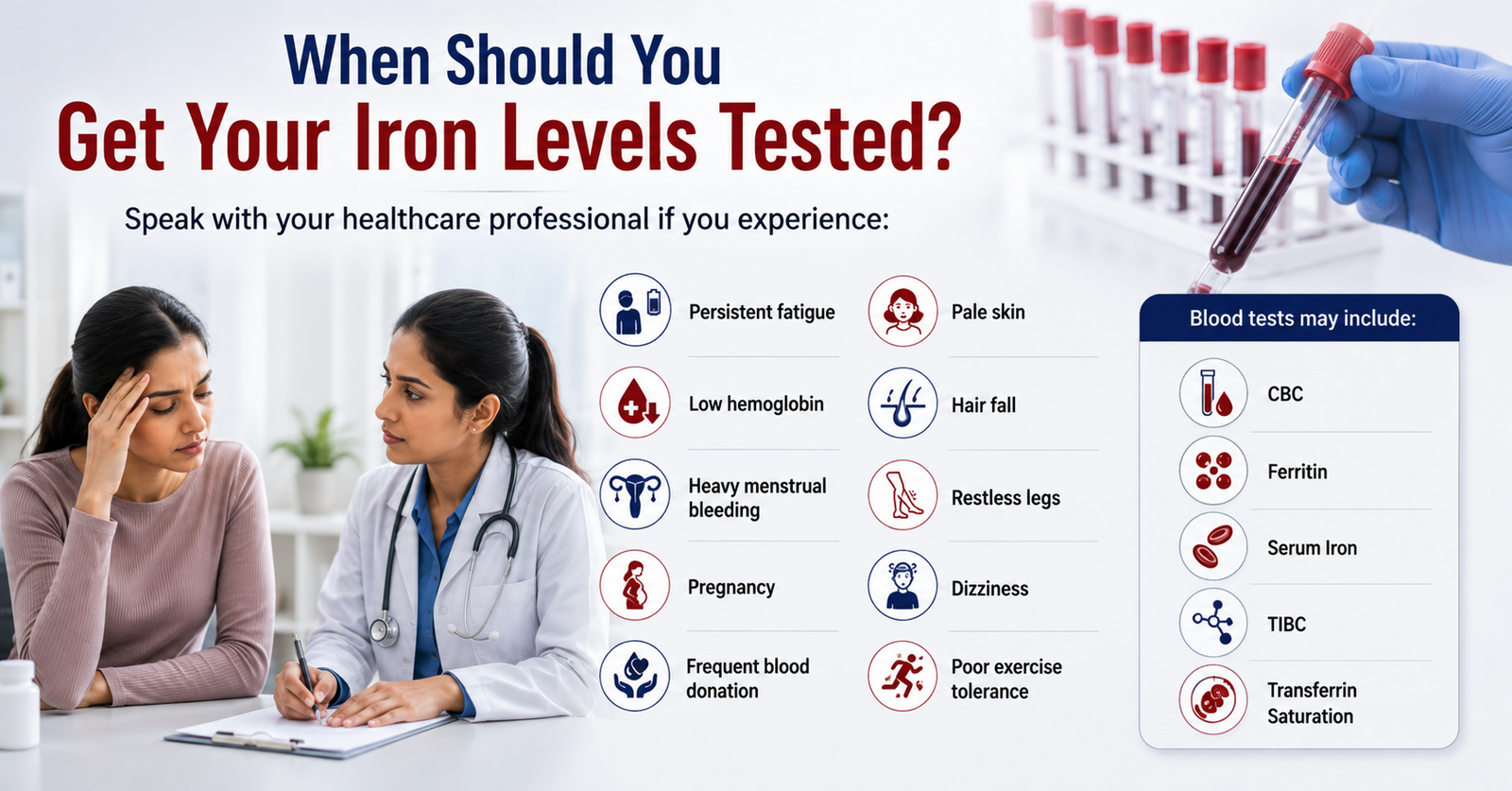
- Hair fall
- Restless legs
- Dizziness
- Poor exercise tolerance
Blood tests may include:
- CBC
- Ferritin
- Serum Iron
- TIBC
- Transferrin Saturation
Final Thoughts
Improving iron levels involves much more than simply taking an iron supplement.
Success depends on confirming the diagnosis, selecting the right dose and formulation, optimizing absorption, addressing underlying causes of iron loss, remaining consistent with supplementation, and monitoring progress with appropriate blood tests.
By understanding these seven evidence-based reasons, you can work with your healthcare professional to make informed decisions that support healthier iron levels and overall well-being.
Upload Your Iron Blood Test Report
Unsure whether your iron levels are improving?
The Precimax Health Team can help you understand:
- Your Ferritin and Hemoglobin levels
- Whether your supplementation appears appropriate
- Factors affecting iron absorption
- Evidence-based nutritional options
Need a Personalized Iron Supplementation Plan?
Talk to Precimax Life Sciences today.
Evidence-based guidance. Personalized recommendations. Better health decisions.