Introduction
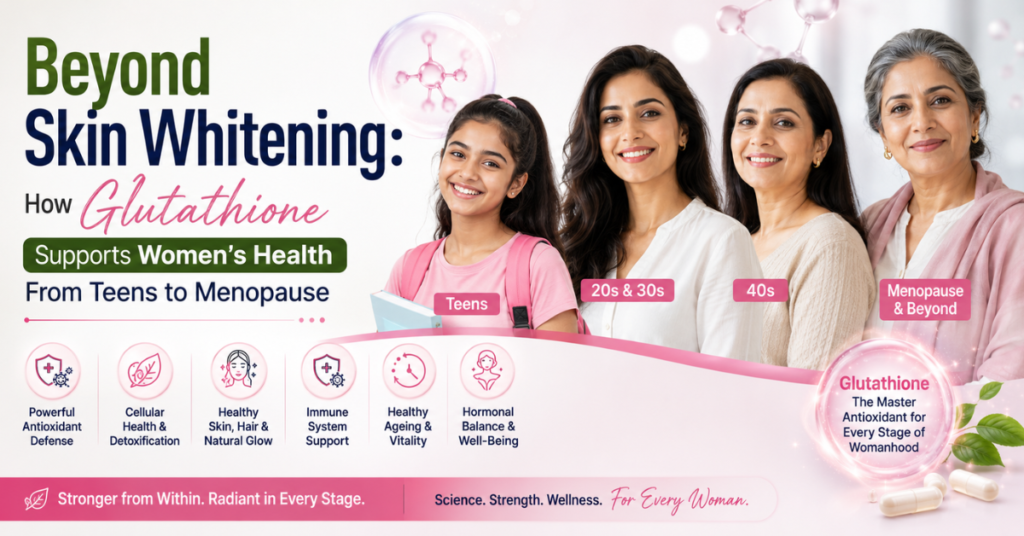
Liposomal Glutathione Benefits “I don’t want fair skin. Why should I take glutathione?”
It’s a question many people ask—and one that highlights one of the biggest misconceptions about glutathione.
For years, glutathione has been marketed primarily as a skin whitening or skin brightening supplement. As a result, many people assume that if they aren’t looking to lighten their skin tone, glutathione has nothing to offer.
However, scientific research paints a very different picture.
Glutathione is often referred to as the body’s master antioxidant because it plays an essential role in protecting cells from oxidative stress, supporting immune function, maintaining healthy cellular processes, and helping the body respond to everyday environmental challenges.
In fact, its role in skin health represents only one small part of what glutathione does inside the body.
Today, researchers are increasingly studying glutathione for its potential role in healthy ageing, cellular antioxidant defense, exercise recovery, liver function, and overall wellness. At the same time, advances in formulation science—particularly liposomal glutathione—are addressing one of the biggest limitations of traditional glutathione supplements: poor bioavailability.
In this article, we’ll separate myths from science, explain why glutathione became associated with skin whitening, and explore why modern nutrition experts are now looking far beyond cosmetic benefits.
Why Did Glutathione Become Famous for Skin Whitening?
If glutathione is involved in so many important biological processes, why do most people know it only as a skin whitening supplement?
The answer lies in how it was marketed.
During the last two decades, glutathione gained popularity through aesthetic clinics, beauty influencers, celebrity endorsements, and cosmetic advertisements. Many products focused almost exclusively on claims related to brighter or more even-looking skin.
This narrowed public perception of glutathione, even though researchers had already been studying it for decades in completely different areas of health.
Today, glutathione is recognized for its central role in:
- Neutralizing free radicals
- Protecting cells from oxidative stress
- Supporting the body’s antioxidant network
- Regenerating vitamins C and E
- Supporting normal immune function
- Contributing to healthy cellular function
Skin health is one area of interest—but it is far from the only one.
Consumer Takeaway
Glutathione became popular because of beauty marketing, but its biological importance extends far beyond the skin.
What Is Glutathione?
Glutathione is a naturally occurring antioxidant produced by almost every cell in the human body.
It is made from three amino acids:
- Glutamine
- Cysteine
- Glycine
Unlike many nutrients that must come directly from food, glutathione is synthesized by the body. It acts as one of the body’s primary defense systems against oxidative stress.
Because it interacts with many different cellular processes, scientists often describe glutathione as the “Master Antioxidant.“
What Does Glutathione Actually Do Inside Your Cells?
Every second, billions of cells in your body produce energy to support breathing, movement, digestion, brain function, and countless other activities.
During these normal metabolic processes, unstable molecules known as free radicals are generated.
In controlled amounts, free radicals are a natural part of human biology. However, when they accumulate faster than the body’s antioxidant defenses can manage them, they contribute to oxidative stress.
Glutathione helps maintain this balance by supporting the body’s natural antioxidant defense system.
Key Functions of Glutathione
Function | Why It Matters |
Neutralizes free radicals | Helps protect cells from oxidative stress |
Regenerates antioxidants | Supports vitamins C and E after they are used |
Supports immune function | Contributes to normal immune health |
Cellular protection | Helps maintain healthy cell function |
Liver support | Participates in normal detoxification pathways |
Healthy ageing | Helps protect cells from oxidative damage over time |
Rather than targeting a single organ, glutathione works throughout the body to help maintain cellular health.
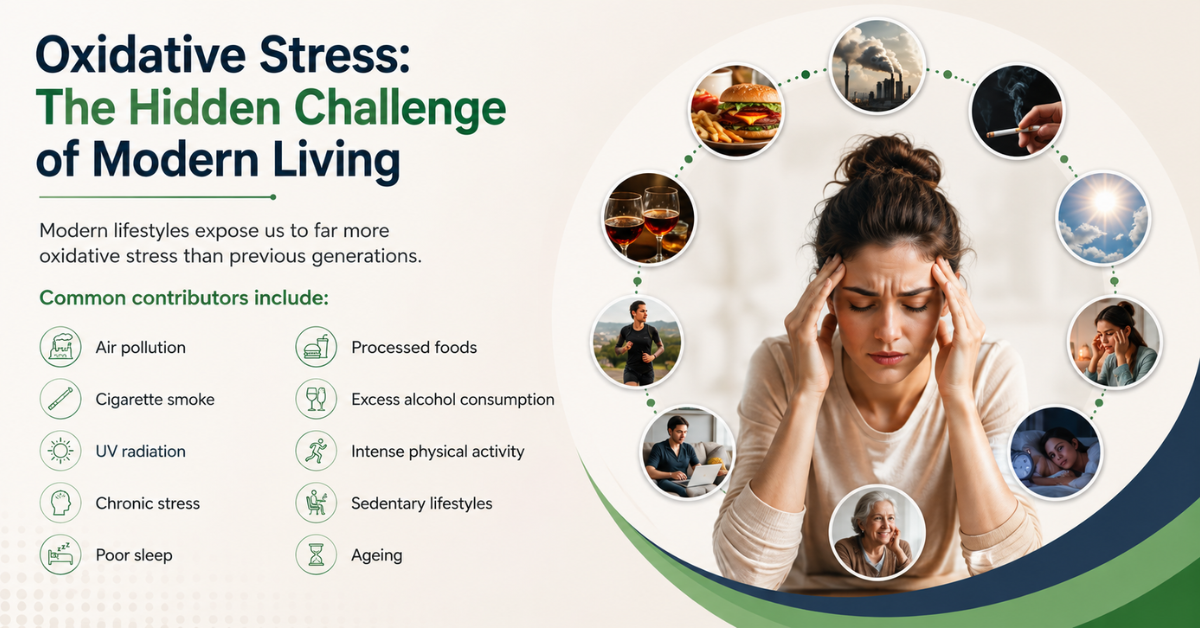
Oxidative Stress: The Hidden Challenge of Modern Living
Modern lifestyles expose us to far more oxidative stress than previous generations.
Common contributors include:
- Air pollution
- Cigarette smoke
- UV radiation
- Chronic stress
- Poor sleep
- Processed foods
- Excess alcohol consumption
- Intense physical activity
- Sedentary lifestyles
- Ageing
While the body naturally produces glutathione, these factors may increase the demand for antioxidant protection.
Maintaining healthy lifestyle habits remains the first step toward supporting the body’s natural antioxidant systems.
These include:
- Eating a nutrient-rich diet
- Regular exercise
- Quality sleep
- Stress management
- Avoiding smoking
- Limiting alcohol intake
Supplements should complement—not replace—these healthy habits.
Skin Health vs Skin Whitening: Understanding the Difference
One of the biggest misconceptions is that healthy skin and skin whitening are the same thing.
They are not.
Healthy skin refers to maintaining the skin’s normal structure and function through hydration, nutrition, collagen support, and protection against oxidative stress.
Skin whitening, on the other hand, refers to changes in skin pigmentation and melanin production.
Glutathione’s antioxidant properties have led researchers to investigate its role in skin appearance, but this should not overshadow its much broader physiological importance.
Skin Health vs Skin Whitening
Healthy Skin | Skin Whitening |
Supports normal skin function | Focuses on skin pigmentation |
Hydration | Changes in melanin pathways |
Antioxidant protection | Cosmetic outcome |
Healthy ageing | Aesthetic goal |
Overall skin wellness | Specific appearance-related objective |
Consumer Takeaway
Even if you have no interest in skin whitening, glutathione may still be relevant because of its role in cellular antioxidant defense and overall wellness.
Why Glutathione Is Gaining Attention for Healthy Ageing
Ageing is a natural process influenced by genetics, lifestyle, environment, and oxidative stress.
Over time, the body’s natural antioxidant defenses may become less efficient, while exposure to oxidative stress continues to increase.
Researchers are therefore exploring nutrients that support healthy ageing at the cellular level.
Glutathione has become one of the most widely studied antioxidants because it helps:
- Protect cells from oxidative damage
- Support normal mitochondrial function
- Maintain healthy cellular processes
- Contribute to overall antioxidant balance
While glutathione is not an anti-ageing treatment, maintaining healthy antioxidant defenses is considered an important part of long-term wellness.
Exercise Recovery: Why Athletes and Active Adults Are Interested in Glutathione
While glutathione is often discussed in relation to skin health, researchers are also exploring its role in exercise recovery and antioxidant defense.
During physical activity, especially moderate to intense exercise, muscles naturally produce more reactive oxygen species (ROS) as energy demands increase. This is a normal biological response and is part of how the body adapts to exercise. However, excessive oxidative stress—particularly when recovery, nutrition, or sleep are inadequate—may affect recovery and overall performance.
Glutathione is one of the body’s primary intracellular antioxidants and helps maintain the balance between free radicals and antioxidant defenses.
Current research is investigating how healthy glutathione levels may support:
- Cellular recovery after exercise
- Protection against exercise-induced oxidative stress
- Muscle cell health
- Normal energy metabolism
- Overall physical wellness
It’s important to note that glutathione should not be viewed as a performance-enhancing supplement. Instead, it may support the body’s natural antioxidant systems as part of a balanced lifestyle.
Supporting Recovery Naturally
Exercise recovery depends on multiple factors, including:
- Adequate protein intake
- Hydration
- Quality sleep
- Balanced nutrition
- Proper training progression
- Antioxidant support
Glutathione is one component of this broader recovery strategy.
The Liver and Glutathione: An Important Partnership
The liver is often described as the body’s natural detoxification organ, carrying out hundreds of essential metabolic functions every day.
One of its key protective molecules is glutathione.
Within liver cells, glutathione participates in normal detoxification pathways by helping neutralize reactive compounds generated during everyday metabolism. It also supports the body’s natural antioxidant defense mechanisms.
The liver itself produces significant amounts of glutathione because it is constantly exposed to metabolic activity.
Healthy liver function depends on many lifestyle factors, including:
- Nutritious diet
- Maintaining a healthy weight
- Regular physical activity
- Limiting alcohol consumption
- Managing metabolic health
Glutathione should not be considered a treatment for liver disease, but it remains an important part of normal liver physiology.
Consumer Takeaway
Healthy liver function is closely linked with healthy glutathione metabolism, making overall wellness habits essential.
What Does the Scientific Evidence Actually Say?
Glutathione is one of the most extensively studied endogenous antioxidants. However, it’s important to distinguish between well-established scientific evidence and areas where research is still evolving.
Understanding this difference helps consumers make informed decisions and avoid exaggerated marketing claims.
Areas Supported by Strong Scientific Evidence
Research consistently supports glutathione’s role in:
- Neutralizing free radicals
- Maintaining intracellular antioxidant balance
- Supporting immune function
- Participating in normal liver detoxification pathways
- Regenerating antioxidants such as Vitamin C and Vitamin E
- Protecting cells from oxidative stress
These biological functions are well documented and form the foundation of glutathione research.
Areas Still Being Explored
Scientists continue to investigate glutathione’s potential role in:
- Healthy ageing
- Exercise recovery
- Skin appearance
- Metabolic health
- Cognitive wellness
- Cardiovascular health
While many early findings are encouraging, more large-scale clinical studies are needed before firm conclusions can be drawn.
Evidence at a Glance
Well Established | Emerging Research |
Cellular antioxidant defense | Healthy ageing |
Immune system support | Exercise recovery |
Oxidative stress protection | Skin appearance |
Liver glutathione metabolism | Metabolic wellness |
Antioxidant regeneration | Brain health |
Consumer Takeaway
Choose supplements based on scientific evidence rather than marketing promises. A high-quality formulation should be transparent about what is well established and what is still under investigation.
Why Bioavailability Matters
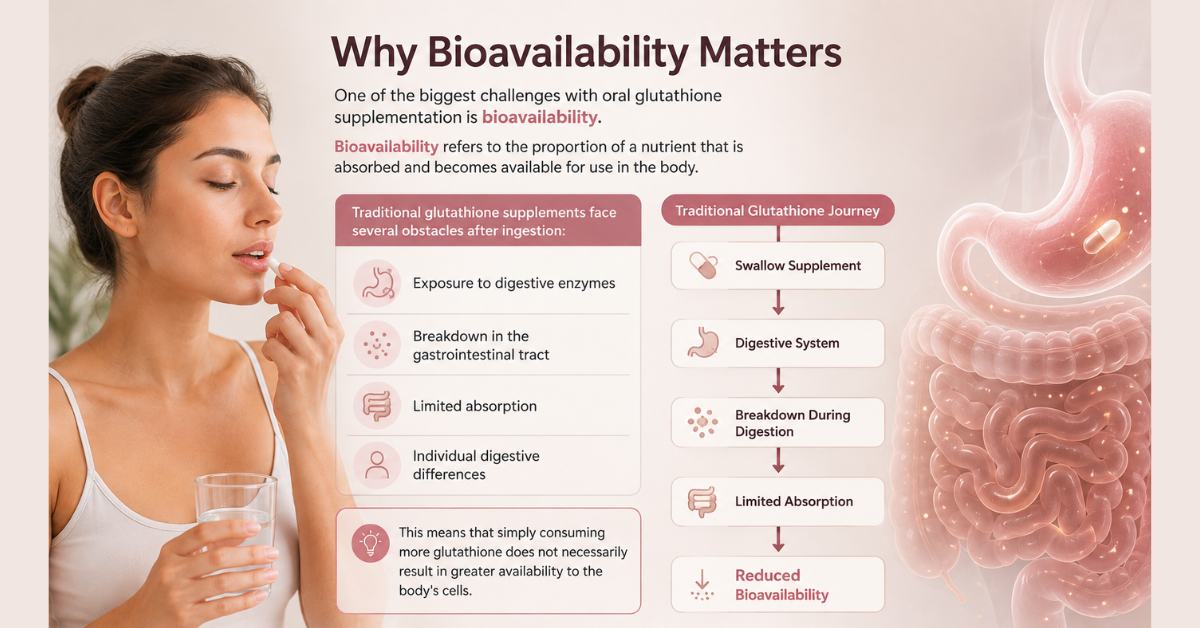
One of the biggest challenges with oral glutathione supplementation is bioavailability.
Bioavailability refers to the proportion of a nutrient that is absorbed and becomes available for use in the body.
Traditional glutathione supplements face several obstacles after ingestion:
- Exposure to digestive enzymes
- Breakdown in the gastrointestinal tract
- Limited absorption
- Individual digestive differences
This means that simply consuming more glutathione does not necessarily result in greater availability to the body’s cells.
Traditional Glutathione Journey
Swallow Supplement
↓
Digestive System
↓
Breakdown During Digestion
↓
Limited Absorption
↓
Reduced Bioavailability
Researchers therefore began focusing not only on how much glutathione is present but also how it is delivered.
How Liposomal Glutathione Addresses Bioavailability
Advances in formulation science have led to the development of liposomal glutathione.
Liposomal technology encapsulates glutathione within microscopic phospholipid vesicles (liposomes). These structures are designed to help protect the active ingredient during digestion and support improved nutrient delivery.
Instead of simply increasing the dose, liposomal formulations aim to improve how glutathione reaches the body’s cells.
Regular vs Liposomal Glutathione
Feature | Regular Glutathione | Liposomal Glutathione |
Delivery Method | Standard tablet or capsule | Liposomal delivery system |
Focus | Ingredient quantity | Ingredient + delivery technology |
Protection During Digestion | Limited | Designed to protect sensitive ingredients |
Bioavailability | Conventional | Enhanced delivery approach |
Modern Formulation Science | Basic | Advanced |
While individual results vary, liposomal formulations represent an important advancement in nutritional science by addressing one of glutathione’s key limitations.
Choosing the Best Glutathione Supplement
With so many options available, selecting a glutathione supplement can be confusing.
Rather than focusing only on the number of milligrams, consider these factors:
What to Compare | Why It Matters |
Glutathione Form | Liposomal formulations are designed for improved delivery. |
Bioavailability Technology | Helps determine how efficiently nutrients are delivered. |
Ingredient Quality | High-quality raw materials support product consistency. |
Clinical Evidence | Evidence-based formulations inspire greater confidence. |
Brand Transparency | Clear labeling and manufacturing standards matter. |
Supporting Nutrients | Ingredients such as Vitamin C may complement antioxidant activity. |
Consumer Tip
The best glutathione supplement is not necessarily the one with the highest dose—it is the one that combines quality ingredients, advanced formulation technology, and scientific credibility.
Where PRECIGLOW Fits Naturally
As nutritional science continues to evolve, advanced formulation has become just as important as ingredient selection.
PRECIGLOW, the liposomal glutathione formulation from Precimax Life Sciences, reflects this modern approach.
Instead of focusing only on glutathione content, PRECIGLOW incorporates liposomal delivery technology designed to support improved nutrient delivery and bioavailability.
Liposomal Glutathione Benefits
- Cellular antioxidant defense
- Healthy ageing
- General wellness
- Skin health
- Protection against oxidative stress
Rather than being promoted solely as a “skin whitening supplement,” PRECIGLOW aligns with the broader scientific understanding of glutathione’s role in overall health.
As with all dietary supplements, it should be used alongside:
- A balanced diet
- Regular exercise
- Quality sleep
- Stress management
- Healthy lifestyle habits
Why Preciglow’s Double Liposomal Technology Matters
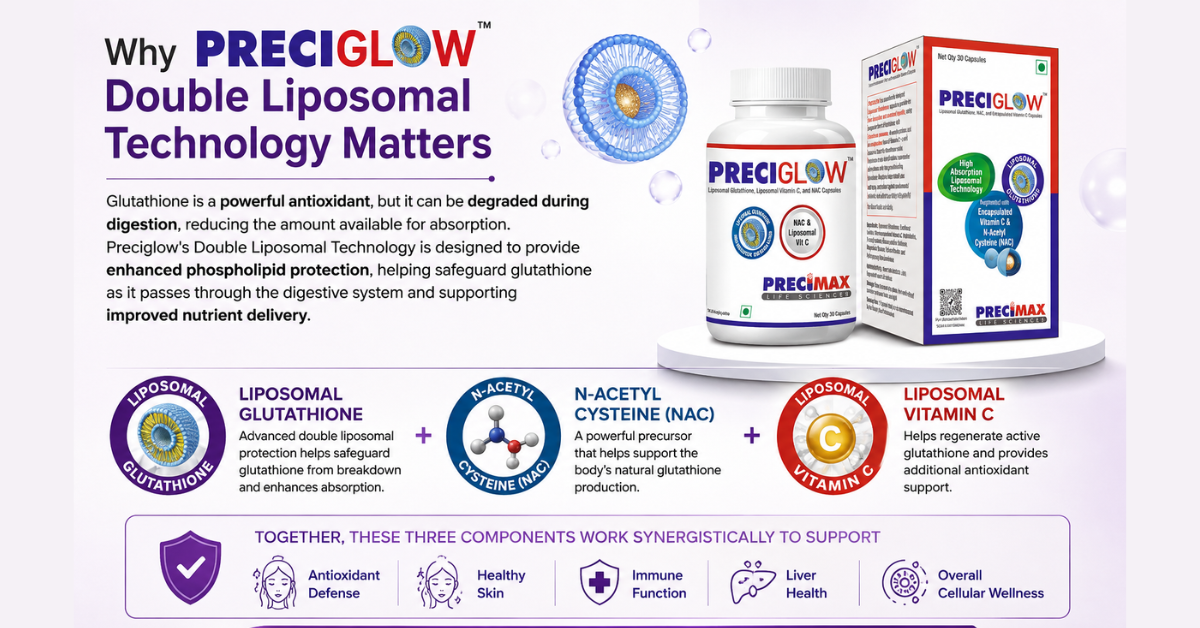
Glutathione is a powerful antioxidant, but it can be degraded during digestion, reducing the amount available for absorption. Preciglow’s Double Liposomal Technology is designed to provide enhanced phospholipid protection, helping safeguard glutathione as it passes through the digestive system and supporting improved nutrient delivery. The formulation is further strengthened with N-Acetyl Cysteine (NAC), a precursor that helps support the body’s natural glutathione production, and Liposomal Vitamin C, which helps regenerate active glutathione while providing additional antioxidant support. Together, these three components work synergistically to support antioxidant defense, healthy skin, immune function, liver health, and overall cellular wellness through an advanced delivery approach designed for better bioavailability than conventional oral glutathione formulations.
How to Choose the Best Glutathione Supplement
With hundreds of glutathione supplements available today, selecting the right one can be overwhelming. Many products focus on high dosages or attractive marketing claims, but the quality of the formulation is often more important than the quantity of the ingredient.
A scientifically designed supplement should support not only glutathione intake but also its effective delivery and utilization by the body.
Glutathione Buying Guide
Parameter | Why It Matters |
Type of Glutathione | Liposomal formulations are designed to improve delivery compared to conventional oral forms. |
Bioavailability Technology | Better delivery systems may help improve nutrient absorption and utilization. |
Clinical Evidence | Choose formulations supported by scientific research whenever possible. |
Ingredient Quality | High-quality raw materials contribute to product consistency. |
Manufacturing Standards | GMP-certified manufacturing helps ensure quality and safety. |
Supporting Ingredients | Vitamin C and other antioxidants may complement glutathione’s antioxidant role. |
Brand Transparency | Look for brands that clearly disclose ingredients and formulation details. |
Value Rather Than Price | The best supplement is not always the cheapest—it should offer quality, science, and reliability. |
Consumer Checklist
Before buying your next glutathione supplement, ask yourself:
✔ Is it a liposomal formulation?
✔ Does it focus on bioavailability?
✔ Is the ingredient list transparent?
✔ Is it manufactured under quality standards?
✔ Is it supported by scientific evidence rather than marketing claims?
Why PRECIGLOW Represents the Future of Glutathione Supplementation
The future of nutritional supplements is no longer just about adding more ingredients—it is about delivering those ingredients more effectively.
This is where PRECIGLOW, Precimax Life Sciences’ liposomal glutathione formulation, naturally fits into the conversation.
PRECIGLOW has been developed using liposomal delivery technology, which is designed to support improved bioavailability compared with conventional oral glutathione supplements.
Instead of positioning glutathione only as a skin whitening ingredient, PRECIGLOW embraces the broader science of antioxidant wellness by supporting:
- Cellular antioxidant defense
- Healthy ageing
- General wellness
- Skin health
- Protection against oxidative stress
This evidence-based approach reflects the evolving understanding that effective supplementation depends on formulation science as much as ingredient selection.
Key Takeaways
- Glutathione is much more than a skin whitening supplement.
- It is the body’s master antioxidant.
- It helps protect cells from oxidative stress.
- Modern lifestyles increase oxidative stress.
- Healthy skin and skin whitening are different concepts.
- The liver depends on glutathione for normal detoxification processes.
- Researchers continue to study glutathione’s role in healthy ageing.
- Exercise recovery involves healthy antioxidant balance.
- Bioavailability is essential when selecting a supplement.
- Liposomal technology was developed to improve nutrient delivery.
- The best glutathione supplement combines formulation quality with scientific evidence.
- PRECIGLOW reflects the next generation of liposomal glutathione supplementation focused on cellular wellness rather than cosmetic claims alone.
References
- Wu G, Fang YZ, Yang S, et al. Glutathione metabolism and its implications for health. J Nutr. https://pubmed.ncbi.nlm.nih.gov/16317141/
- Forman HJ, Zhang H, Rinna A. Glutathione: Overview of its protective roles. https://pubmed.ncbi.nlm.nih.gov/18848540/
- Ballatori N, et al. Glutathione dysregulation and disease. https://pubmed.ncbi.nlm.nih.gov/22057264/
- Pizzorno J. Glutathione! Integr Med. https://pubmed.ncbi.nlm.nih.gov/29916708/
- Richie JP Jr, et al. Randomized trial of oral glutathione supplementation. https://pubmed.ncbi.nlm.nih.gov/24791752/
- Sies H. Oxidative stress and antioxidants. https://pubmed.ncbi.nlm.nih.gov/17034344/
Looking Beyond Skin Whitening?
If you’re searching for a women’s antioxidant supplement that supports cellular wellness, healthy ageing, and antioxidant defense, don’t choose a supplement based on cosmetic claims alone.
Look for:
✔ Advanced liposomal delivery technology
✔ Evidence-based formulation
✔ Transparent ingredient quality
✔ A trusted brand committed to science
PRECIGLOW by Precimax Life Sciences is designed with these principles in mind, offering a modern liposomal glutathione formulation that supports wellness from the inside out.
Because true beauty starts with healthy cells—not just brighter skin.
Quick Answers
1. Is glutathione only for skin whitening?
No. Glutathione supports antioxidant defense, immune function, liver metabolism, cellular health, and healthy ageing. While it may influence skin brightness in some individuals, skin health is only one aspect of its biological role.
2. What is the best glutathione supplement?
The best glutathione supplement combines high-quality ingredients, advanced delivery technology such as liposomal formulations, strong manufacturing standards, and scientific evidence—not simply the highest dosage.
3. Is liposomal glutathione better than regular glutathione?
Liposomal glutathione is designed to improve nutrient delivery and bioavailability compared with conventional oral glutathione. The effectiveness depends on the formulation, quality, and individual health factors.
4. Why is glutathione called the master antioxidant?
Glutathione is called the master antioxidant because it is naturally present in almost every cell and helps neutralize free radicals while supporting antioxidants like Vitamins C and E.
5. Does glutathione support healthy ageing?
Yes. Glutathione helps protect cells from oxidative stress, supports mitochondrial function, and contributes to normal cellular repair mechanisms that are important for healthy ageing.
6. Glutathione vs Vitamin C: What’s the difference?
Vitamin C is an essential antioxidant vitamin that supports collagen formation and immunity. Glutathione is the body’s primary intracellular antioxidant that protects cells and helps regenerate Vitamin C after it is used.
7. Which is better for skin: Glutathione or Vitamin C?
Both support skin health differently. Vitamin C promotes collagen synthesis and protects against environmental damage, while glutathione supports antioxidant defense and may influence skin brightness. They often work best together.
8. Can glutathione and Vitamin C be taken together?
Yes. Vitamin C helps maintain glutathione in its active form, making the combination commonly used in antioxidant support formulations.
9. Is glutathione stronger than Vitamin C?
They have different biological roles and cannot be directly compared. Glutathione is the body’s main intracellular antioxidant, while Vitamin C is an essential dietary antioxidant with complementary functions.
10. What is the difference between liposomal and regular glutathione?
Regular glutathione may be broken down during digestion, whereas liposomal glutathione is designed to protect the ingredient and improve its delivery and bioavailability.
11. Why is liposomal glutathione considered more bioavailable?
Liposomal technology encapsulates glutathione within phospholipids, helping protect it during digestion and potentially improving absorption compared with standard oral formulations.
12. Is liposomal glutathione worth buying?
For people looking to maximize oral glutathione delivery, liposomal formulations may offer advantages. Product quality and manufacturing standards remain important considerations.
13. Can regular glutathione still work?
Yes. Conventional glutathione may still provide benefits, although absorption can vary depending on the formulation and individual digestive factors.
14. Glutathione serum vs oral glutathione: What’s the difference?
Glutathione serum works on the skin’s surface, while oral glutathione supports the body’s antioxidant system from within. They serve different purposes and are not direct substitutes.
15. Is glutathione serum better than oral supplements?
Not necessarily. Serums primarily target topical skin care, whereas oral supplements provide systemic antioxidant support throughout the body.
16. Can I use glutathione serum and oral supplements together?
Yes. Many people combine topical skincare with oral antioxidant support because each works through different pathways.
17. Who may benefit from glutathione supplements?
People experiencing increased oxidative stress, ageing, environmental exposure, or those seeking antioxidant support may consider glutathione supplements after consulting a healthcare professional.
18. When is the best time to take glutathione?
There is no universally accepted best time. Many manufacturers recommend taking glutathione on an empty stomach or according to the product instructions for optimal use.
19. How long does glutathione take to show results?
The timeline varies depending on health goals, formulation, dosage, consistency, and individual physiology. Antioxidant support is generally considered a long-term nutritional strategy.
20. What should I look for before buying a glutathione supplement?
Choose products that offer:
Liposomal or advanced delivery technology
High manufacturing quality
Transparent ingredient sourcing
Third-party quality standards where available
Evidence-based formulation rather than high dosage alone