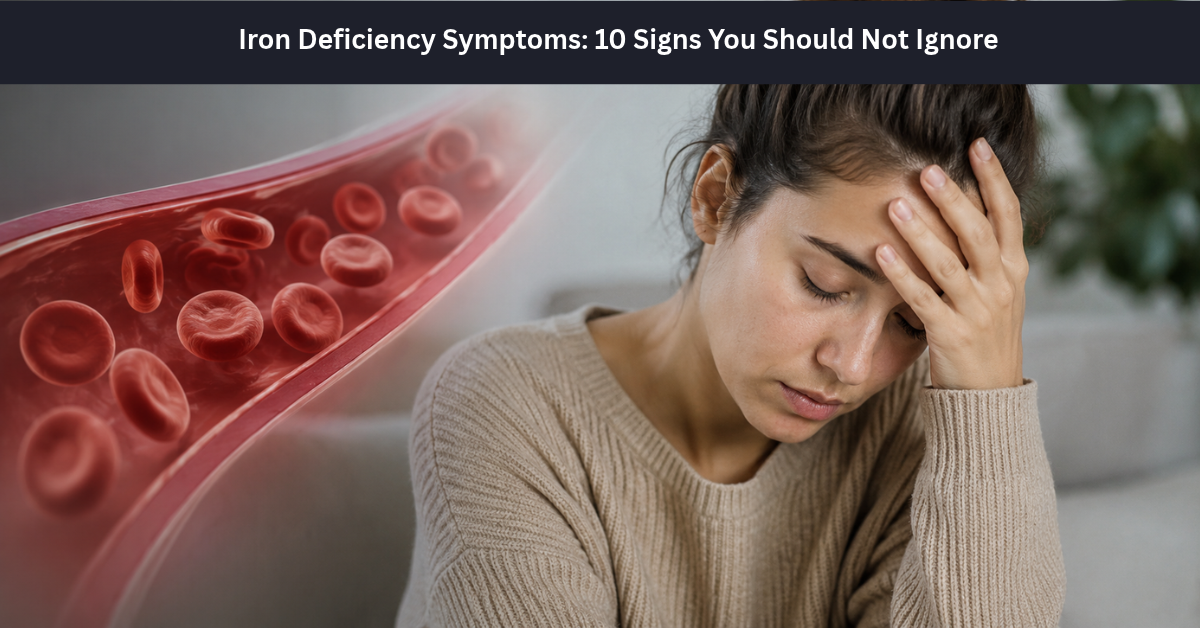
Iron deficiency can develop gradually, and many people do not realize their iron stores are falling until symptoms begin to affect their energy, concentration, exercise tolerance or everyday life.
Feeling tired, experiencing hair fall, getting dizzy or struggling to concentrate can have many causes. But when these symptoms occur together — particularly in people with heavy periods, pregnancy, inadequate dietary intake, frequent blood donation, gastrointestinal problems or increased physical demands — iron deficiency may be worth investigating.
In this guide, we go beyond the usual list of symptoms.
You will learn:
- Whether iron deficiency and anaemia are becoming more common in India
- Who is at higher risk
- The 10 symptoms you should watch for
- A simple self-scoring questionnaire
- Which symptoms are more commonly noticed first
- How risk differs between children, women, pregnancy, athletes and older adults
- Different iron-deficiency situations
- How diet, vitamin B12 and other nutritional factors can affect the picture
- How iron deficiency can be checked
- Which tests may be useful
- When to seek medical help
- Which type of doctor to consult
- What to do after receiving your test results
- Where liposomal iron, liposomal ferric pyrophosphate and liposomal lactoferrin fit into the discussion
Important: This self-assessment is an awareness tool, not a diagnostic test. Symptoms alone cannot confirm iron deficiency.
Is Iron Deficiency Increasing in India?
Iron deficiency and anaemia are related, but they are not the same condition.
Iron deficiency means the body’s iron stores are inadequate. If deficiency becomes more severe and begins affecting haemoglobin production, it can contribute to iron-deficiency anaemia.
This distinction matters when looking at national health data.
What does India’s national data show?
The National Family Health Survey (NFHS) provides important information about anaemia in India.
NFHS-4 (2015–16) reported that approximately:
- 58% of children aged 6–59 months were anaemic
- 53% of women aged 15–49 years were anaemic
- Around half of pregnant women were anaemic
In NFHS-5 (2019–21), the reported figures were:
- 67.1% of children aged 6–59 months
- 57.0% of women aged 15–49 years
- 52.2% of pregnant women aged 15–49 years
- 59.1% of adolescent girls aged 15–19 years
- 25.0% of men aged 15–49 years
These figures show that anaemia remains a major public-health concern in India.
However, there is an important limitation:
NFHS anaemia figures should not automatically be interpreted as iron-deficiency figures.
Anaemia can have multiple causes, including iron deficiency, vitamin deficiencies, blood loss, infections, inherited blood disorders and other medical conditions.
Therefore, if you want to know whether your symptoms are related specifically to iron deficiency, laboratory assessment is more useful than assuming that anaemia statistics apply directly to you.
The Indian Council of Medical Research–National Institute of Nutrition (ICMR-NIN) also conducts research into micronutrient absorption, iron metabolism, biomarkers and the bioavailability of iron from different diets.
Who Is More Likely to Develop Iron Deficiency?
Iron requirements and iron losses are different for different people.
You may have a higher risk if you fall into one or more of these groups.
1. Children
Children require nutrients for growth and development.
Iron deficiency during childhood can be particularly important because iron is involved in neurological development, oxygen transport and normal physical development.
The Government of India’s Anaemia Mukt Bharat programme specifically includes:
- Children 6–59 months
- Children 5–9 years
- Adolescents 10–19 years
- Pregnant women
- Lactating women
- Women of reproductive age
as important beneficiary groups.
2. Adolescent Girls and Young Women
Rapid growth combined with menstrual blood loss can increase iron requirements.
Watch for:
- Heavy or prolonged periods
- Persistent fatigue
- Hair shedding
- Dizziness
- Poor exercise tolerance
- Difficulty concentrating
NFHS-5 reported anaemia in approximately 59.1% of girls aged 15–19 years in India.
3. Working Women
Busy schedules can create several overlapping risk factors:
- Irregular meals
- Low intake of iron-rich foods
- Vegetarian or restricted diets without adequate planning
- Heavy menstrual bleeding
- High work-related stress and fatigue
- Poor sleep
- Frequent dieting
Fatigue should not automatically be blamed on work or stress.
If fatigue persists despite adequate sleep and lifestyle adjustments, nutritional or medical causes may need to be considered.
4. Pregnancy
Pregnancy increases nutritional requirements.
Iron requirements can increase because the body needs to support maternal blood volume expansion and the developing baby.
NFHS-5 reported that 52.2% of pregnant women aged 15–49 years were anaemic.
Pregnancy-related iron supplementation should be managed according to antenatal care and medical guidance.
5. Postpartum and Breastfeeding Women
Iron status may remain a concern after childbirth, particularly when there has been:
- Significant blood loss during delivery
- Anaemia during pregnancy
- Multiple pregnancies
- Inadequate nutritional intake
- Poor recovery of iron stores
Postpartum fatigue should not automatically be considered a normal consequence of having a newborn.
6. Women With Heavy Menstrual Bleeding
Regular menstrual blood loss is one of the important reasons women of reproductive age can become iron deficient.
If periods are:
- Very heavy
- Prolonged
- Associated with clots
- Causing significant fatigue or dizziness
it may be appropriate to discuss both iron testing and the cause of heavy bleeding with a healthcare professional.
7. Athletes and Physically Active People
Athletes may have increased nutritional demands.
Iron status can be particularly relevant when someone experiences:
- Reduced endurance
- Unusual fatigue during training
- Declining performance
- Breathlessness during exercise
- Poor recovery
- Persistent weakness
Reduced performance does not automatically mean iron deficiency, but persistent unexplained changes may justify assessment.
8. Older Adults
Older adults may have different dietary patterns, chronic illnesses, medication use or gastrointestinal issues that can influence nutritional status.
New iron deficiency in an older adult should not simply be treated with supplements without looking for the underlying cause.
9. People Taking Long-Term Medicines
Some long-term medicines or medical conditions can affect gastrointestinal function, nutrient absorption, appetite or bleeding risk.
If you take medicines regularly and develop unexplained symptoms or abnormal blood results, discuss the complete medication history with your doctor.
Do not stop prescribed medicines on your own.
10. People With Gastrointestinal or Other Medical Conditions
Iron deficiency can occur because of reduced absorption or blood loss.
Potential contributors include certain gastrointestinal conditions, gastrointestinal bleeding and other chronic health problems.
Persistent or unexplained iron deficiency should therefore prompt a search for the underlying cause rather than simply increasing iron intake.
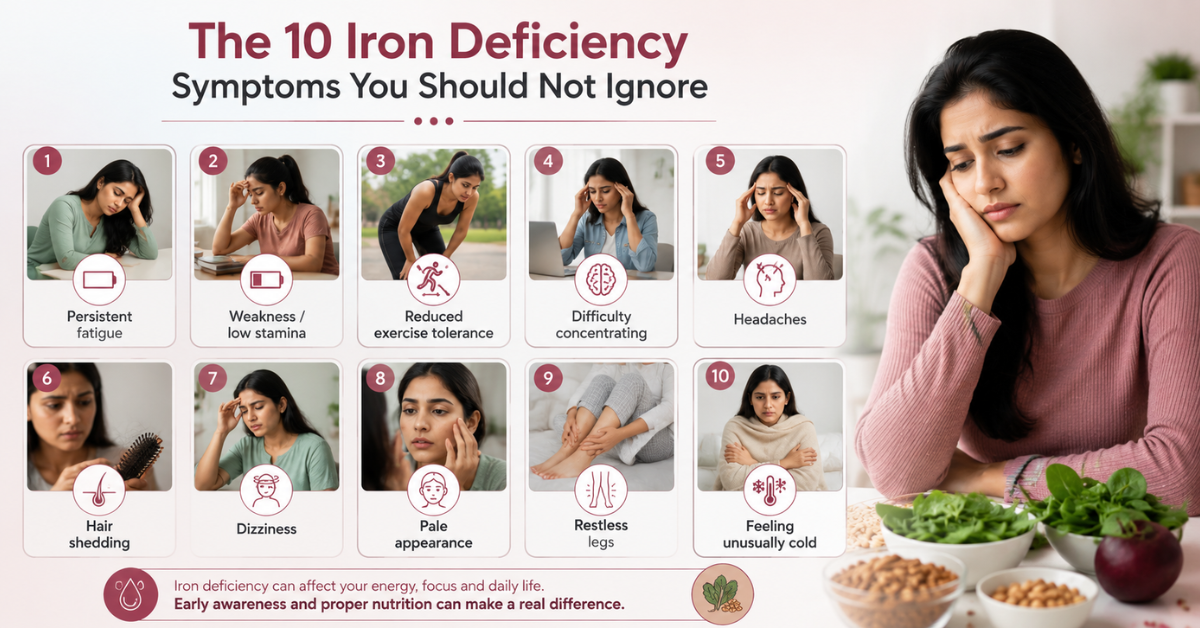
The 10 Iron Deficiency Symptoms You Should Not Ignore
Not every symptom has the same specificity.
Some symptoms are commonly noticed early, while others are more likely to become prominent when deficiency is more significant or anaemia develops.
More commonly noticed symptoms
Symptom | What you may notice | Relative attention |
Persistent fatigue | Tired despite adequate rest | ★★★★★ |
Weakness / low stamina | Everyday activities feel harder | ★★★★★ |
Reduced exercise tolerance | Performance drops or you tire quickly | ★★★★☆ |
Difficulty concentrating | Brain fog or reduced mental energy | ★★★★☆ |
Headaches | Recurrent headaches | ★★★☆☆ |
Hair shedding | Increased hair fall | ★★★☆☆ |
Dizziness | Lightheadedness, especially with exertion | ★★★☆☆ |
Pale appearance | Skin or inner eyelids appear paler | ★★★☆☆ |
Restless legs | Urge to move legs, especially at night | ★★★☆☆ |
Feeling unusually cold | Cold hands, feet or feeling colder than usual | ★★☆☆☆ |
These ratings indicate how commonly a symptom may be noticed or how useful it is as an awareness clue. They are not diagnostic scores.
1. Persistent Fatigue and Low Energy
One of the most commonly reported symptoms associated with iron deficiency is persistent tiredness.
You may notice that:
- You feel exhausted after normal activities
- You have less energy than before
- You struggle to stay energetic throughout the day
- Rest does not seem to completely resolve the tiredness
Fatigue can have many causes, so it becomes more meaningful when combined with other symptoms or risk factors.
2. Weakness or Reduced Physical Performance
You may notice that normal activities suddenly feel more difficult.
For example:
- Climbing stairs feels harder
- Walking long distances causes unusual fatigue
- Exercise feels more difficult
- You need longer recovery time
3. Reduced Exercise Tolerance or Breathlessness
When iron deficiency progresses to anaemia, reduced oxygen-carrying capacity can make physical activity more difficult.
You may become breathless while:
- Running
- Climbing stairs
- Exercising
- Walking quickly
Sudden or severe breathlessness should not be assumed to be caused by iron deficiency and requires prompt medical assessment.
4. Difficulty Concentrating or Brain Fog
Some people with low iron status report:
- Difficulty concentrating
- Reduced mental energy
- Forgetfulness
- Feeling mentally foggy
Persistent concentration problems should also be evaluated for other possible causes.
5. Hair Fall or Increased Hair Shedding
Iron deficiency may be associated with increased hair shedding in some people.
However, hair loss can also occur due to:
- Hormonal changes
- Thyroid problems
- Stress
- Other nutritional deficiencies
- Illness
- Genetic hair-loss conditions
Therefore, hair fall alone cannot confirm iron deficiency.
6. Dizziness or Lightheadedness
Dizziness may occur particularly when anaemia develops.
But dizziness can also result from:
- Dehydration
- Low blood pressure
- Medication effects
- Blood sugar changes
- Other medical conditions
Persistent or severe dizziness deserves medical evaluation.
7. Headaches
Some people with iron deficiency or anaemia experience recurrent headaches.
However, headaches are common and have many possible causes.
Look at the overall pattern rather than using headache alone as evidence of low iron.
8. Pale Skin or Pale Inner Eyelids
Reduced haemoglobin can sometimes make the skin or inner eyelids appear paler.
However, natural skin colour varies significantly.
Paleness alone cannot diagnose iron deficiency.
9. Restless Legs
Some people with low iron stores experience an uncomfortable urge to move their legs, especially during rest or at night.
This can be associated with restless legs syndrome, although restless legs have multiple possible causes.
10. Feeling Cold More Often
Some people with iron deficiency report:
- Cold hands
- Cold feet
- Feeling colder than others
- Difficulty staying warm
However, thyroid disorders, body weight, circulation and other nutritional factors can also cause cold intolerance.
A Simple Iron Deficiency Self-Check
This questionnaire is designed to help you decide whether it may be reasonable to discuss your symptoms and risk factors with a healthcare professional.
Give yourself 1 point for every “Yes.”
Question | Yes = |
Do you experience persistent unexplained fatigue? | 1 |
Has your exercise tolerance or stamina decreased? | 1 |
Do you frequently feel weak or low on energy? | 1 |
Do you experience recurrent dizziness or lightheadedness? | 1 |
Have you noticed increased hair shedding? | 1 |
Do you have difficulty concentrating or feel mentally foggy? | 1 |
Do you experience restless legs, especially at night? | 1 |
Do you often feel unusually cold? | 1 |
Do you have heavy or prolonged menstrual bleeding? | 1 |
Are you pregnant, recently postpartum, or breastfeeding? | 1 |
Have you previously had low ferritin or haemoglobin? | 1 |
Do you donate blood frequently? | 1 |
Do you follow a restrictive or poorly planned diet? | 1 |
Do you have a gastrointestinal condition or absorption problem? | 1 |
Do you have an unexplained change in physical performance? | 1 |
How to interpret your score
0–2: Lower symptom/risk signal
You may not have strong clues from this questionnaire, but symptoms can still have other causes.
3–5: Moderate signal
If symptoms are persistent, consider discussing your symptoms and risk factors with a healthcare professional.
6 or more: Higher signal
Multiple symptoms or risk factors are present. Consider discussing appropriate blood testing with a healthcare professional rather than self-treating based only on symptoms.
Important
This score does not diagnose iron deficiency.
A person can have iron deficiency with relatively few symptoms, while someone with a high score may have another medical or nutritional condition.
Different Iron Deficiency Situations
Iron deficiency does not always develop for the same reason.
Understanding the situation can be more useful than simply asking, “How much iron should I take?”
1. Low Intake
The diet may not provide enough iron over time.
2. Increased Requirement
Requirements may increase during:
- Childhood
- Adolescence
- Pregnancy
- Lactation
- High physical activity
3. Increased Iron Loss
Losses can occur through:
- Heavy menstruation
- Blood donation
- Gastrointestinal bleeding
- Other sources of blood loss
4. Reduced Absorption
A person may consume enough iron but absorb less than expected because of gastrointestinal conditions, diet-related factors or other individual circumstances.
5. Mixed Nutritional Deficiencies
Fatigue and anaemia-like symptoms can sometimes involve more than one nutritional problem.
For example, vitamin B12 or folate deficiency can also contribute to anaemia.
This is particularly important when dietary patterns are restrictive or poorly planned.
Can You Have Inherently Low Iron Levels?
Some people repeatedly experience low iron stores despite previous treatment.
In these situations, simply taking iron again and again may not address the complete problem.
Ask:
- Is dietary iron adequate?
- Is there ongoing blood loss?
- Are menstrual losses significant?
- Is there a gastrointestinal problem?
- Is iron being absorbed properly?
- Are other nutrient deficiencies present?
- Is the diagnosis actually iron deficiency?
- Has the underlying cause been identified?
Repeated low ferritin or haemoglobin should encourage a cause-first approach.
Iron, Diet and Nutritional Co-Factors
Iron status is influenced by the overall diet, not just one supplement.
Iron-rich foods
Depending on dietary preferences, sources include:
- Lentils
- Beans
- Chickpeas
- Green leafy vegetables
- Fortified foods
- Nuts
- Seeds
- Meat
- Seafood
Plant-based iron is primarily non-heme iron, while animal foods can provide heme iron.
Vitamin C-containing foods can support absorption of non-heme iron.
Examples include:
- Amla
- Guava
- Citrus fruits
- Tomatoes
- Capsicum
Tea and coffee contain compounds that can reduce iron absorption when consumed around the same time as an iron-rich meal or supplement.
Calcium can also interact with iron absorption, so the timing of supplements and meals may matter.
Iron and Vitamin B12: Don’t Confuse the Two
Iron deficiency is not the only nutritional cause of anaemia.
Vitamin B12 deficiency can also occur, particularly in people with certain dietary patterns or absorption problems.
A person who follows a vegetarian or vegan diet should not automatically assume that fatigue means iron deficiency.
Instead, nutritional assessment may need to consider:
- Iron
- Vitamin B12
- Folate
- Overall dietary intake
The correct evaluation depends on the individual’s symptoms and medical history.
How Do You Know If You Have Iron Deficiency?
Symptoms can provide clues, but blood testing is more useful for confirmation.
Step 1: Clinical History
A healthcare professional may ask about:
- Diet
- Menstrual history
- Pregnancy
- Recent childbirth
- Blood donation
- Gastrointestinal symptoms
- Medication use
- Existing medical conditions
- Previous blood reports
Step 2: Physical Examination
Depending on symptoms, a clinician may look for signs such as:
- Pallor
- Changes in heart rate
- General weakness
- Nutritional status
- Other signs suggesting an underlying condition
A physical examination alone cannot confirm iron deficiency.
Step 3: Blood Tests
Depending on the clinical situation, tests may include:
- Complete Blood Count (CBC)
- Serum ferritin
- Serum iron
- Transferrin or TIBC
- Transferrin saturation
Other tests may be considered depending on the suspected cause.
Can You Have Iron Deficiency With Normal Haemoglobin?
Yes.
Iron stores can become depleted before haemoglobin falls below the laboratory reference range.
This is why a person with symptoms or risk factors should not assume that normal haemoglobin automatically means their iron stores are optimal.
Ferritin is commonly used to assess iron stores.
However, ferritin can rise during inflammation or infection, so it should be interpreted together with the clinical situation and other laboratory findings.
What Ferritin Level Indicates Iron Deficiency?
Ferritin is commonly used as a marker of stored iron.
A low ferritin result can indicate depleted iron stores.
However, there is no single number that should be interpreted without context.
The meaning of a ferritin result depends on:
- Laboratory reference range
- Age
- Symptoms
- Inflammation
- Infection
- Medical history
- Other blood tests
If your ferritin is low or borderline, discuss the result with your healthcare professional rather than interpreting it in isolation.
What If Your Iron Levels Keep Falling?
If iron levels improve temporarily and then become low again, ask why.
Possible explanations include:
- Continued menstrual blood loss
- Inadequate dietary intake
- Incomplete treatment
- Poor adherence
- Reduced absorption
- Gastrointestinal disease
- Occult blood loss
- Increased physiological requirements
- Another nutritional deficiency
- An incorrect or incomplete diagnosis
The goal should not simply be to increase the number on the next blood report.
The goal is to identify and address the reason the iron status became low in the first place.
When Should You Seek Medical Help?
Consider speaking with a healthcare professional if you have:
- Persistent unexplained fatigue
- Recurrent dizziness
- Significant hair shedding
- Reduced exercise tolerance
- Persistent weakness
- Heavy menstrual bleeding
- Symptoms during pregnancy
- Previous low ferritin
- Previous anaemia
- Recurrent low iron despite supplementation
- Unexplained weight loss
- Gastrointestinal symptoms
- Signs of possible blood loss
Seek urgent medical attention for symptoms such as:
- Severe or sudden shortness of breath
- Chest pain
- Fainting
- Significant bleeding
- Severe weakness
- Rapid deterioration
Do not assume these symptoms are caused by iron deficiency.
Which Doctor Should You Consult?
The appropriate doctor depends on your symptoms and situation.
General Physician / Family Physician
A good starting point for:
- Fatigue
- Dizziness
- Suspected nutritional deficiency
- Abnormal blood reports
Gynaecologist
Particularly relevant when iron loss may be related to:
- Heavy periods
- Prolonged periods
- Pregnancy
- Postpartum concerns
Paediatrician
For children and adolescents with suspected iron deficiency or anaemia.
Internal Medicine Specialist
Useful when anaemia is persistent, recurrent or associated with multiple medical conditions.
Gastroenterologist
May be appropriate when there is concern about:
- Gastrointestinal bleeding
- Malabsorption
- Persistent unexplained iron deficiency
- Digestive symptoms
The correct specialist depends on the suspected underlying cause.
What Is Liposomal Iron?
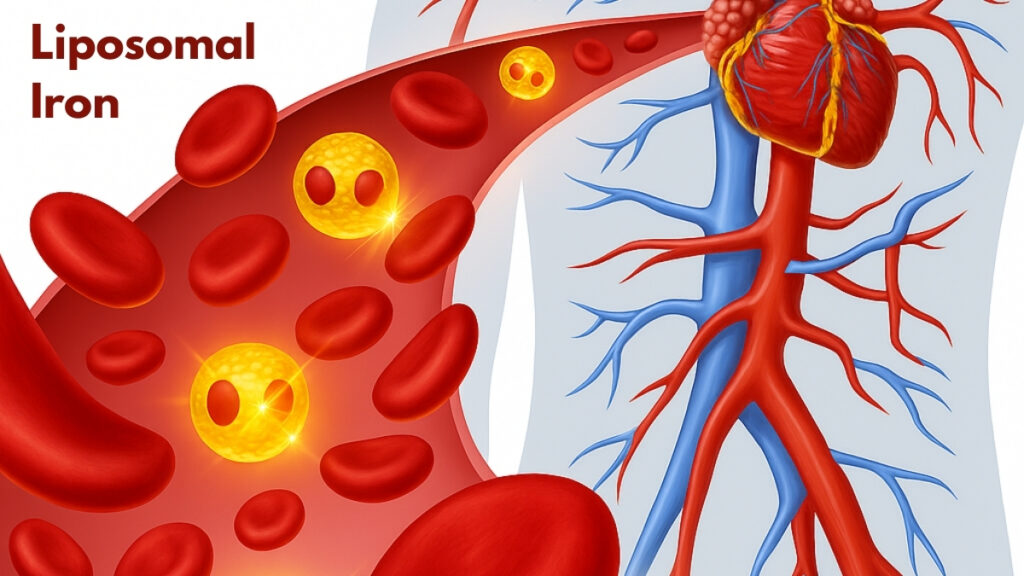
Liposomal iron (PRECIFER) refers to iron delivered using a liposomal delivery system.
Different products may use different iron compounds and different formulations.
When evaluating an iron supplement, consider:
- Type of iron
- Elemental iron amount
- Delivery technology
- Tolerability
- Individual requirements
- Laboratory results
- Healthcare professional guidance
What Is Liposomal Ferric Pyrophosphate?
Liposomal ferric pyrophosphate is ferric pyrophosphate delivered using a liposomal formulation.
The liposomal approach is designed to provide iron through a different delivery system and may be used in formulations intended to improve gastrointestinal tolerability.
However, the performance of a supplement depends on its specific formulation, dosage, individual factors and use.
What Is Liposomal Lactoferrin?
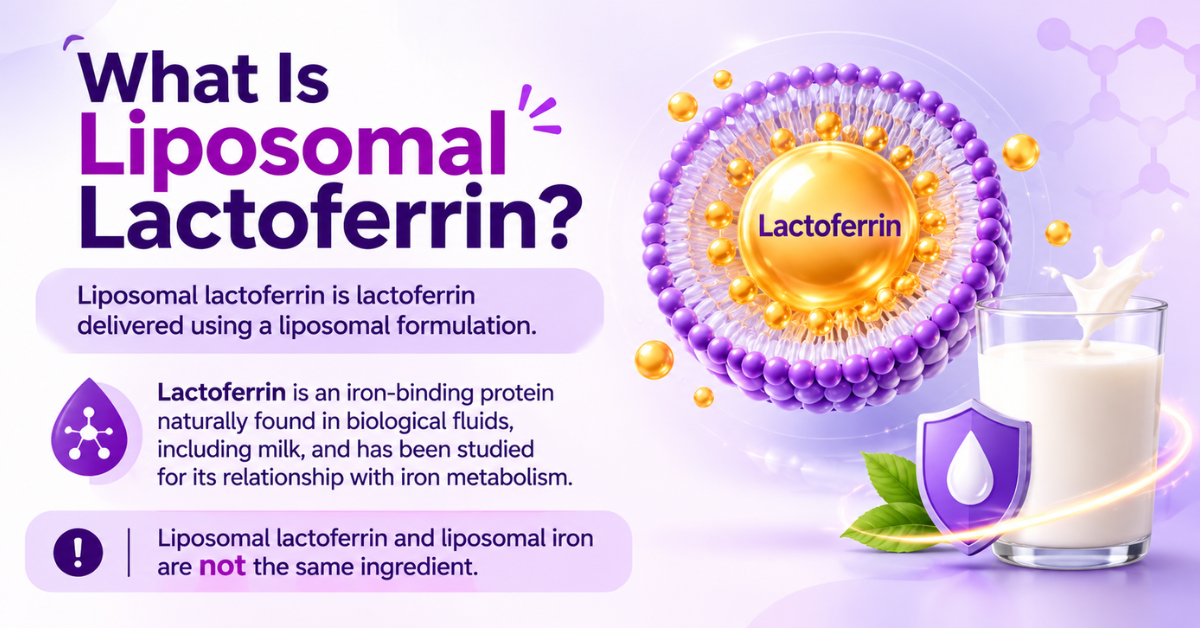
Liposomal lactoferrin is lactoferrin delivered using a liposomal formulation.
Lactoferrin is an iron-binding protein naturally found in biological fluids, including milk, and has been studied for its relationship with iron metabolism.
Liposomal lactoferrin and liposomal iron are not the same ingredient.
Liposomal Iron vs Traditional Iron Supplements
Traditional oral iron supplements can be effective when appropriately selected.
Some people experience gastrointestinal effects such as:
- Nausea
- Abdominal discomfort
- Constipation
- Changes in bowel habits
Liposomal iron is one alternative delivery approach.
The right formulation depends on the individual’s iron status, cause of deficiency, tolerance, treatment requirements and healthcare guidance.
What Should You Do After an Iron Deficiency Test?
Getting the test is only the first step.
Step 1: Understand the report
Do not look at haemoglobin alone.
Discuss the relevant results, which may include:
- Haemoglobin
- Ferritin
- MCV
- MCH
- Serum iron
- TIBC/transferrin
- Transferrin saturation
Step 2: Identify the likely cause
Ask:
Why did my iron stores become low?
Step 3: Start an appropriate correction plan
Depending on the cause, this may involve:
- Dietary changes
- Iron supplementation
- Treatment of blood loss
- Management of gastrointestinal conditions
- Correction of other nutritional deficiencies
Step 4: Follow up
Your healthcare professional may recommend repeat blood testing after an appropriate interval to assess the response.
Step 5: Don’t stop at “haemoglobin is normal”
If iron stores were previously low, the goal is to understand whether the underlying problem has been corrected.